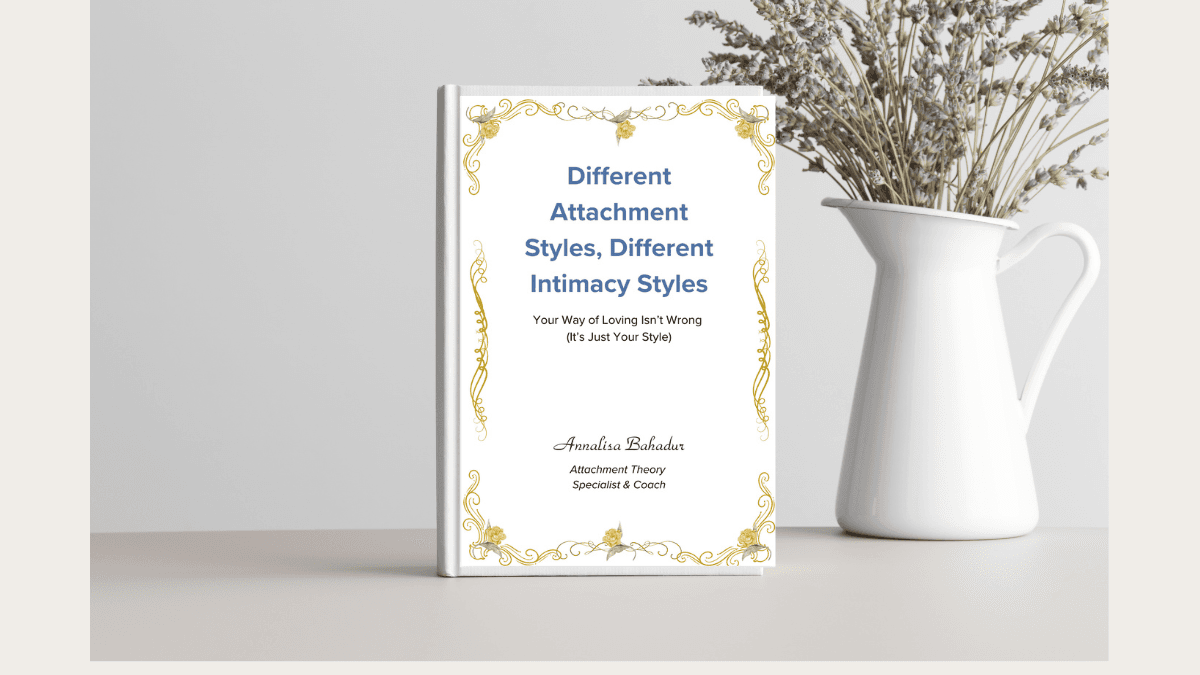
How to Build Intimacy with Avoidant & Anxious
$11.11
You’ve noticed that sometimes after an amazing time together, they suddenly pull away.
You ask if something happened and they say, “Everything is fine.” But you feel the coldness and immediately start to spiral.
Maybe they drop your hand like a hot potato, avoid posting you on social media, or roll over and stare at the ceiling after sex when all you want is to feel close.
Or maybe you’re the one who feels uncomfortable when your partner wants to cuddle, talk or become even closer after sex.
You need some time alone after intimacy, but you’re afraid to say it because what kind of person needs space after being close to someone they love?
The problem may not be that either of you is doing intimacy wrong—you may simply have very different attachment responses to closeness.
HOW WE’RE GOING TO WORK ON IT
We’re going to look at how anxious, avoidant, fearful-avoidant and secure attachment can experience intimacy differently.
You’ll understand why sex and physical affection can feel like reassurance and connection to one person and pressure or vulnerability to another.
We’ll explore why someone can genuinely enjoy being close to you and still feel the need to pull back afterward.
You’ll learn what to do when your partner pulls away instead of immediately chasing, questioning or assuming something is wrong.
And if you’re the one who needs space, you’ll learn how to communicate that without making your partner feel rejected.
We’ll look at why some people use work, tiredness or busyness to create distance from sex and intimacy and what else could be happening underneath that behavior.
You’ll learn what to do when you want to be vulnerable but your body seems to shut down before you can get there.
We’ll talk about anxiety around sex and how your attachment fears can follow you into the bedroom.
We’ll explore why being acknowledged publicly or posted on social media can feel deeply reassuring to some people and uncomfortable or unnecessary to others.
You’ll identify the core beliefs that may be driving your fears around intimacy, rejection, abandonment, engulfment or losing your independence.
And you’ll get practical tools for noticing these patterns earlier so you can respond to them differently instead of repeating the same intimacy cycle.
WHAT TO EXPECT
You’ll stop automatically interpreting every moment of distance as proof that something is wrong.
You’ll understand your own needs around sex, affection, vulnerability, space and closeness more clearly.
You’ll be better able to communicate those needs without shame, pressure or guessing games.
You’ll understand your partner’s reactions without automatically making them mean something about your desirability or worth.
And intimacy can start becoming something you navigate together, rather than something that repeatedly pushes you apart.
Sometimes the moment that makes one person feel most connected is the exact moment that makes another person feel most vulnerable.
If closeness keeps turning into confusion, anxiety or distance, join me and learn how attachment may be shaping your intimacy and what you can start doing differently.