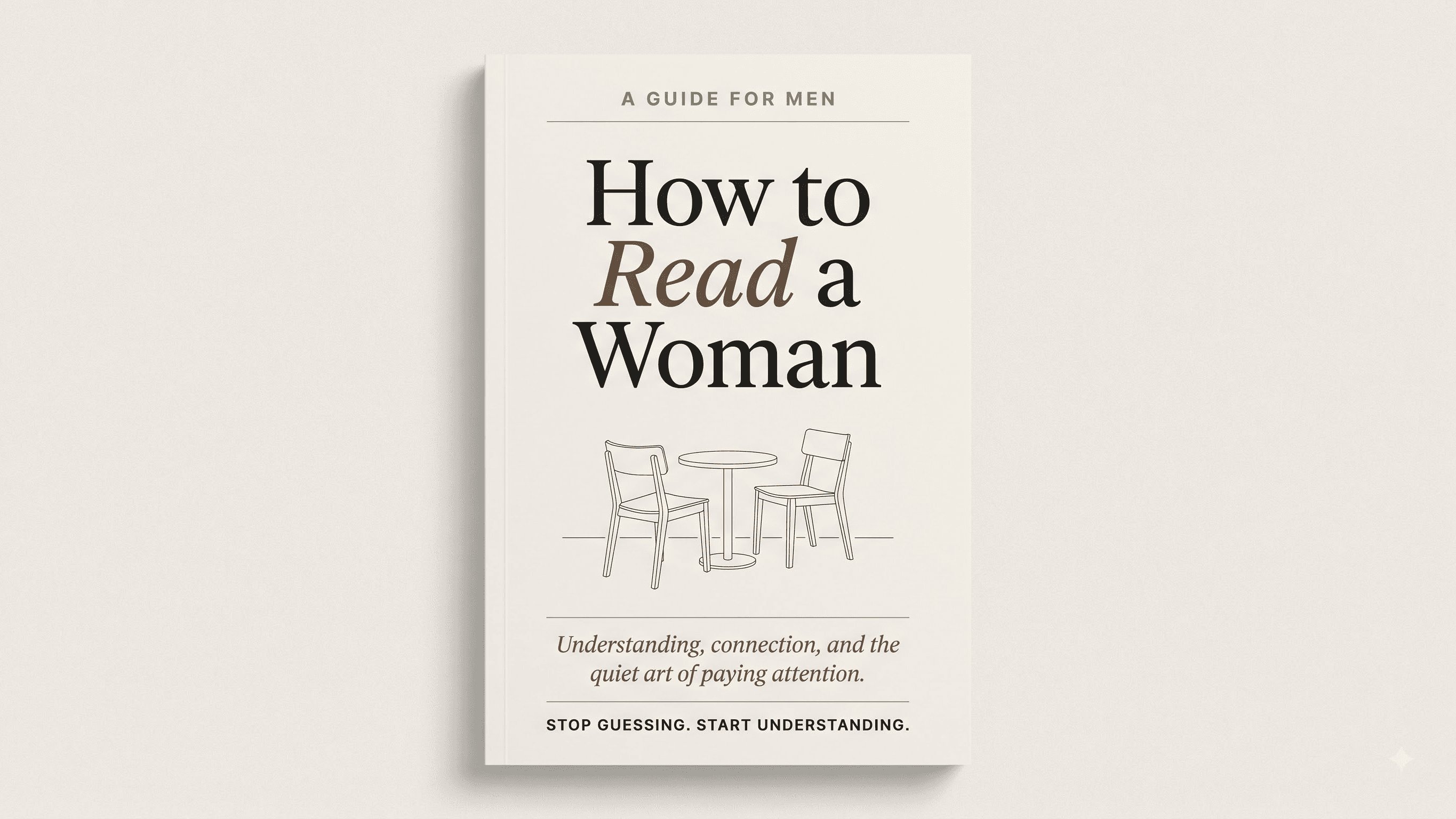
Track 1 - The Mind : How to Read a Woman
$9.99$19.99
Nine in the evening. She drops her bag and says, I had the worst day.
You offer a solution. Within a minute the room goes cold and neither of you knows why.
If you've lived that night, keep reading. You are not the problem.
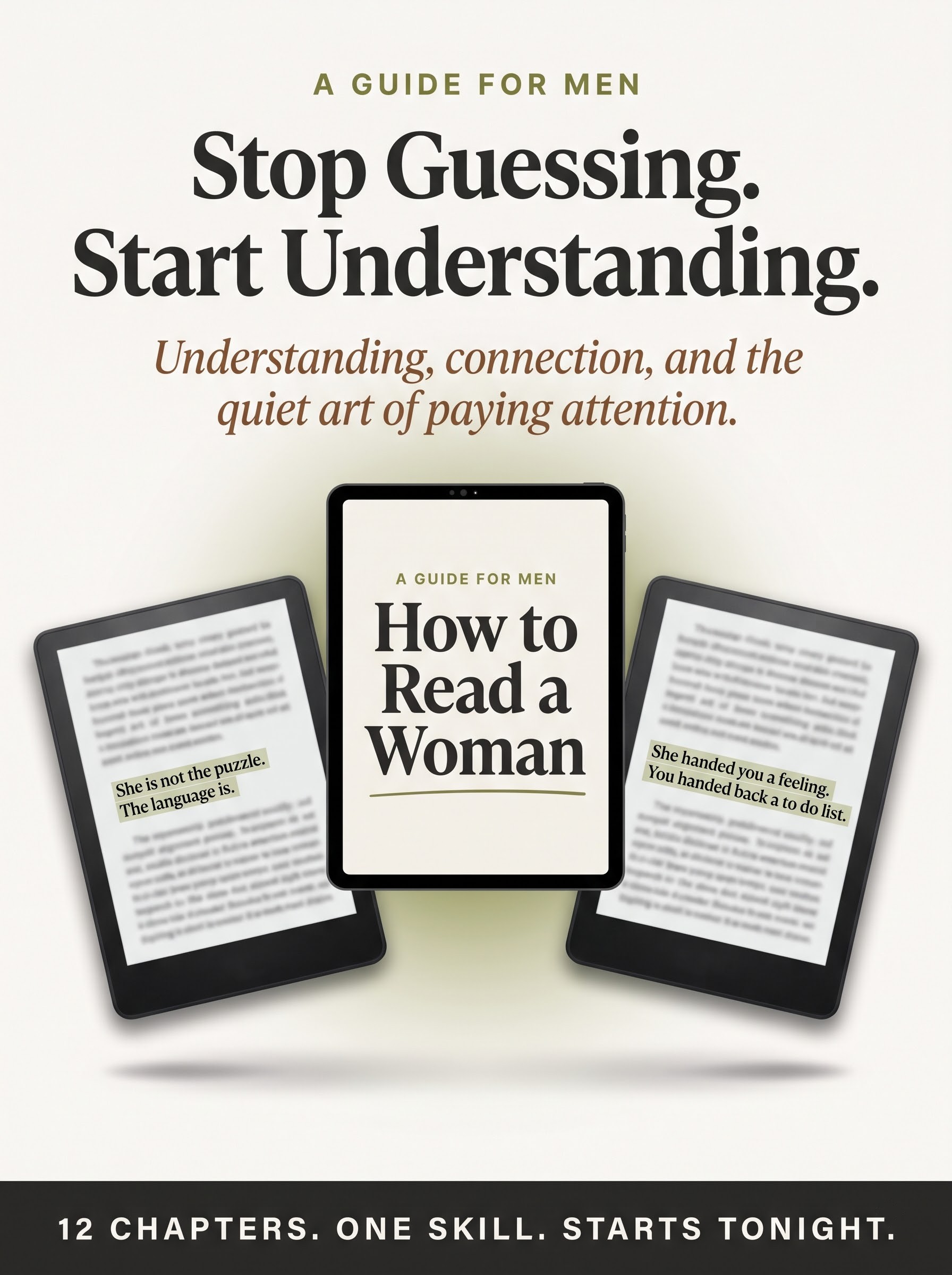
There's an old idea that women are confusing on purpose. It's a comfortable myth, because it lets us give up.
The truth is simpler. Men and women often learn two different styles of talking. One to trade information, one to build closeness. Neither is wrong. But when nobody names the difference, it feels like talking past each other in a foreign language.
She was building a bridge. You thought she was reporting a problem.

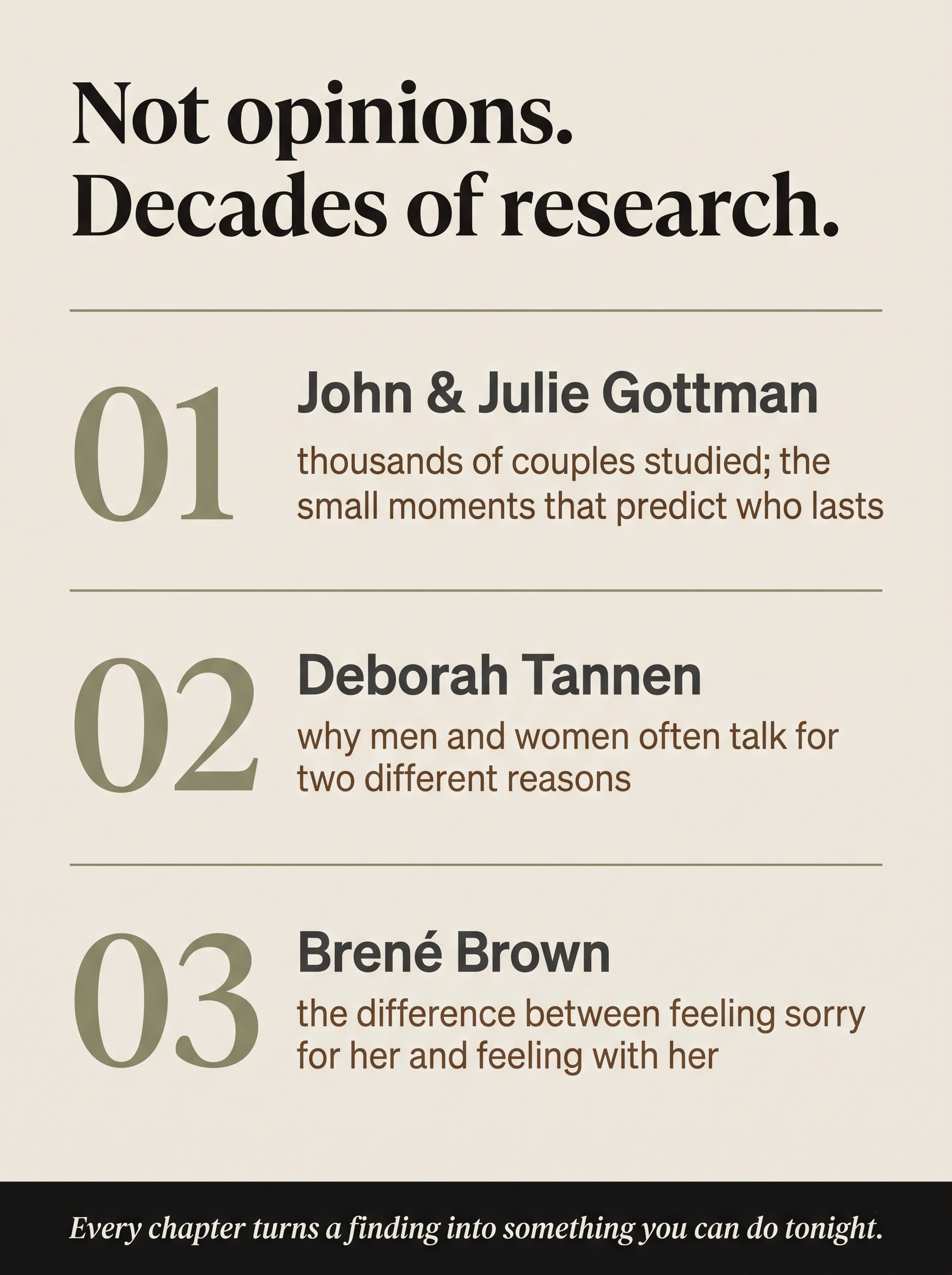
Nothing in this book is opinion. Every chapter takes a finding from people who have studied couples for decades and turns it into one thing you can do tonight.
No theory you have to believe. Just a practice, and a way to check whether it worked.
Reading her starts with reading yourself. You cannot sense what she feels while your own alarm bell is ringing.
So Part One is about you — noticing the heat before it speaks, and learning to pause without disappearing. Everything after that gets easier.

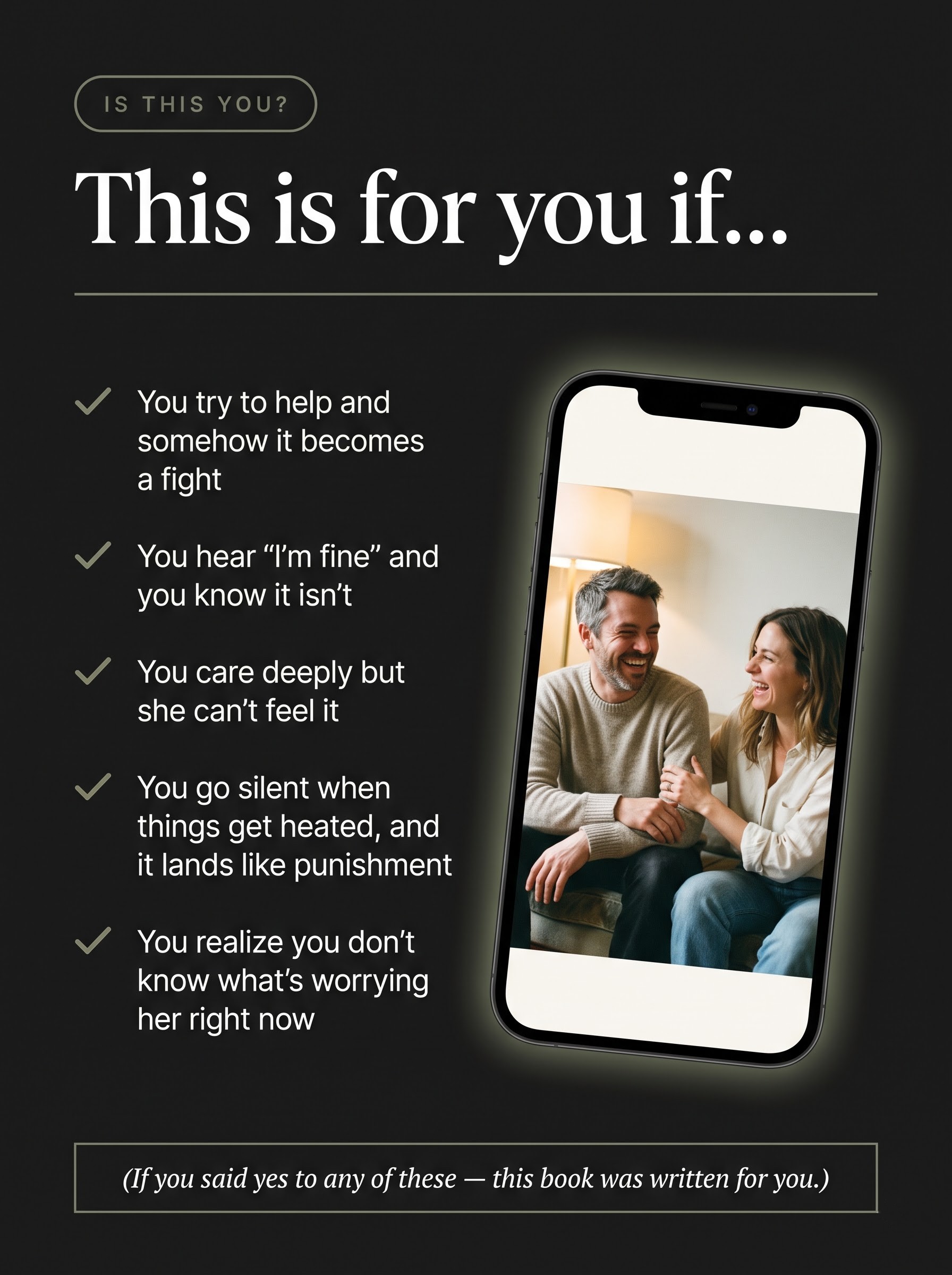
If none of that sounded familiar, this isn't your book, and that's fine.
But if you read that list and felt something tighten, it's because you already know the gap is there. You just never had a name for it.
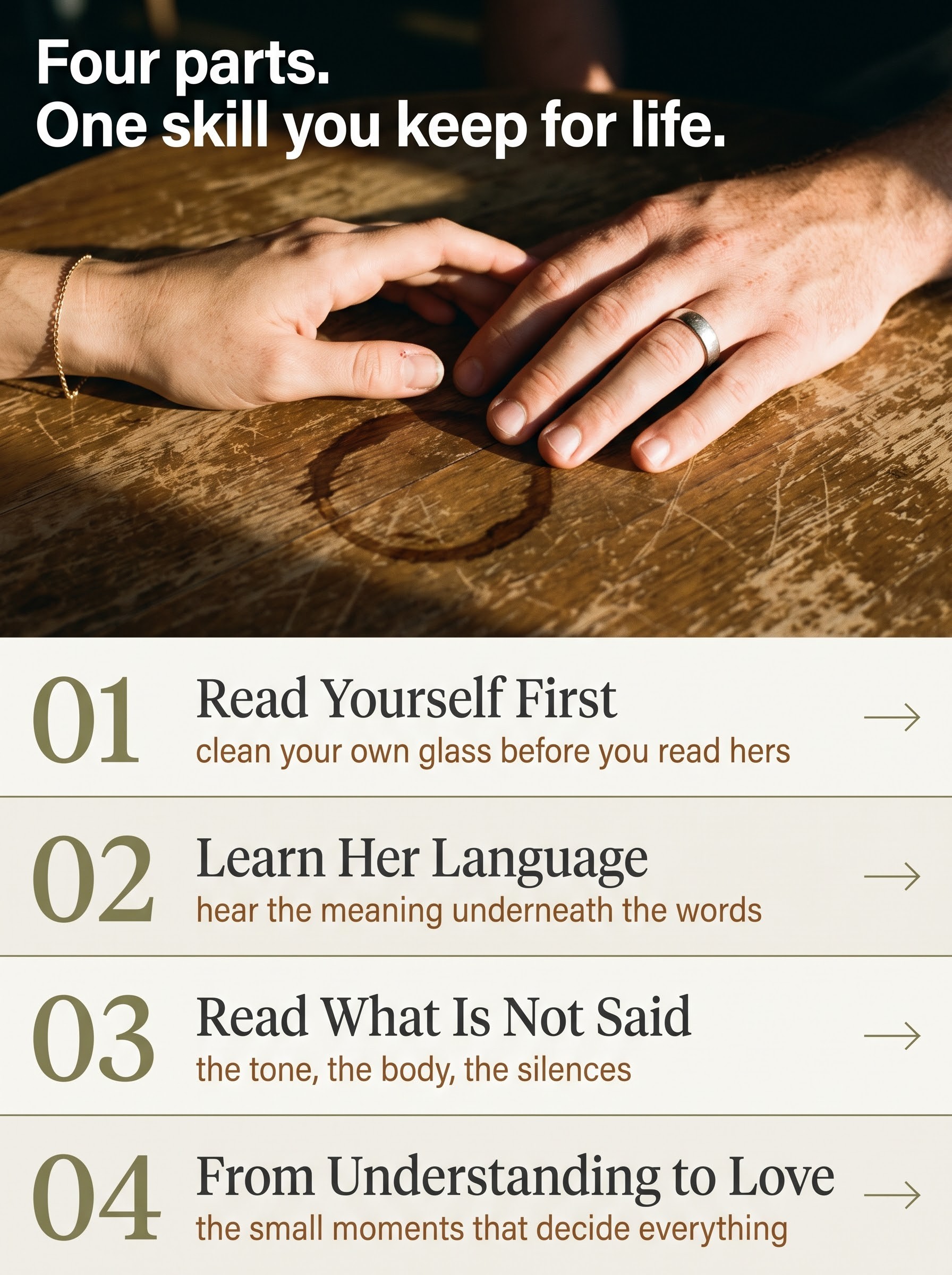
Twelve chapters, built the same way every time.
A real moment you've probably lived. The idea underneath it. A mistake almost every man makes. And one practice you can start tonight.
You don't need to read fast. You need to read honestly.
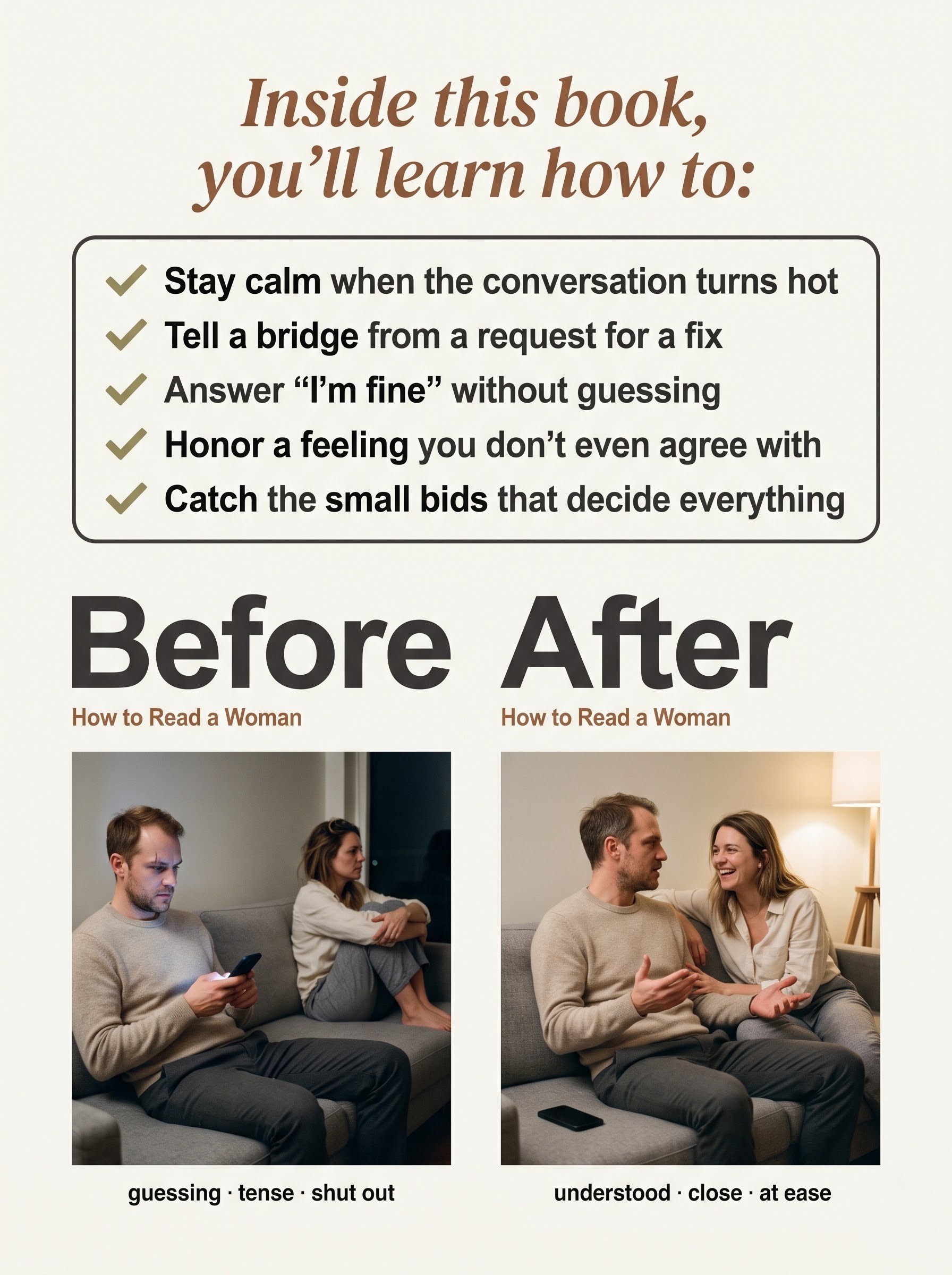
Nothing dramatic changes. Same couch, same evening, same argument waiting.
What changes is that he now knows what she's actually asking for — and he has the words ready when it matters.
That's the whole difference. It's smaller than you think, and it takes about ninety days.
Researchers followed couples for six years. The ones still happy had turned toward each other's small moments about eighty-six times out of a hundred. The ones who split had managed thirty-three.
Not the big fights. The sunset she asked you to come look at.
Those moments are happening in your house this week. You just haven't been counting them.
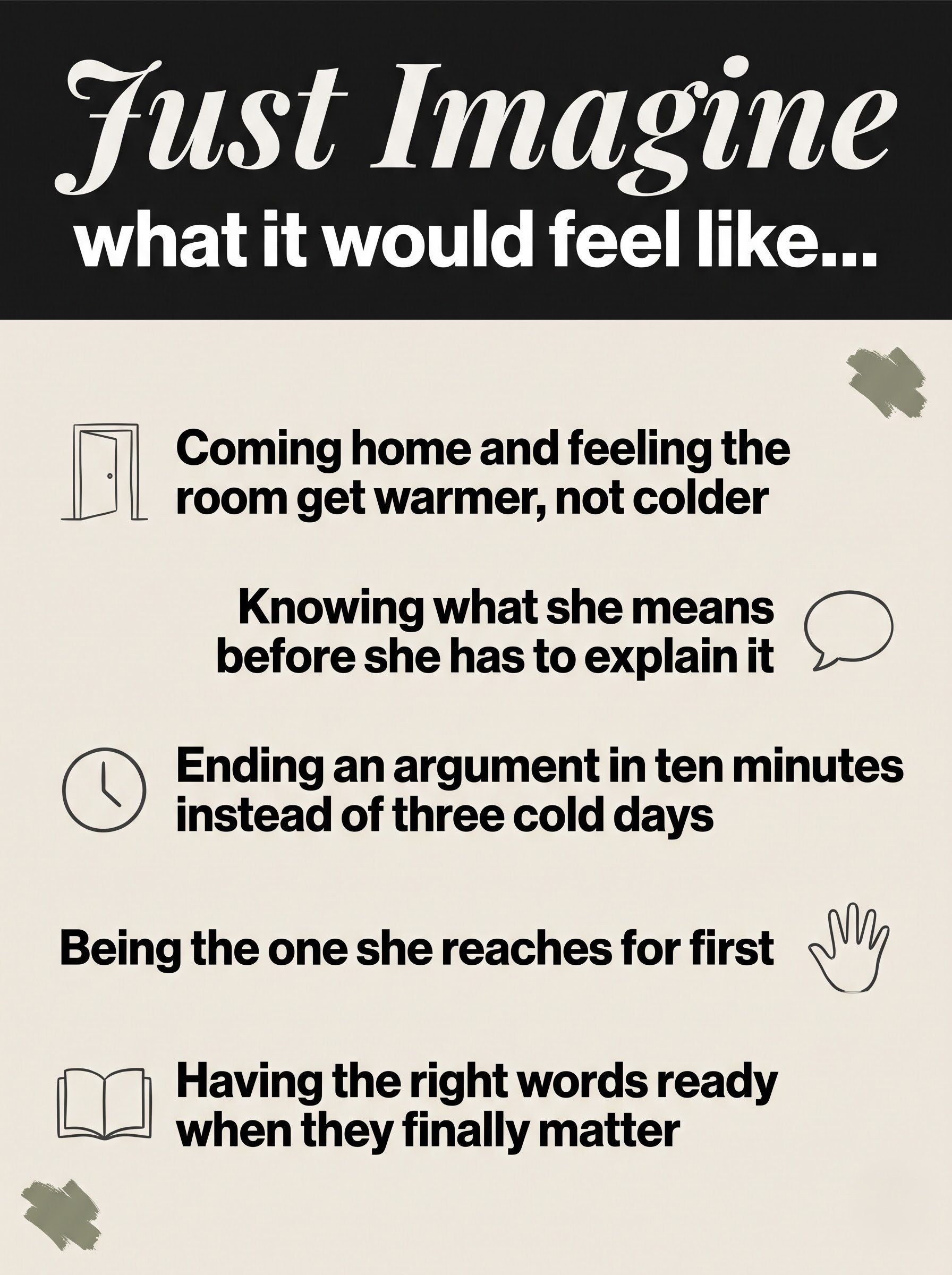
Reading a woman was never about cracking a code. It's about being fully present with another person — curious instead of certain, noticing instead of assuming.
And one line this book never crosses: understanding someone is not the same as controlling them. These are tools for closeness, not leverage. If that's what you're looking for, this is the wrong book.
If it isn't — start tonight, with the very next conversation.

How to Read a Woman
12 chapters · 4 parts · 50 questions · a practice for every chapter
Stop guessing. Start understanding.