Get The Self-Advocate's Guide Now!
$19.99$24.99
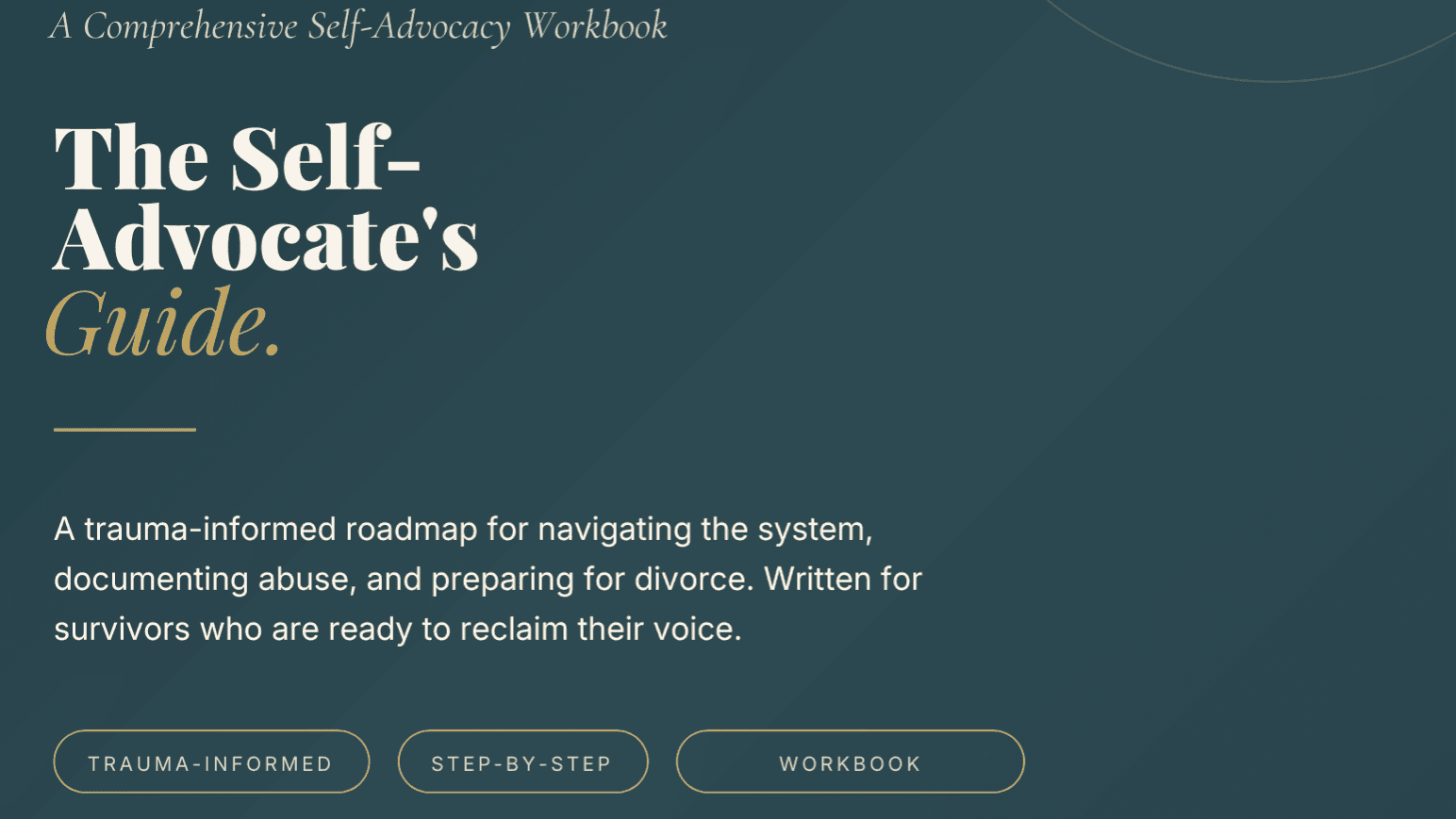
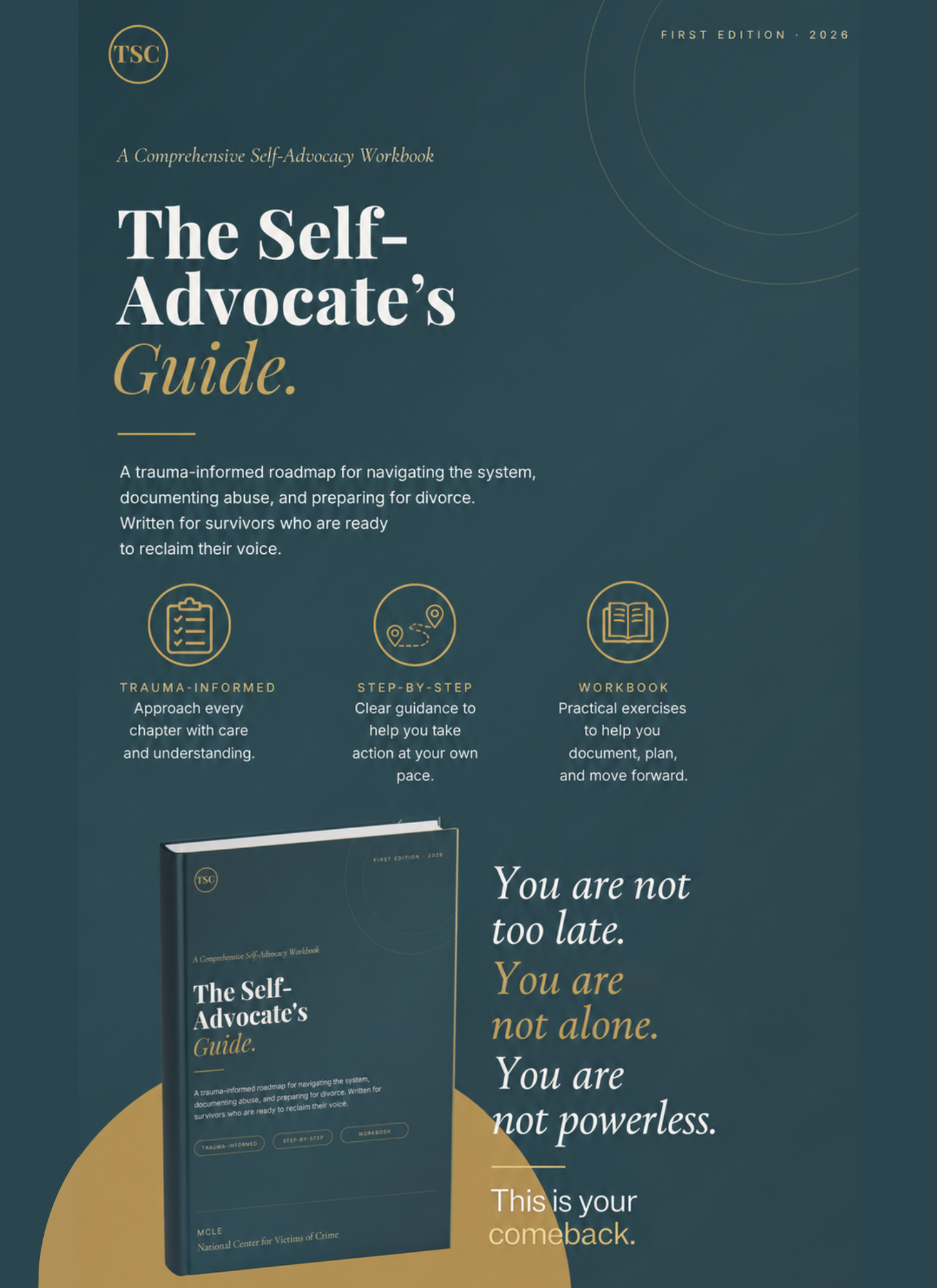
The Self-Advocate’s Guide
A Trauma-Informed Workbook for Survivors Navigating Abuse, Divorce & Self-Advocacy
A comprehensive trauma-informed workbook designed to help survivors organize documentation, understand manipulation tactics, prepare for divorce, and reclaim their voice with clarity and strategy.
Created by Cheri Shandra, a nationally credentialed victim advocate and trauma-informed practitioner.
You are not “too emotional.”
You are navigating trauma, confusion, survival, and systems that often misunderstand abuse.
The Self-Advocate’s Guide was created to help survivors move from overwhelm to organization.
This workbook combines trauma-informed education, practical self-advocacy tools, emotional regulation support, documentation guidance, and strategic preparation for individuals navigating abusive relationships, separation, divorce, coercive control, and high-conflict dynamics.
Whether you are:
questioning your reality
preparing to leave
co-parenting through conflict
documenting abuse
organizing legal information
trying to understand DARVO or reactive abuse
rebuilding your confidence after manipulation
…this guide was written with you in mind.
What’s Inside
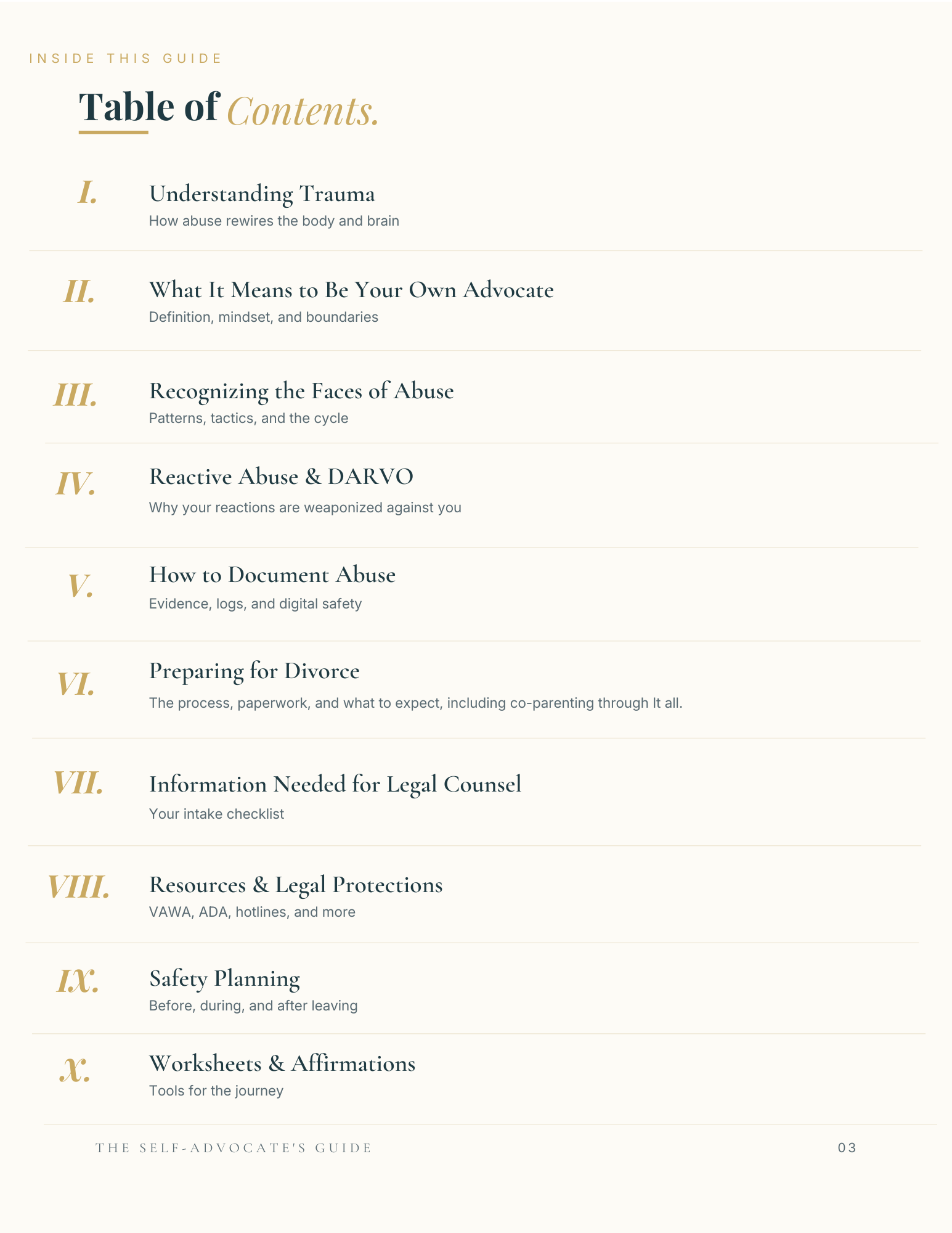
✔ Understanding trauma & nervous system responses
✔ Fight, flight, freeze, and fawn responses
✔ Emotional & psychological abuse education
✔ DARVO and reactive abuse education
✔ Documentation & evidence organization strategies
✔ Digital safety guidance
✔ Divorce preparation support
✔ Co-parenting through complexity
✔ Safety planning tools
✔ Incident log templates
✔ Preparation worksheets to meet with Legal Professional
✔ Healing affirmations & emotional support
Who This Is For
This workbook is for:
survivors of emotional, psychological, narcissistic, or domestic abuse
individuals preparing for divorce or custody proceedings
people navigating coercive control
survivors struggling to organize their experiences under stress
those seeking clarity, validation, and practical strategy
Created By
Cheri Shandra
Nationally Credentialed Victim Advocate
Accredited Trauma-Informed Practitioner
California State Bar MCLE Provider #20906
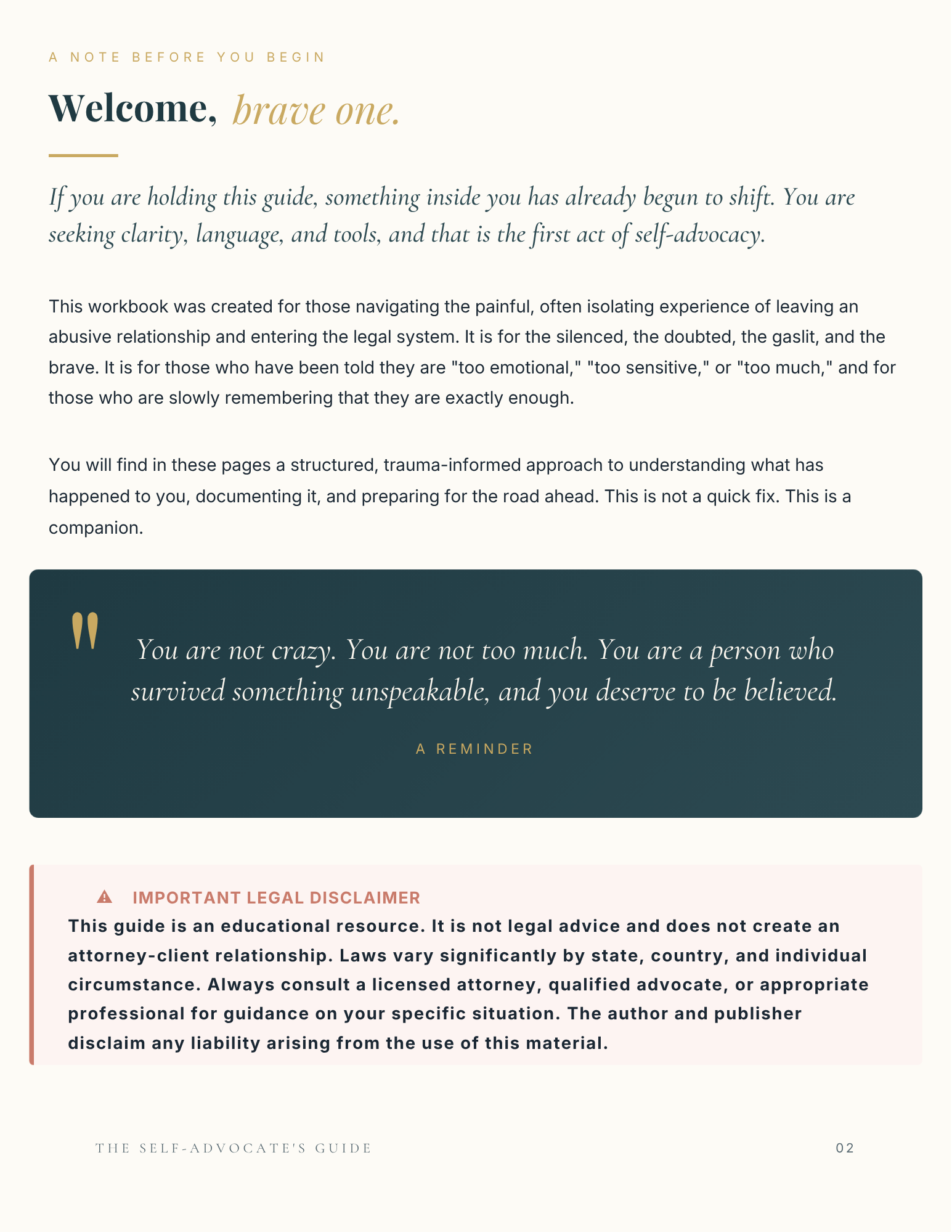
Important Disclaimer
This workbook is an educational and organizational support resource. It is not legal advice, therapy, or a substitute for professional legal counsel or mental health care.