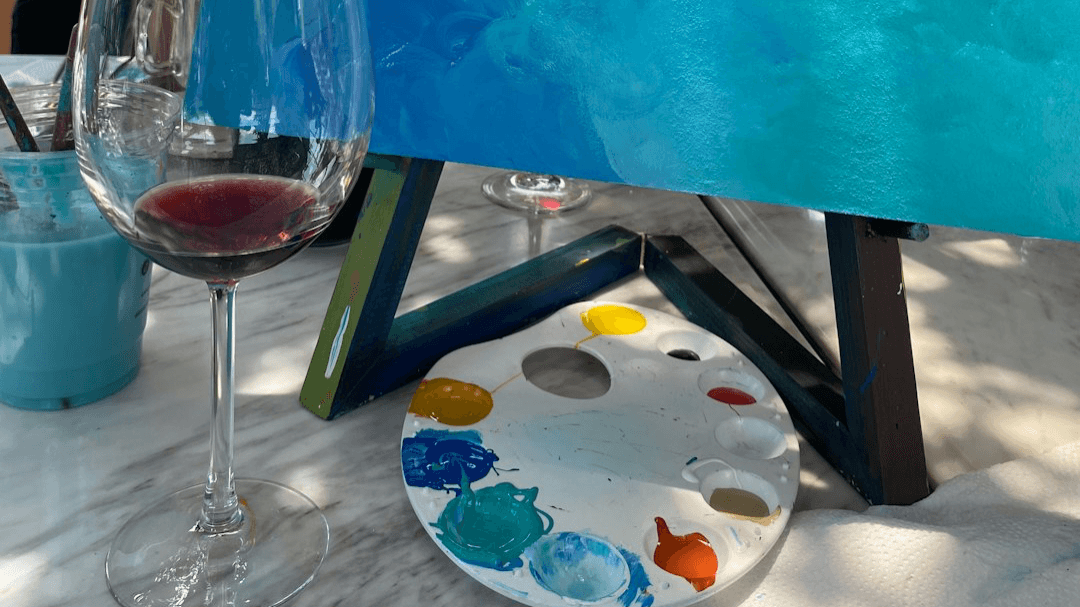
Paint & Sip Course
$32$40
This Course will teach you everything you need to achieve your goals. As long as you follow the steps below your business will be successful, consider the following:
Running a paint and sip business for beginners involves choosing between a mobile or studio-basedmodel and mastering the "entertainment-first" teaching style. Successful studios often see profit margins of 20% to 40% per ticket, with an average ticket price of $35 to $45 for a two-hour session.
1. Choose Your Business Model
Mobile Service: Lower startup costs ($6,000–$13,000). You partner with local venues like wineries, breweries, or restaurants to host events.
Physical Studio: Higher startup costs ($15,000–$69,000+) but offers a permanent branded environment and the ability to host private parties easily.
Franchise vs. Independent: Franchises like Painting with a Twist provide a proven model but require high initial investments ($60k–$200k+) and ongoing fees.
2. Legal and Administrative Setup
Business Structure: Most owners form a Limited Liability Company (LLC) to protect personal assets.
Permits & Licenses:
Liquor License: This is the most complex step, taking 3–12 months and costing between $500 and $15,000+ depending on your state.
BYOB Alternative: Many beginners start with a BYOB (Bring Your Own Bottle) model to bypass immediate liquor licensing costs, though you may still need a premises license.
Registration: Apply for a free Employer Identification Number (EIN) via the IRS website.
Insurance: Secure General Liability(standard $1M coverage) and Liquor Liability insurance to cover accidents and alcohol-related incidents.
3. Essential Equipment & Supplies
Buying in bulk from art retailers like Blick Art Materials or Jerry's Artarama is crucial for maintaining margins.
Per-Seat Setup: Tabletop easel ($15–$30), canvas ($2–$5), set of 3–4 brushes (small, medium, large), and an apron.
Consumables: Acrylic paints (start with primary colors plus black and white), paper towels, plastic cups for water, and paper plates for palettes.
Atmosphere: Invest in bright, even lighting and a quality sound system for background music and instructor visibility.
4. Running the Classes
Hiring: Look for instructors with engaging personalities over high-level technical skill; they must be able to teach beginners in a fun, step-by-step manner.
Teaching Tip: Instructors should remind students to "rinse and dry" brushes after every step to preserve equipment.
Booking: Use online scheduling software like Bookeo, FareHarbor, or Acuity to manage capacity and collect payments upfront.
5. Marketing & Growth
Visual Platforms: Focus on Instagram and Facebook, using high-quality photos of groups smiling with their finished paintings.
Local Partnerships: Collaborate with nearby restaurants for "dinner and painting" packages or local businesses for team-building events.
Loyalty: Implement a rewards program or newsletter to encourage the 25% retention boost seen in studios with a strong community vibe.
This guide is for you if you’re looking to:
Achieve your Dream
Find Meaning in Your Work
Be Happy