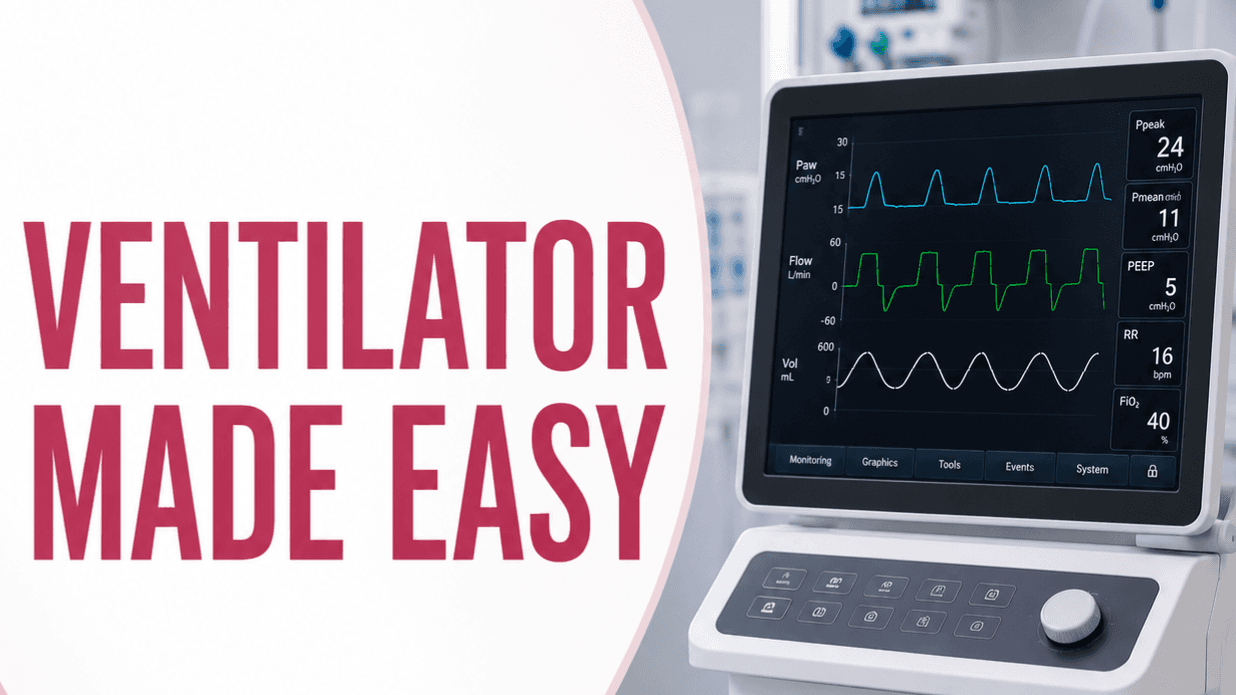
Ventilator Made Easy
$27$47
The ventilator is alarming, everyone is talking about PEEP, pressure and tidal volume and you’re standing there thinking, “What is this machine actually doing?”
You’ve watched videos, memorized definitions and written down the settings, but it still feels complicated. You want someone to explain it clearly, connect the pieces and show you what it all means for the patient in front of you.
This guide gives you the missing framework.
Instead of memorizing random numbers and confusing mode names, you’ll learn how to look at the ventilator, understand its goal and connect the settings to oxygenation, ventilation and your patient’s condition.
WHAT’S INSIDE:
Understand what the ventilator is actually doing during each breath without getting buried in respiratory physiology
Decode common modes including AC/VC, pressure control, PRVC and pressure support and understand why one may be chosen over another
Learn what FiO₂, PEEP, respiratory rate and tidal volume control so the settings stop looking like random numbers
Connect ABG results to the ventilator and understand which problems involve oxygenation, ventilation or something the vent cannot fix
Use a simple bedside assessment process to evaluate your patient, read the settings and communicate confidently with the RT and provider.
Real clinical cases, worked step by step
A four-step method for ABG interpretation you'll use for the rest of your career
A CRNA interview prep module with real questions programs ask and how to answer them
7 printable quick-reference cheat sheets
Curated video links for extra explanations
This Is For You If
You can read the settings but still cannot explain what changing them is accomplishing
You have searched YouTube, saved ventilator videos and memorized definitions, but the information still has not clicked
You feel nervous when the vent alarms or worry that you should understand more than you currently do.
WHAT YOU’LL WALK AWAY WITH:
A clear mental picture of how the ventilator supports breathing
The ability to connect modes, settings, ABGs and patient assessment
More confidence during bedside care, report and ICU rounds
No fluff. No overwhelm. Just a simple, step-by-step system you can start using today.