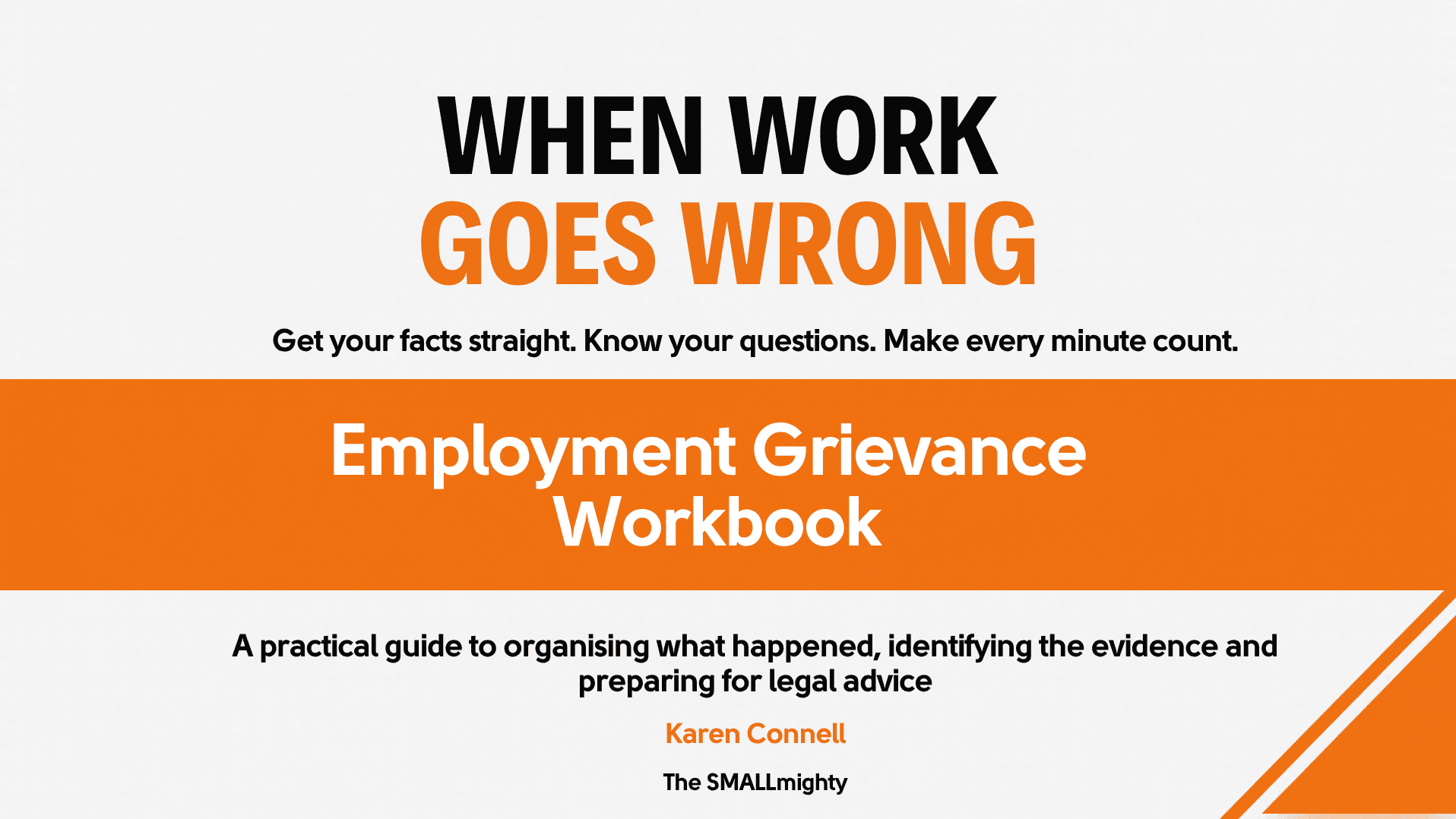
The Employment Grievance Workbook
£24
WHEN WORK GOES WRONG
The Employment Grievance Workbook
Get your facts straight. Know your questions. Make every minute count.
Something has gone wrong at work.
Maybe you've been treated unfairly, threatened with redundancy, put through a disciplinary process or pushed to breaking point by your manager.
You're angry. You're stressed. You might be frightened about losing your job or your income. And you're probably getting plenty of advice from friends, colleagues and AI — all telling you what they think you should do.
But who really knows what's best for you?
This is exactly why I created When Work Goes Wrong.
After more than 36 years working with people and organisations, I've seen how quickly a difficult workplace situation can become even harder when people react before understanding their options.
My advice is always to speak to a qualified employment solicitor or lawyer. But good legal advice costs money. And time matters.
Solicitors may charge by the hour. Employment disputes can involve strict legal deadlines. And the last thing you want is to spend a paid consultation trying to remember dates, find emails or explain a complicated story.
That's where this workbook comes in.
When Work Goes Wrong takes you step by step through your situation, helping you separate what happened from what you believe happened, identify the evidence and get clear about what you want to achieve.
So when you speak to a solicitor, you're prepared, focused and ready to make every minute count.
What you'll work through
Separate facts from assumptions, emotions and accusations.
Build a clear timeline of important events.
Identify evidence that supports and challenges your account.
Consider what your employer might say in response.
Understand what outcome you're hoping to achieve.
Prepare your own questions for your solicitor.
Identify potential deadlines and where to find free or low-cost support in Great Britain and Australia.
Think carefully before making decisions that may be difficult to reverse.
And what about AI?
AI can be useful, but it lacks the judgement and experience of an employment lawyer. Worse, it can sound convincing even when it gets things wrong.
That's why I've included five optional AI prompts that help you check your information, identify gaps, improve your wording and prepare a concise, factual briefing for a solicitor.
Use AI as your editor, not your lawyer.
What you'll receive
An editable Word workbook to complete at your own pace, plus a PDF reference copy.
Created by Karen Connell, founder of The SMALLmighty, executive coach and author of Perfectly Flawed: How Behaviour, Not Brilliance, Builds Careers.
Important: This workbook helps you prepare for professional legal advice. It does not provide legal advice or determine whether you have a legal claim. It can be used internationally, with additional deadline and support information for Great Britain and Australia. Legal deadlines can be short and may change. Seek qualified advice promptly, especially if a deadline or urgent decision is approaching.