The Reluctant Reader Reset
$19$27
You want your kid to love reading. You've bought the books. You've made the space. You've read to them, sat with them, cheered them on.
And somehow reading time has turned into the worst twenty minutes of your night.
Maybe they groan when you bring it up. Maybe they wiggle and stall and suddenly need water. Maybe they've started saying things like "I'm bad at this," and you don't know what to say back, so you say "no you're not," and it doesn't help.
You're not doing anything wrong. And your kid is not behind for good.
Here's what nobody tells you: "reluctant reader" isn't one problem. It's four. A kid who finds reading hard needs something completely different from a kid who finds it boring, or a kid who's quietly decided they're not smart enough for it. That's why the general advice hasn't worked. It wasn't aimed at what's actually going on in your house.
This guide helps you figure out which kind of stuck your kid is, then hands you exactly what to try.
This is for you if:
Your kid avoids reading, stalls, argues, or shuts down the second books come up
You've tried the sticker charts, the timers, the bribery, maybe even the begging
You've heard "reading is boring" or "I'm bad at reading" and felt your stomach drop
You've read the generic advice and thought, okay, but what do I actually do tonight
You want reading time back without turning it into a fight
This probably isn't for you if:
Your child is under 6 or over 12, these strategies are built for this specific age range
You're looking for a formal reading evaluation, this guide will help you recognize when it's time to bring in a specialist, but it isn't one itself
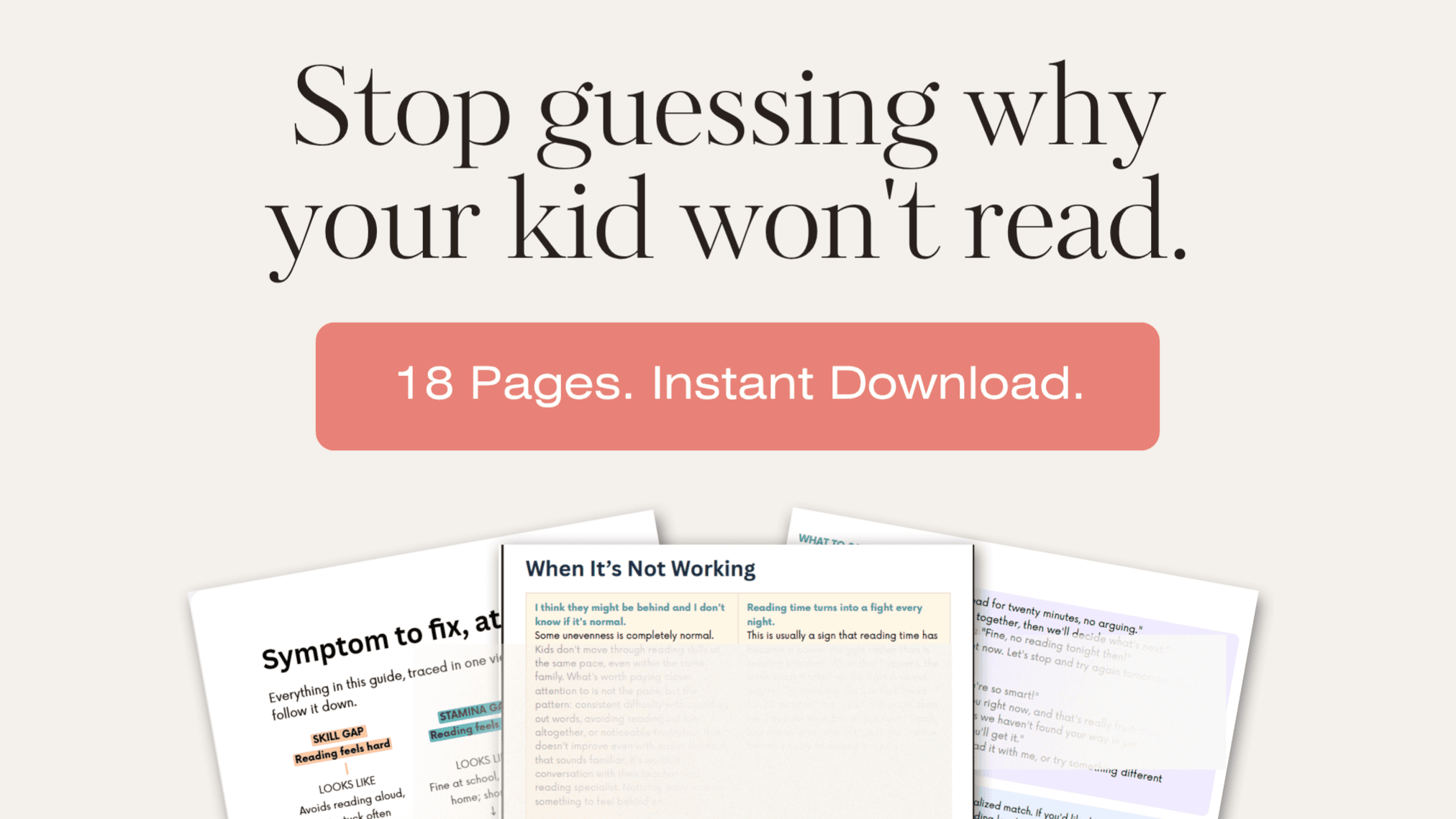
What's inside (18 pages):
A start-here checklist that turns everything you've been noticing into one of four clear gaps: skill, stamina, preference, or anxiety and shame
A decision map that takes you from what you're seeing to what to try, all on one page
7 troubleshooting sections built around the exact things parents tell me, like "every book is boring," "she's fine at school but refuses at home," and "reading time turns into a fight every night." Each one explains what's really going on underneath, what to say instead, and specific books chosen for that exact situation
Word-for-word scripts for the hardest moments, including the one where your kid says they're not smart
The Five-Finger Test, a thirty-second way to know if a book is the right fit before you're three chapters into a struggle
A stamina section for the kid who's done after two pages, and why pushing longer makes it worse
Two screenshot-friendly pages for the nights you need the move, not the explanation
A printable reading plan so you can see what's actually working
Why me:
I've spent over a decade as a school librarian, and I founded Community Book Project because I wanted more kids to have books that actually reach them. I've watched a lot of families sit exactly where you are right now. Nothing in this guide is theory. It's what works.
