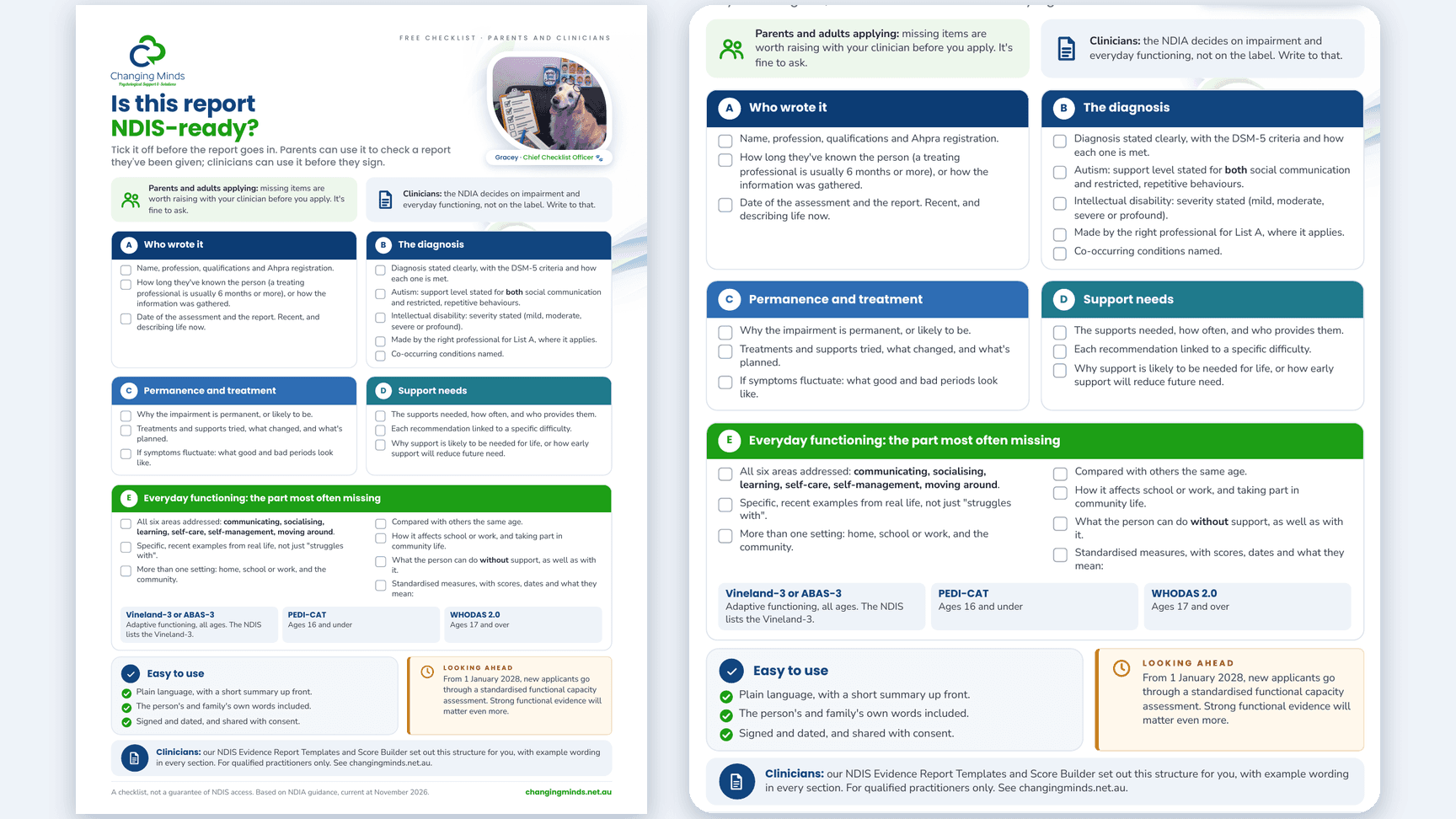
Is this report NDIS-ready? Free checklist
Before a report goes to the NDIS, check it against this one-page list: who wrote it, how the diagnosis is recorded, whether it shows the difficulty is lifelong, and whether it describes everyday functioning in the six areas the NDIS looks at. Use it on a report you already have, or hand it to the person writing a new one. It is a guide to what the NDIS looks for, not a guarantee of any decision.
A free checklist for parents and clinicians from Clinical Psychologist Gina Howland, Changing Minds. You'll also get occasional emails with practical tips. Unsubscribe any time.