
Everything You Need To Know About Food
$14$22
I've made a list of 56 really interesting questions about food and diet that people have asked me, and I've answered every one of them properly. Read it the whole way through and you'll understand food better than most doctors in the Western world.
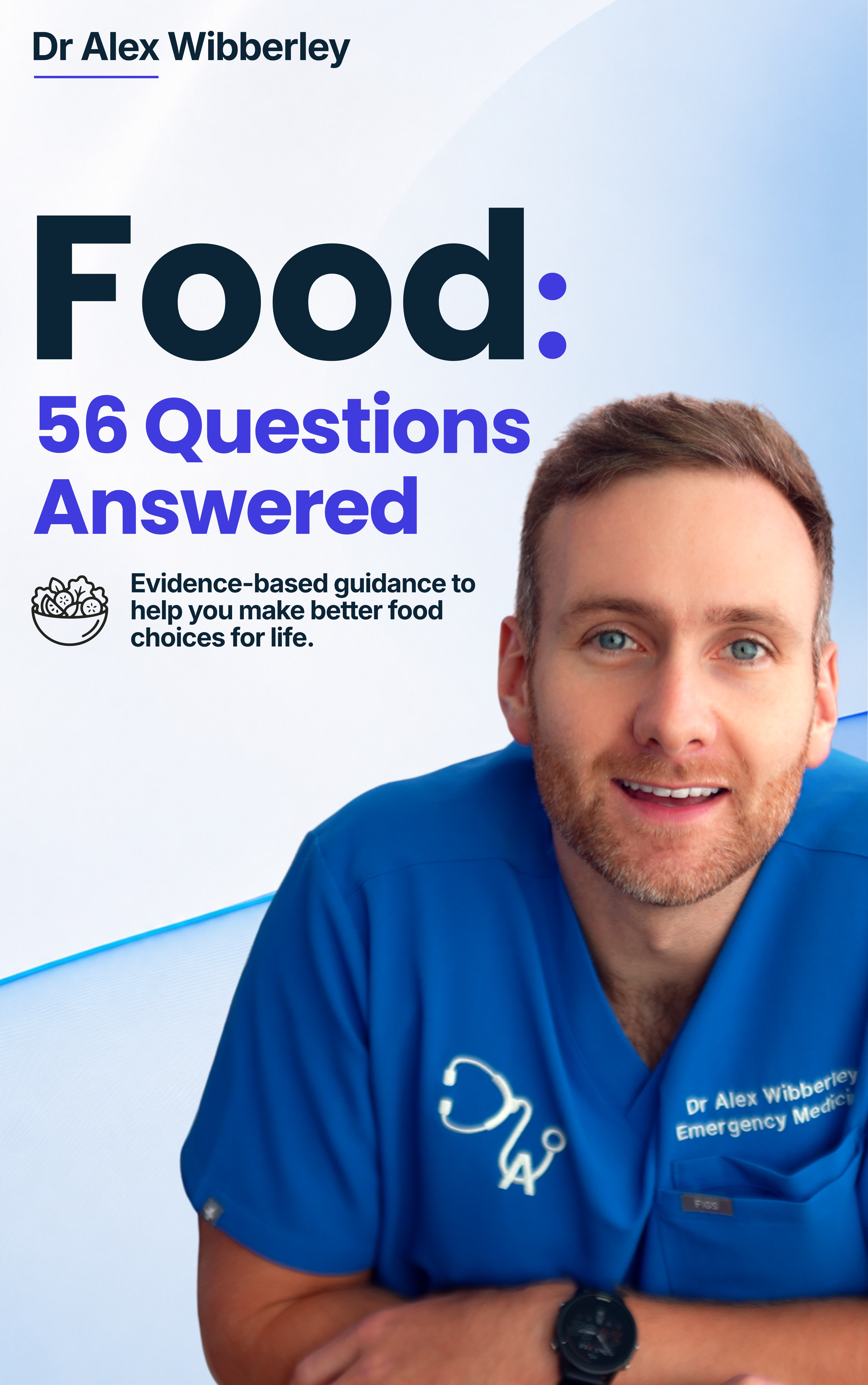
What you get:
200 pages, covering all 56 questions in full
The four foods with real evidence linking them to cancer, and the long list of things people worry about that shouldn't be on it at all
Why reheating your leftover rice doesn't undo the benefit of having cooled it, and why the loaf in our house lives in the freezer
How nitrites in bacon can harm you while the nitrates in beetroot and spinach protect your arteries, and why that isn't a contradiction
What actually happens inside an artery when it furs up, and why the thing that kills you isn't the narrowing
The single test that predicts your heart risk better than cholesterol does, and why your GP probably hasn't offered it
Why saturated fat in cheese behaves differently from the same amount in butter
The trick supermarkets use on protein bars, and what you'll find when you turn one over and read the back
Why coffee drinkers look healthier in the research than coffee actually makes them
How much fibre we eat at home, why it's far above what you've been told to aim for, and how to build up to it without a fortnight of bloating
What I have for breakfast, what I snack on, and the one question I ask myself before eating anything
Clear warnings wherever the advice needs changing for kidney disease, pregnancy, blood thinners and other conditions
A short answer box at the end of every question, so you can get the answer in two sentences if you're in a hurry
A full reference list, so you can check anything I've said for yourself
Why I wrote it
Nutrition isn't really something that gets taught properly in medical school, in my opinion. I've been studying for a long time now to become a certified lifestyle medicine doctor, which is something I haven't spoken about much on my channel. That, combined with a decade in emergency medicine watching the same conditions arrive in the same beds at roughly the same ages, is what pushed me to put this together.
It's honest about what we don't know
A lot of nutrition advice gets delivered with far more confidence than the research behind it deserves. I've tried hard not to do that. Where the evidence points clearly in one direction, I say so plainly. Where it doesn't, I set out what each side believes and let you weigh it up yourself. There are several questions in here where the honest answer is that the science isn't settled, and I say so rather than picking a side to sound more authoritative.
Written so anyone can follow it
I've assumed no background knowledge whatsoever. Cholesterol gets explained as a waxy substance that needs a protein parcel to travel through your blood before I ever mention LDL. Fibre gets explained as the only food you eat that isn't really for you. There's also a short section near the front explaining the difference between the two main kinds of study, and between relative and absolute risk, which will make you much harder to mislead by a newspaper headline for the rest of your life.
Practical, not theoretical
Every section comes back to the same question, which is what you should actually do differently. Which four things to put in your trolley this week. Which swap to make first because it only takes one decision. What I keep in my own fridge, what I sprinkle on my food, and how we eat at home.
Read it your way
The 56 questions are grouped into eight parts covering fibre and the gut, inflammation, cancer risk and protection, fruit and vegetables, heart health, processed food, and meal timing. Every answer stands on its own, so you can read it cover to cover or go straight to the three questions you've always wondered about.
Part One: the questions people ask first
Which foods are most strongly linked to cancer, and how good is the evidence really?
How much fibre do you actually need in a day, and why do so many of us get barely half of it?
Is ultra-processed food harmful in itself, or is the problem the whole food it pushes off your plate?
Can you actually reverse the furring up of your arteries with food, or only slow it down?
What does your gut actually control in the rest of your body, and what has been oversold?
Part Two: fibre and the gut
Are there different types of fibre, and does it make a difference which ones you get?
How do you increase fibre without spending three weeks bloated?
Does the thirty plants a week target have real evidence behind it?
Do fermented foods do what people claim?
Are probiotic supplements worth the money?
What can you eat to rebuild your gut after antibiotics?
Is leaky gut a real condition or an internet invention?
How does the gut talk to the brain, and can food change your mood?
Is resistant starch worth understanding, and how do you get more of it?
Does fibre protect against bowel cancer specifically, and how strong is that link?
Part Three: inflammation
What actually causes chronic inflammation in the first place?
Does an anti-inflammatory diet do anything you could measure?
Are seed oils actually inflammatory?
How does saturated fat affect your arteries?
Part Four: cancer risk and protection
Which vegetables have the strongest evidence for cancer protection?
Does charring or burning food on a barbecue raise cancer risk?
Is red meat as bad as processed meat, or are they being lumped together?
Does dairy raise or lower cancer risk?
Is soy safe for women with a family history of breast cancer?
How much alcohol is safe, now the glass of red wine story has fallen apart?
Part Five: fruit, vegetables and polyphenols
What are polyphenols, and which foods have the most?
Do polyphenols survive cooking, or are you wasting them?
Which fruits are the healthiest, and does colour tell you anything?
How much fruit and veg per day, and is five a day still the number?
Are frozen fruit and vegetables as good as fresh?
Does organic produce have any real health advantage?
Do smoothies and juices count towards your fruit and veg?
How does fruit fit in if you're worried about blood sugar spikes?
Part Six: heart and artery health
Which foods lower LDL cholesterol most, and by how much?
Is olive oil special, or is that a marketing story?
Are eggs bad for cholesterol or not?
How much does salt actually make a difference for blood pressure?
What's the single biggest dietary change for heart health?
Which foods have the best evidence for keeping arteries flexible as you age?
Part Seven: processed food, drinks and the grey areas
Is plain wholemeal bread processed?
Do protein bars and shakes count as ultra-processed food?
Are diet drinks like Coke Zero bad for you?
Do artificial sweeteners damage your gut bacteria?
Is grinding your own flour and baking your own bread noticeably better?
Is coffee good for you, and how much is too much?
Some doctors say oats and beans are harmful. Who is right?
Part Eight: timing, groups and putting it together
Is intermittent fasting worth doing, and does one meal a day take it too far?
Should your biggest meal be in the morning or the evening?
Is it acceptable to eat something before bed?
How do portion sizes differ for weight loss versus long-term health?
What should vegetarians and vegans prioritise if longevity is the goal?
How do you eat well without gluten and still get enough fibre?
Is a high-protein or carnivore diet safe with reduced kidney function?
Can food help with perimenopause symptoms like brain fog and anxiety?
What can you eat travelling or in an office with no fridge?
How do you turn all of this into what actually goes on your plate, meal by meal?