
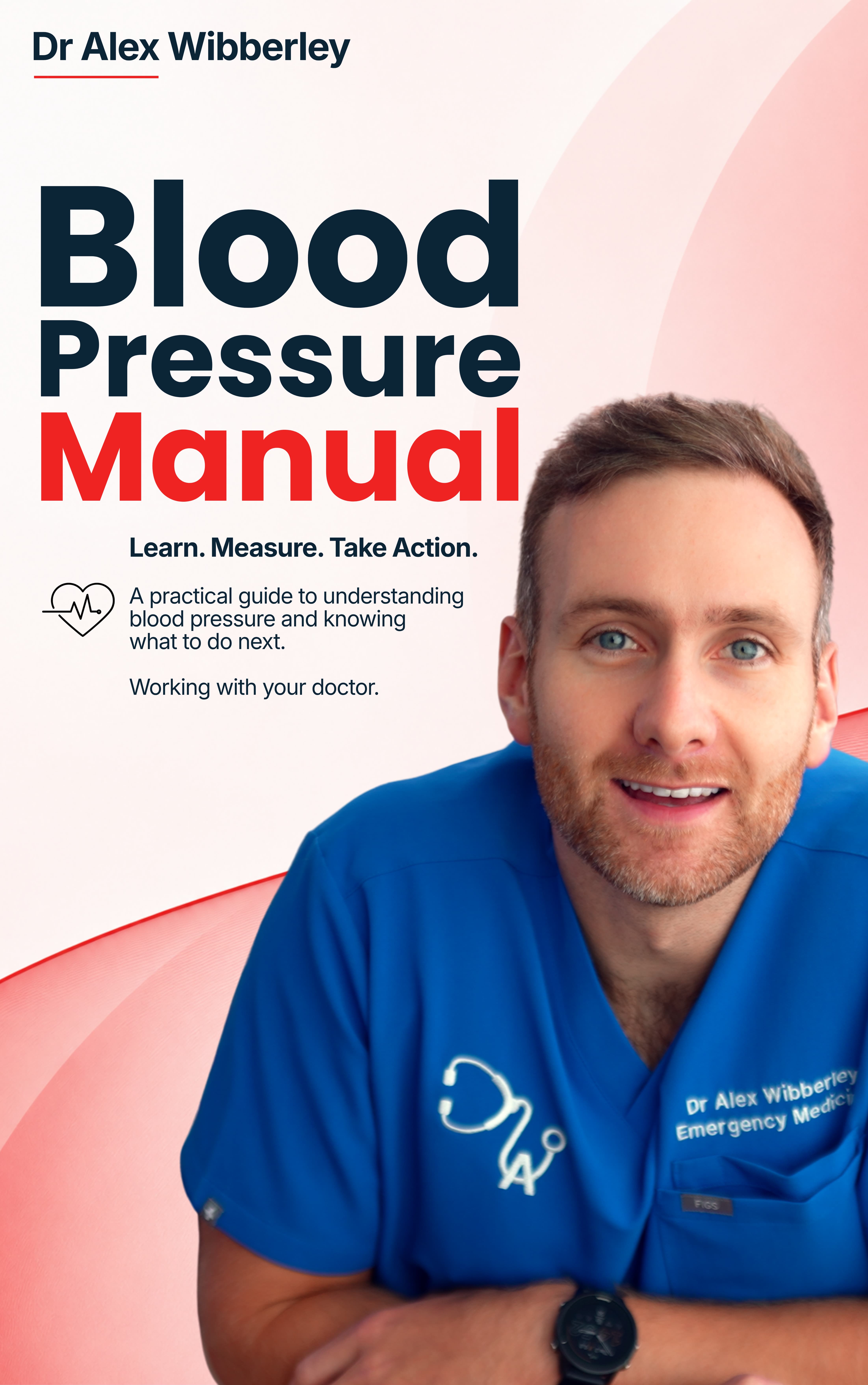
My Blood Pressure Manual
$6$10
Learn. Measure. Take Action.
High blood pressure damages your arteries for years before you feel a single thing, and by the time it announces itself in a hospital bed the damage is already done. This is a complete month of measuring it properly at home, understanding what the numbers mean, and knowing exactly what to do next. Work through it and you'll have better information about your own heart than almost anybody who walks into a GP appointment.
What you get
31 pages, including four printable log pages and a full month chart to plot yourself
Six boxes a day, so you record two readings morning and evening and work out the average that actually counts
Why almost every alarming home reading turns out to have been taken badly, and the eight step routine that fixes it
What the post mortem studies on teenagers and young soldiers found in their arteries, and why that's the reason I say measure from thirty
The five bands your home average can fall into, with the UK and US labels set side by side so you know which line you're on
Why a reading below 90 over 60 would concern most doctors, what my wife's 90 over 65 taught me, and when low is a problem rather than a blessing
The exact readings that need a same day phone call, the ones that need 999, and the ones that need nothing at all
The one change I'd make to your food first, and why changing your evening meal instead loses you the whole day
Why an hour in the gym doesn't undo ten hours in a chair, and what our ancestors can and can't tell us about it
The type of exercise that came out top of the 2023 analysis for lowering blood pressure, which you can do against your kitchen wall
Adaptations for larger arms, an irregular pulse, pregnancy, kidney disease, frailty and shift work
Clear safety notes placed where the advice sits, not buried at the back
A page of questions to take to your appointment, and a one page summary for the box your monitor lives in
A full reference list, so you can check anything I've said for yourself
Why I wrote it
In ten years in emergency departments, nobody has ever walked in telling me they could feel their blood pressure was high. Plenty have walked in with the stroke, the heart attack or the kidney failure it caused. I've taken tens of thousands of readings and looked at hundreds of thousands more, and I've watched the same conditions arrive in the same beds at roughly the same ages. Blood pressure is the one thing on that list you can measure at home for the price of a takeaway, and hardly anybody does.
One month, then the rest of your life
You start measuring on day one. There's no run in and no separate baseline. By the end you'll have around fifty six readings and twenty eight daily averages, which is a far stronger picture than one measurement taken in a rushed ten minutes. After that, one reading a week keeps it going, and I'd like you to keep going for good.
Learning and logging, side by side
Each week of measuring is followed by a section on one thing you can change. Food, then movement, then strength, then sleep, alcohol and stress. You pick one change from each and carry on measuring while it beds in, rather than trying to overhaul your life in a fortnight.
Written so anyone can follow it
I've assumed no background knowledge at all. Systolic gets explained as the pressure at the moment your heart squeezes. NICE gets explained before I ever use the word. Every technical term is unpacked in the same sentence or the one after it.
Safety comes first, on every page
Every section carries its own warnings, placed where the relevant advice appears. There's a whole page on when a reading needs action, and a firm line running through the book that nothing here should ever change what your own doctor has told you.
It's education, and I'm not your doctor
I haven't examined you, I don't know your history and I can't take one from you. What this manual does is help you collect readings a doctor can genuinely use, and give you the questions to ask when you take them in.
What's in it
Getting started
Before you begin
Why everybody should monitor their blood pressure from age thirty
Why I keep talking about this
Understanding the numbers
How to take a proper blood pressure reading
What the two numbers mean
How the UK and the US label the same reading
How low is too low
When a reading needs action
Adaptations and special situations
The month, week by week
Week one
Food, and the change I would make first
Food, and what to do with the rest of the day
Week two
Movement, and why sitting is the problem
Movement, and how to build it into a normal day
Week three
Strength, and why it counts as you age
Strength, and how to actually start
Week four
Sleep
Alcohol and stress
Making sense of your month
Your month on one chart
Your month at a glance
Five things people believe that aren't true
Taking this to your doctor
Questions I get asked
Keeping it going
The one page summary
Where to go from here
References, and a note about them