
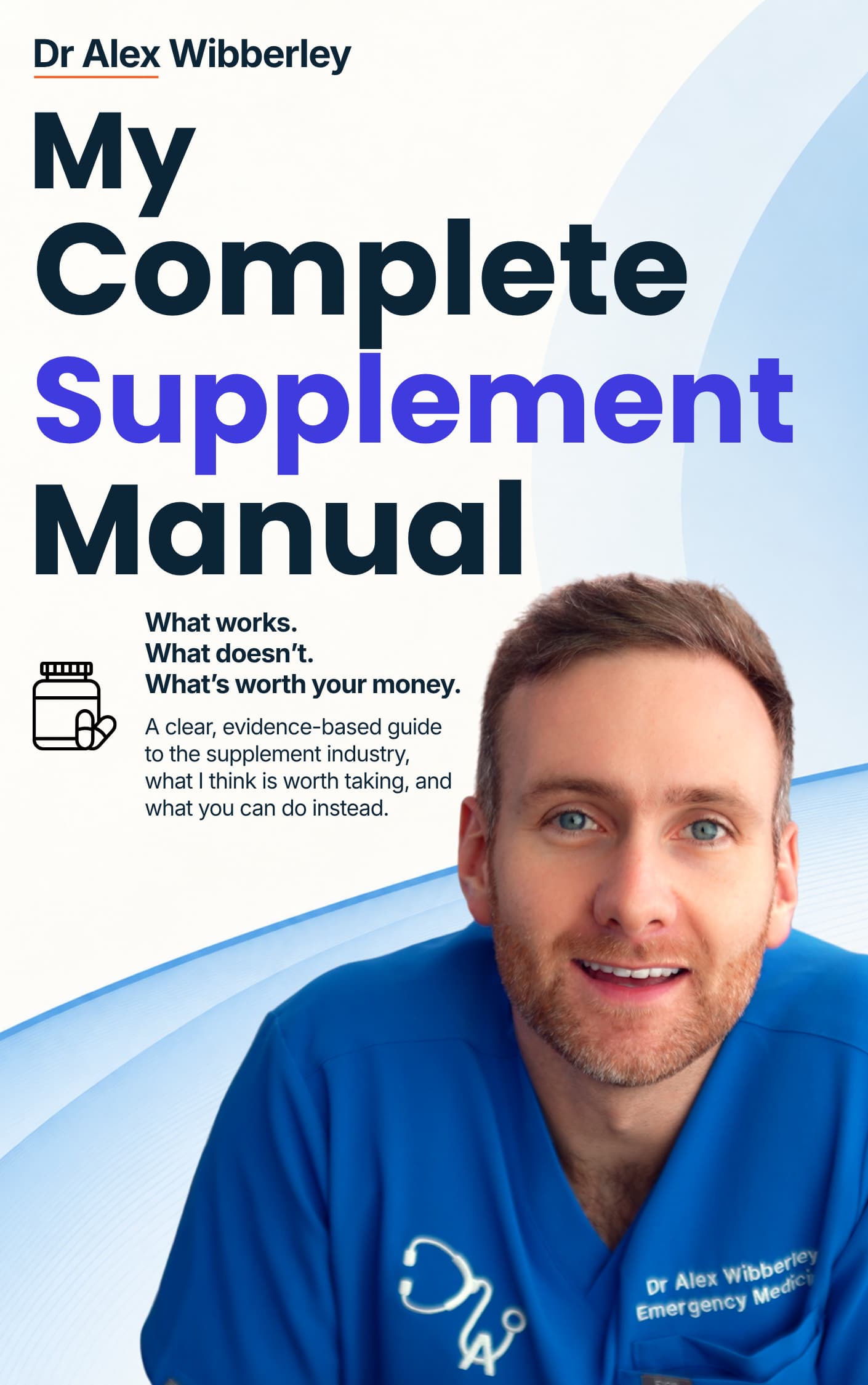
My Complete Supplement Manual
$22$35
These are the 38 supplements people ask me about most, every one of them weighed against the published evidence, with a straight answer on whether I would ever take it myself. I've spent about a decade in emergency medicine, and in all that time I've never once looked at a patient in front of me and thought that a different capsule would have changed the outcome. I've also been approached repeatedly by companies wanting to put my name on a supplement, and I've said no every time. So this is the guide I've been meaning to write for a very long time!
What you get
116 pages, tons of learning with two full pages on every one of the 38 supplements
A clear verdict on each one
What the substance actually is and what it does inside your body, explained in plain language with no assumed medical knowledge
What the research really found, including the large randomised trials by name, so you can look them up yourself
A section on every single supplement called what actually works for this, giving you the thing with stronger evidence for the exact outcome you were hoping to buy
Clear warnings wherever the advice changes for pregnancy, kidney disease, blood thinners, thyroid conditions, diabetes medication and children
What each one costs you per month and per year (approx), with the real numbers set out
A chapter on who actually does need a supplement, because there are people who genuinely do
A summary page you can print and stick inside a cupboard door
A reference list of the main trials behind the whole guide
I only recommend a very small number (for a reason)
Where a supplement has a real effect, I say so plainly, even when I still wouldn't buy it. And where there is no large trial at all, which is the case far more often than the marketing suggests, I say that too, because the absence is part of the answer..
The part I'd most like you to read
Every supplement has a section telling you what actually works for the thing that product is sold for. If it's sold for sleep, you get what the sleep evidence actually supports. If it's sold for joints, you get what the trials show for joint pain. If it's sold for your heart, your gut, your focus, your skin or your energy, you get the thing with the stronger evidence behind it.
I want you to finish this guide understanding that for almost every product on that shelf, there is something else you could be doing that is more powerful, usually cheaper, and often free.
The chapters before the supplements
The first third of the guide is the argument, and the individual entries later on make far more sense once you've read it.
Why supplement trials keep coming back empty, and the reasons it will happen again with whatever launches next year
How the marketing is built, including the six phrases that should slow you down every time you see them
Why supplements in the UK are regulated as food rather than as medicines, and what that means for whether you actually know what you're swallowing
Why you feel it working, including the surgical pain study that changed how I think about all of this
The money, with a typical stack costed out over ten years and set against what the same money buys instead
What to do when you've done everything right and your symptoms still haven't shifted, which is the most important chapter in the guide
The 38 supplements covered
Vitamin D. Creatine. Magnesium. Collagen. Protein powder. Omega 3 and fish oil. CoQ10. Multivitamins. Vitamin C. Vitamin B12. B complex. Folic acid. Iron. Calcium. Vitamin K2. Zinc. Selenium. Probiotics. Fibre supplements. Turmeric and curcumin. Ashwagandha. Melatonin. L theanine. St John's wort. Lion's mane. NMN and NR. Resveratrol. Ginkgo biloba. Beetroot and nitrate. Berberine. Electrolyte drinks. Caffeine and pre workout. BCAAs and EAAs. Glucosamine and chondroitin. Biotin and hair supplements. Apple cider vinegar. Green tea extract. Greens powders.
Every one of them gets the same treatment. What it's sold as, what it actually is, what the research shows, whether there's any situation where a doctor might reasonably suggest it, the cautions, the cost, what actually works instead, and my honest answer.
Why nobody is going to tell you most of this
There is an enormous amount of money in supplements and none at all in telling you to go for a walk. I've watched doctors and scientists I admired build huge audiences on excellent free advice about food, movement and sleep, and then put their name on a product that sits awkwardly against everything they used to say. I understand why it happens. I've just decided not to do it, and this guide is partly my explanation of that decision.
It's honest about what it can't do
This is education rather than personal medical advice, and I've been careful about that throughout. There may well be a specific situation, particular to you and your history, where taking a supplement is the right thing to do. I'm not telling you otherwise. What I'm telling you is that there's far more nuance here than any guide can capture for an individual reader, and I'd much rather you took something after a proper conversation with a qualified clinician who knows you, than because a well made advert convinced you that you needed it.
I've also been specific about the ones where taking it anyway carries real risk, and what to do about that if you're going to take it regardless.
Who this is for
If you've got a cupboard full of tubs and you've started wondering whether any of it is doing anything, this is for you. If somebody in your family is spending a few hundred pounds a year on products nobody has ever explained to them, this is for them.