
The Annual Preventative Health Check-Up
$22$35
The Preventative Health Check-up
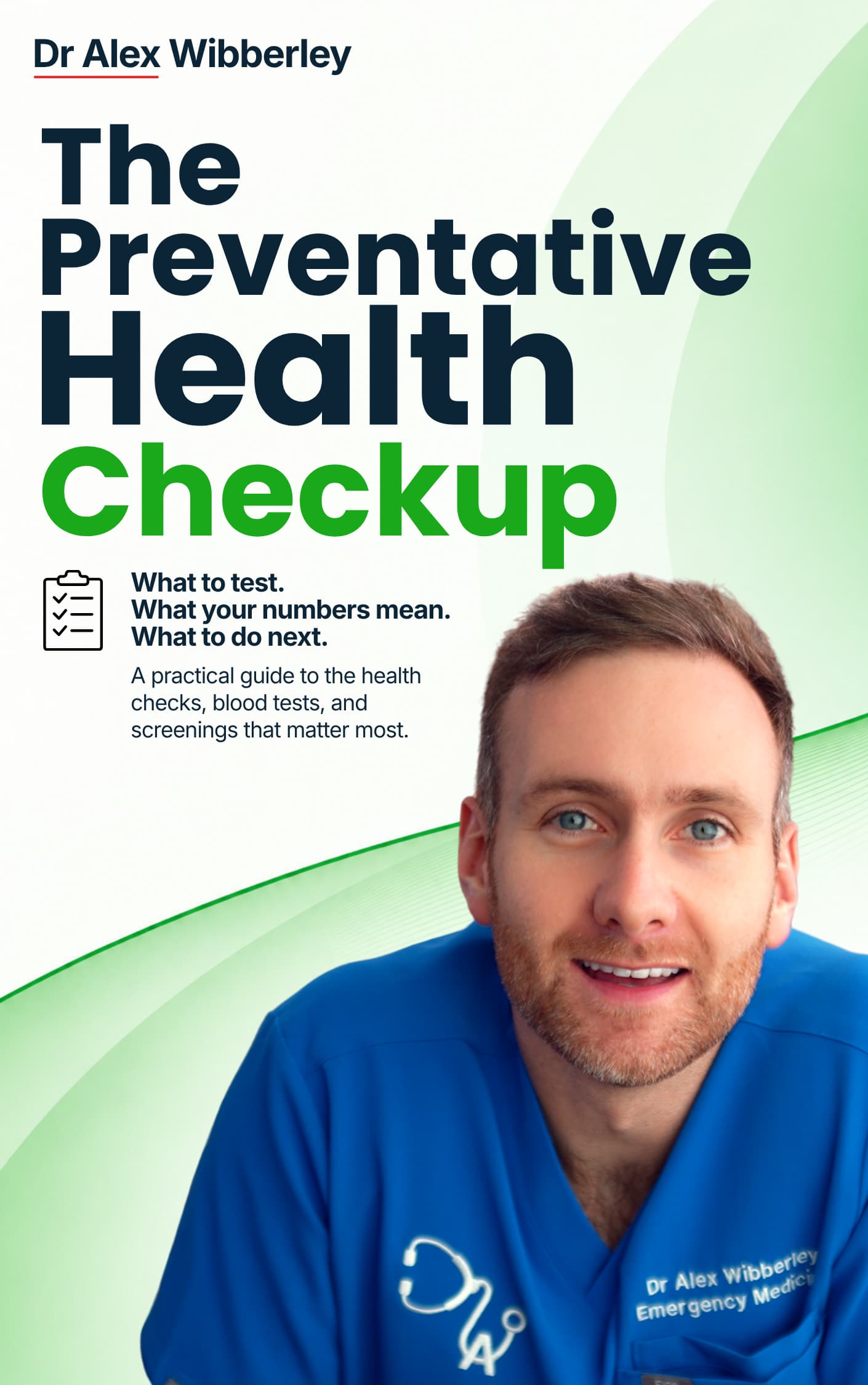
These are the tests I've come to believe are the most important things you could be measuring regularly, to catch heart disease, diabetes, kidney and liver problems and a good few other things early, and to give yourself the best chance of a long and healthy life. I've got skin in the game with this one, because there's a strong history of early heart disease in my own family. So I've put together the 22 checks I'd want you to have, what each result is actually telling you, and what you can do about it.
What you get
64 super detailed pages, with a full page on every one of the 22 checks
Every check sorted by what it costs you, from free at home to the ones worth paying extra for
Each test given a score based on how essential it is and which are simply nice to have, from my own personal and professional opinion
UK and US numbers side by side for every test, so you can read your results wherever you are
The physiology behind each number explained in plain language, with no assumed medical knowledge
What to actually do to move each number in the right direction
Clear warnings wherever the advice changes for kidney disease, pregnancy, blood thinners and other conditions
A schedule showing how often each check should be done and when to start
A tick sheet at the back for what you've had done, what your result was, and whether it's been properly explained
A full reference list so you can check anything I've said for yourself
Five of them cost you nothing at all
A tape measure costs about two pounds and tells you more about your future than a good deal of what goes on inside a hospital. Before you spend a penny on a blood test, there are five things you can measure yourself at home this afternoon, with no appointment, no referral and nobody's permission. One of them is a two minute test using a dining chair that tells you a great deal about whether you'll still be independent at eighty. A lot of people have never been told these exist at all.
Then one blood test that does most of the work
Nine of the 22 come from a single blood test. Often free through your own doctor if you ask in the right way, which I show you how to do, and well under two hundred pounds privately. That one test covers your risk of a heart attack, your risk of diabetes, the state of your kidneys and your liver, and whether you're running short of the things that can very much affect how you feel day to day. If you did nothing else all year, this alone would tell you an enormous amount about yourself.
And a handful almost nobody ever gets offered
There's a test that predicts your heart risk better than the cholesterol number you're used to seeing, and it costs about the same as a takeaway. There's another you only need once in your entire life, because you were born with the result, which one adult in five has raised and almost nobody in this country has been tested for. If yours is high, everything else on your list becomes far more important. Both of these are relevant to me personally, and both are tests I've recommended to my own family.
There's also one heavily marketed test I tell you not to buy, and I explain exactly why.
What's included
What each test actually is, explained really simply
Where your number sits, in UK and US units, colour coded so you can see it at a glance
What pushes it up or down, meaning the real physiology, so you understand why it does what it does
What it means for your health, including how strong the evidence behind it really is
What you can do about it, which is the part that makes reading the rest worthwhile
Why nobody is going to offer you most of this
The health service I work in is quite brilliant at rescuing people and pretty poor at catching things early. We're extraordinary in a crisis. Give us somebody halfway through a heart attack and we'll do remarkable things for them. Ask us to go and find the twenty years of drift that led up to it and the system was never really built for that, because it's funded to react rather than to prevent. Which means you have to go and ask for it, and sometimes you have to pay for it.
It's honest about what it can't do
A number on a screen is one part of a picture that also contains your symptoms, your family history, your medicines, your weight and your age. So throughout the manual I frequently encourage you to book a doctor's appointment, either with your family doctor or privately, to discuss your results with the context and nuance that applies to you and your medical history. I've also been specific about the results you must not act on alone. Low iron is the clearest example. Taking a tablet fixes the number and hides the question.
Who this is for
If you're somebody who wants to be really, really on the ball with their health, this will serve you well. It doesn't cover absolutely everything, and if you already have a specific medical condition there'll be things you should be monitoring that aren't in here. This is education rather than personal medical advice.
But if you've ever wondered which tests are worth having, what your results were actually telling you, or why nobody ever explained any of it, this is the manual I wish somebody had handed my patients twenty years before I met them.