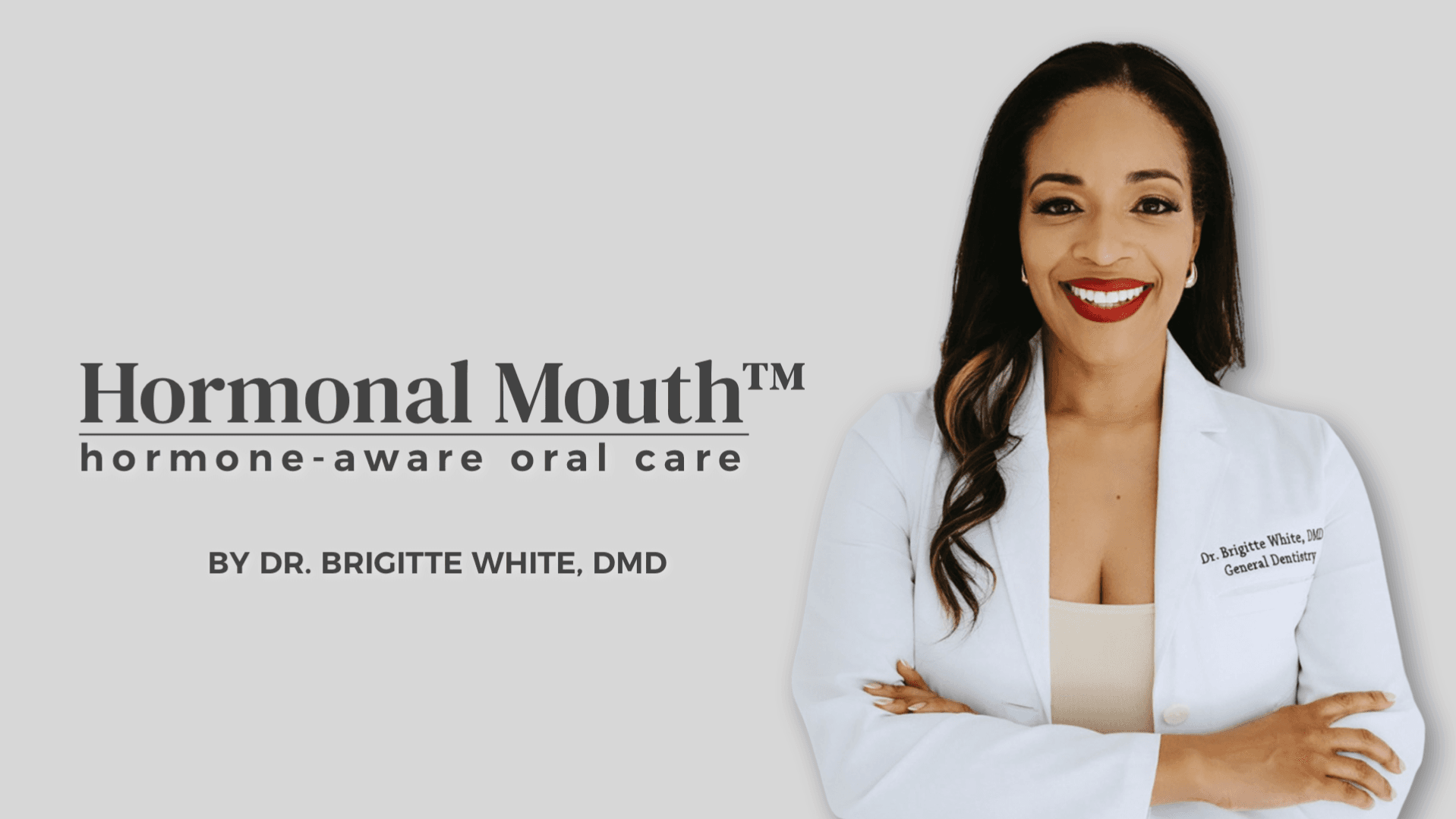
Hormonal Mouth™ Starter Guide
$11
If your teeth suddenly feel sensitive, your jaw feels tense, or your mouth feels dry “for no reason,” you are not imagining it.
Women’s oral symptoms often shift with hormones, stress physiology, sleep, medications, and life phases — but traditional dental advice rarely explains why.
Instead, many women are given behavior-only messaging: brush more, floss harder, try again.
This guide introduces the Hormonal Mouth™ framework, a prevention-focused, non-diagnostic model that connects everyday oral symptoms to biological context.
Inside, you’ll learn how common experiences may be linked to shifts in:
Saliva and hydration
Inflammation thresholds
Tissue sensitivity
Nervous system load
Hormonal life stages
This guide gently explains the connection between:
Sensitivity flares
Clenching & jaw tension
Dry mouth & hydration shifts
Burning mouth sensations (including BMS-like patterns)
Gum sensitivity & inflammation changes
Altered taste and oral reactivity
So you can understand what your body may be communicating — instead of blaming your brushing, your effort, or your routine.
Written by a dentist and founder of Hormonal Mouth™, this resource is designed for women navigating:
Chronic stress
Cycle-related oral changes
Pregnancy & postpartum shifts
Perimenopause & menopause
Medication-related dryness or sensitivity
Calm. Clinical. Contextual.
Because the mouth is not separate from the body — and women’s biology is not static.
What’s Included
The Hormonal Mouth™ foundational framework
Symptom pattern breakdown (dry mouth, sensitivity, clenching, burning, inflammation)
Biological explanations in clear, non-alarmist language
Gentle daily support strategies (home + lifestyle aware)
Trigger tracking guidance (stress, sleep, cycle, hydration)
Scope-safe education on when to seek clinical evaluation
Format: Digital PDF
Delivery: Instant download
Length: Flagship educational guide
Who This Is For
Women experiencing:
Unexplained tooth sensitivity
Jaw tension or clenching
Dry or burning mouth sensations
Gum tenderness or oral discomfort
Oral changes during hormonal transitions
And clinicians who want a more biologically contextual way to discuss women’s oral symptoms.
Clinical Positioning
Educational • Non-diagnostic • Hormone-aware • Prevention-focused
Founded by Dr. Brigitte White, DMD