Why a Blank Page Is Never Empty - The FREE to GRAP
What This Is
Most art installations live inside museums ir galleries.
This one lives on your desk, your wall, or wherever you spend your best thinking time.
The free PDF introduces The Blank Page Project—a simple ritual that turns a normal sheet of paper into a study of:
how we assign value
how we perceive meaning
how we pay attention
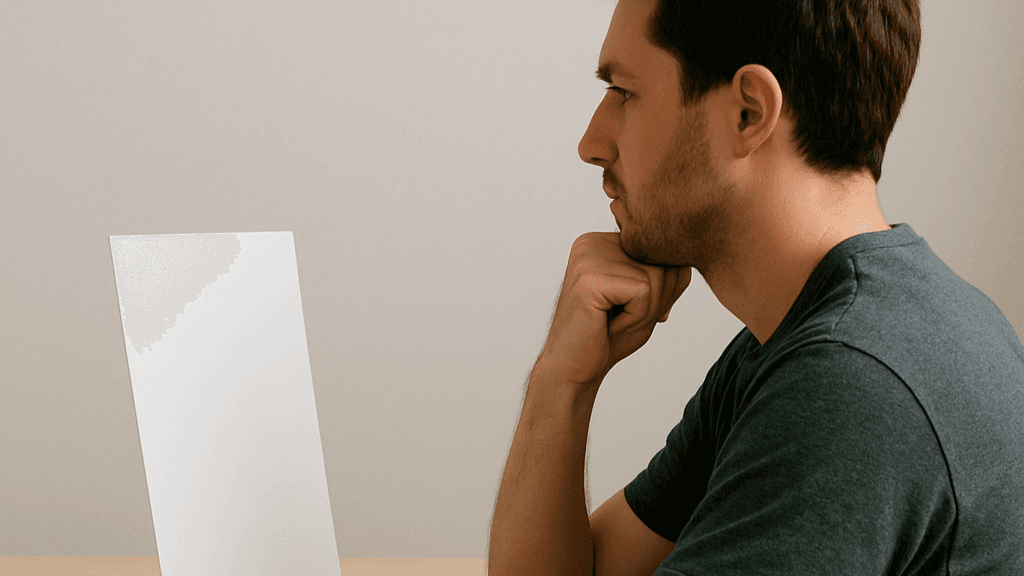
what happens when you deliberately stare at “nothing”
It’s a quiet experiment that reveals the invisible economy behind design and creative work.
Why It Exists
Designers price the invisible:
judgment, taste, restraint, timing, attention.
This project makes that invisible economy visible.
By printing a single blank page—one deliberate action—you test what happens when nothing becomes framed, chosen, and intentional.
The free PDF gives you:
the concept
the context
the language
and the ritual
so the experience becomes something you can actually use in your creative life.
What’s Inside the Free PDF
Use this section in Stan with icons or bullets:
The origin story of the project
A breakdown of value, perception, and attention
The invisible economy behind design decisions
A complete printing ritual
The 10-second sprint
The 5–10 minute session
The 2-hour marathon
Reflections on boredom and why “staring” matters
How to frame the page as a tiny at-home installation

The Ritual
A blank page changes when you choose it.
You’ll learn how to:
Remove the stack of paper.
Insert one sheet.
Press print.
Hang it.
Stare—longer than feels comfortable.
Notice the shift.
This is not meditation.
It’s not productivity advice.
It’s a designer’s experiment in perception and meaning.
Who It’s For
This free PDF is for you if:
You design for print or digital
You work with visual judgment, typography, layout, or composition
You’re curious about value and pricing
You like conceptual art that doesn’t require a gallery
You enjoy small experiments that change how you see your work
You teach, mentor, or critique creative work
You want a new conversation starter with clients or colleagues
What You’ll Take Away
You’ll walk away with:
a deeper understanding of the hidden forces behind “simple” decisions
a new frame for talking about taste, restraint, and attention
a small ritual that sharpens your eye
a story you can use with clients or students
a reminder that value is rarely about the object—it’s about how it’s framed