
Get The Well Panel Guide!
$9.99
The Well Panel
A functional bloodwork guide to help you understand the clues in labs you may already have, and know what might be worth asking for next.
Maybe you’ve had bloodwork done because you’re tired, your hormones feel off, your weight has changed, you’re more anxious than usual, or you simply don’t feel like yourself.
You might also have been told everything looks “normal.”
Before brushing off this information OR jumping straight to expensive functional testing, I think your bloodwork is a really useful place to start.
Your basic bloodwork might contain way more information than you realize, it's just not being explained...
Your labs are more than HIGH, LOW or “normal.”
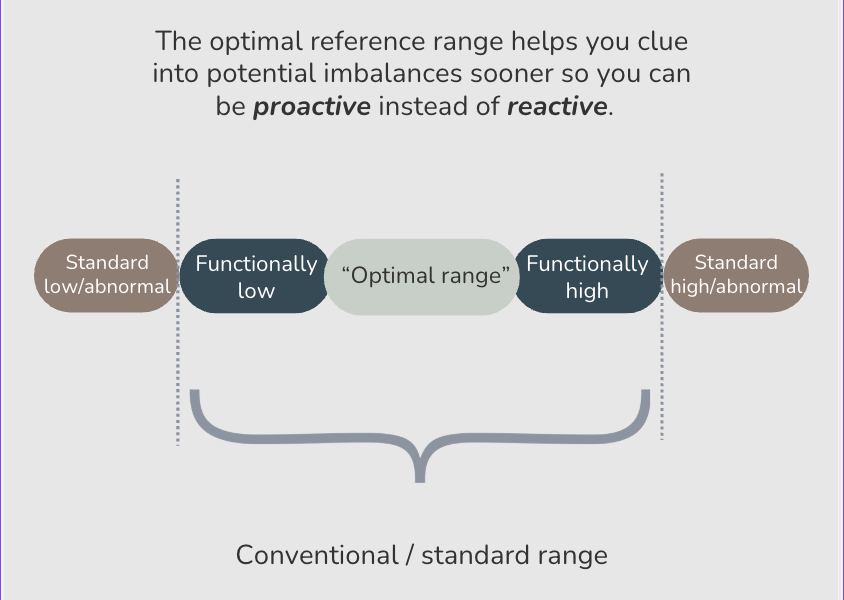
Most standard bloodwork is interpreted by looking at each marker individually and asking whether it falls within the lab’s reference range, but that doesn’t always give you the whole picture.
Some markers can start changing before they’re technically flagged. Others become much more useful when you look at them alongside one another. Some of the markers I find most helpful simply aren't included in routine bloodwork.
That’s why I created The Well Panel.
It’s the guide I wanted women to have when they’re trying to make sense of their own labs and figure out what questions to ask next.
Inside, I’ll show you how I look for clues related to:
Blood sugar & insulin resistance
Thyroid function beyond TSH
Cortisol & your stress response
Iron & nutrient status
Inflammation
Methylation & hormone clearance
Liver & detoxification capacity
You’ll walk away with:
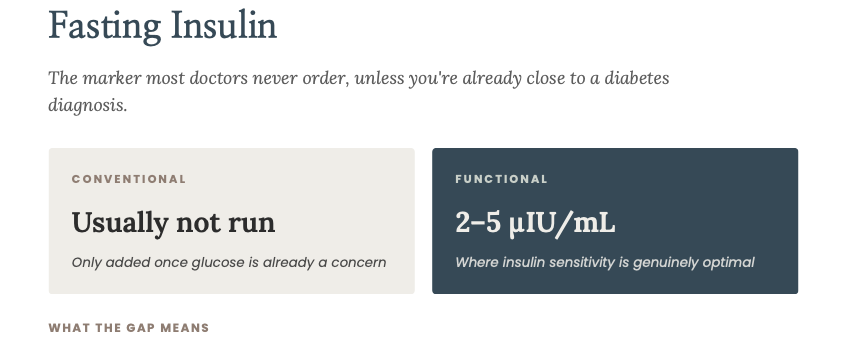
7 markers worth knowing about
These are markers I commonly want to see that often aren't included in standard bloodwork — with functional ranges, symptoms, how to have them drawn and why I find them useful.
11 clues that may already be sitting in your labs
I’ll show you how I look differently at familiar markers from a CBC, CMP, lipid panel, thyroid and blood sugar testing.
Functional optimal ranges
You can see how your results compare to the ranges used in Functional Medicine practice, not just whether they were flagged high or low.
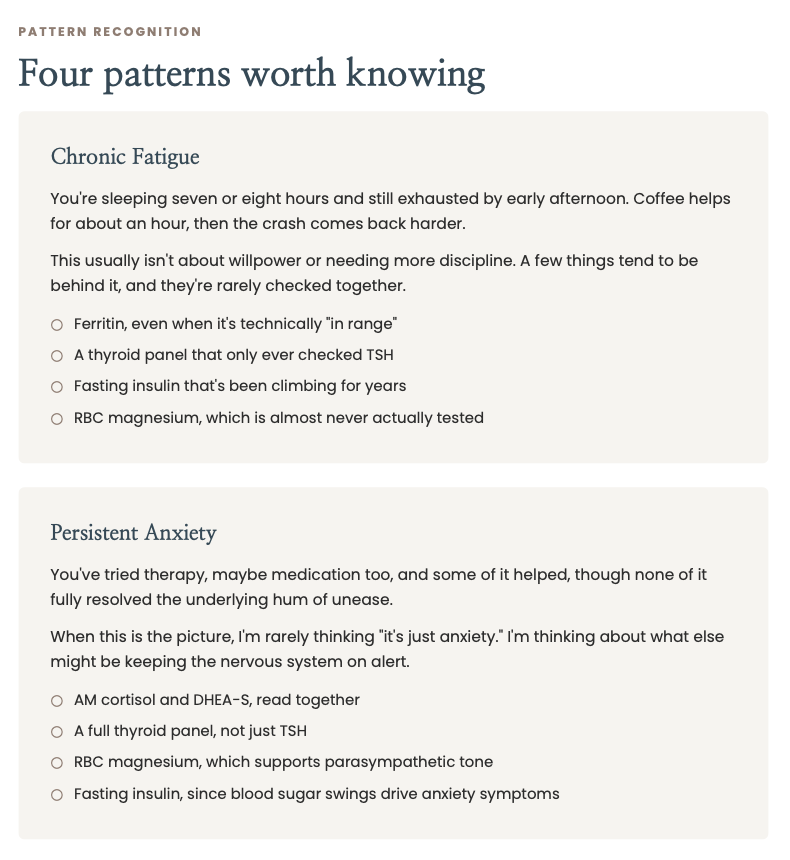
Patterns to help you connect the dots
Including examples of what I look at when someone is dealing with fatigue, anxiety, brain fog or hormonal symptoms.
A real client example
So you can see what it actually looks like when individually “normal” markers start telling a story when they’re read together.
Exactly what to ask for next
Including a simple script you can bring to your healthcare provider if you’re missing some of these markers.
You don’t need to become your own practitioner.
My goal with this guide isn't to teach you to diagnose yourself.
It’s to help you understand your own health information well enough to ask better questions and consider the most appropriate next step for YOU.
What do I already know?
What might I be missing?
Are there patterns here worth paying attention to?
And where does it actually make sense to go next?
Sometimes that next step is more advanced functional testing.
But sometimes your first clue has been sitting in your patient portal all along, and it arms you with information about how to prioritize your health starting today.
Start with the labs you already have.
Get instant access to The Well Panel:
29-page digital guide • Instant access • Designed to use alongside current or previous bloodwork or your next panel
The Well Panel is an educational resource and is not intended to diagnose, treat, cure or prevent disease or replace individualized medical care.