Language Matters Digital Course
$111$444
An Intentional Language Model for Raising Identity-Strong, Resilient Kids
The way we talk to our children becomes their inner voice.
And that inner voice will guide them long after childhood.
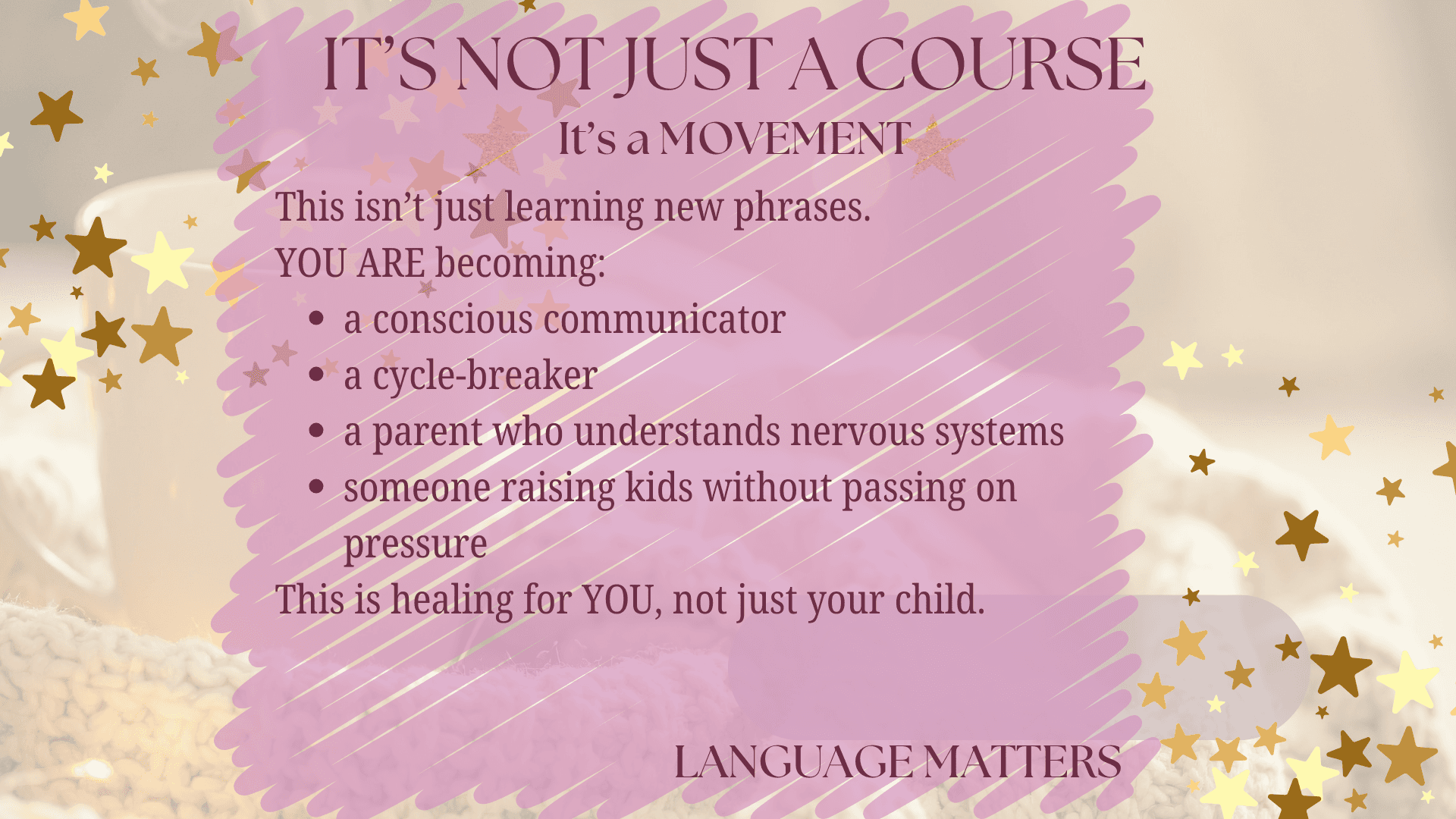
Language Matters is more than a parenting course.
It’s a research-backed framework that helps caregivers understand how everyday words shape identity, resilience, motivation, and emotional regulation.
Because children don’t just learn skills from us.
They learn who they are.
💛 Why This Matters
Most parenting advice focuses on behavior.
Language Matters focuses on identity.
Children form core beliefs about themselves before age 7–8.
And those beliefs are shaped through:
• What we notice
• What we name
• What we repeat
• How we respond to mistakes
• How we handle emotions
Small language shifts can protect your child’s confidence for a lifetime.
🧠 What You’ll Learn Inside
This course walks you through the science and the real-life application of intentional language — step by step.
You’ll learn:
✨ How identity forms in early childhood
And why repeated labels — even positive ones — can shape adult patterns like perfectionism, people-pleasing, emotional shutdown, or fear of failure.
✨ Identity praise vs. effort praise
How to build motivation and achievement without tying your child’s worth to performance.
✨ How to keep identity flexible
Shifting from “who they are” to “what they’re building.”
✨ Language for emotional resilience
Using words that mirror, model, and move emotions so children feel safe, seen, and capable.
✨ Nervous system regulation for caregivers
Why your calm matters more than your script — and how to regulate yourself before you speak.
✨ The “Flex Your Muscle” Framework
A practical, child-friendly way to teach growth, effort, and character as skills — not fixed traits.
🌟 This Course Is For You If…
You want to:
• Raise a child who is motivated and confident — without pressure
• Break cycles of shame, labeling, or performance-based love
• Support big feelings without shutting them down
• Protect your child’s inner voice while still holding strong standards
• Feel grounded and intentional — even in hard moments
Whether you’re a parent, educator, or caregiver, this model gives you language you can use immediately.
🔬 Rooted in Research
Language Matters integrates insights from:
• Growth mindset research (Carol Dweck)
• Emotion coaching research (Gottman, Denham)
• Neuroscience of stress and regulation
• Developmental psychology on identity formation
But this isn’t academic.
It’s practical.
Relatable.
And designed for real families.
🌱 The Outcome
Children raised with intentional language learn:
• Mistakes are safe
• Effort matters
• Feelings are manageable
• Winning doesn’t define worth
• Identity is flexible
• Growth is possible
And caregivers learn:
• To pause before reacting
• To regulate before responding
• To protect identity while shaping behavior
Because when we shift from labeling who children ARE
to naming what they’re building,
we give them freedom — not pressure — to grow.
💛 Language Matters isn’t about being perfect.
It’s about being intentional.
Your everyday words are co-creating your child’s identity, confidence, and resilience.
So let’s make them count.