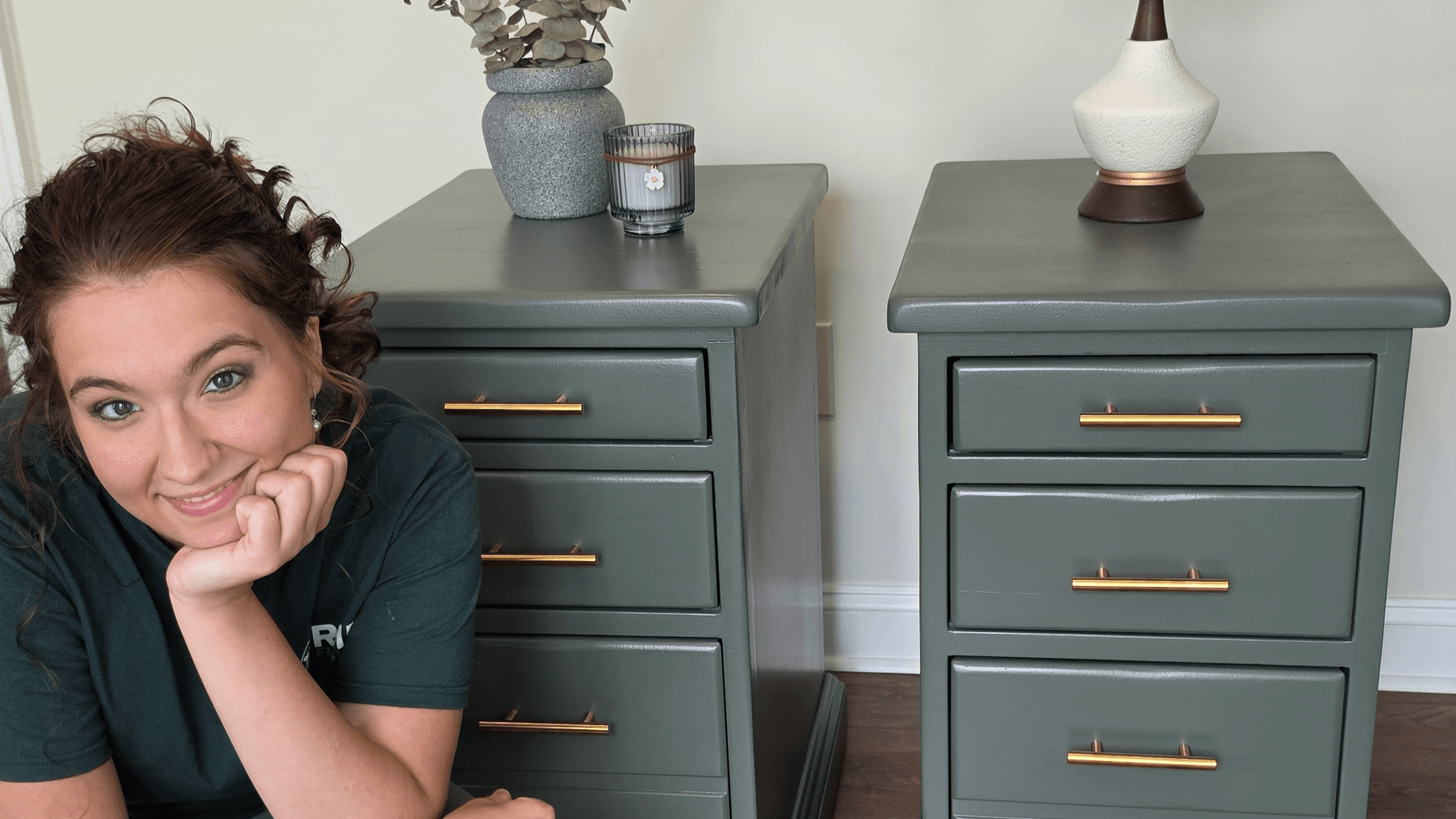
Full Course: From Drab to Fab
$47
Learn to refinish furniture from start to finish - even if you've never picked up a power tool.
A beginner furniture refinishing course that walks you through exactly what to do, what to use, and what to learn next - from choosing your first piece to creating a beautiful finish and selling your work, FAST! 🤑💰No more guessing, wasted products, or wondering what comes next.
70+ Lessons • Step-by-Step Videos • 20+ Printable Workshop Guides • Exact Product Recommendations

Stop Guessing Your Way Through Furniture Refinishing
You find a piece you love and can already picture what it could look like. Then you actually get it home... and suddenly you have a hundred questions.
Is this solid wood or veneer?
Do I strip it or sand it?
What grit do I use?
How do I fix that crack?
Do I need primer?
Should I stain it, paint it, or do both?
What products do I actually need?
And if I want to flip it for profit, how do I get someone to buy it?
You shouldn't have to risk ruining a beautiful piece - or spend hundreds of dollars buying products and tools you don't need, just to learn through trial and error.
From Drab to Fab puts the entire beginner process in one place and in the order you actually need it.
Your Complete Roadmap
Follow one module each week and refinish alongside the course, or move completely at your own pace. There are no deadlines.
Module #1: Everything You Need to Get Started
You establish the process, beginner tools, workspace, safety, low-odor products, and supply list.
Module #2: Know Your Furniture & Fix Damage
This is much more substantial than “learn about wood.” You cover Solid Wood vs. Veneer, Solid Oak, Solid Pine, Solid Cherry, the differences between working with solid wood and veneer, holes, missing/broken/chewed areas, hairline cracks/uneven surfaces, and problem drawers.
Module #3: Stripping Furniture
Choosing the Right Stripper → solid wood vs. veneer → Proper Application → safely scraping → cracks/curves/grooves → knowing when you're actually done stripping → final tips.
Module #4: The Ultimate Sanding Masterclass
Sandpaper grits, which sander to use, common mistakes, veneer, solid wood, repainting, when to STOP sanding, sanding primer, and sanding between coats of paint.
Module #5: Bringing the Wood Back to Life
Paint Washing 101, glaze on raw wood, Paint washing + Glaze for a Pottery Barn-inspired finish, tinted wax for orange wood, oil-based stain, protecting natural finishes, and refreshing an existing finish.
Module #6: Painting Furniture
Prep, priming, paint types, sheens, choosing a sprayer, thinning paint, your step-by-step tutorial, troubleshooting spraying problems, and cleaning the sprayer.
Module #7: Finishing Details & Mixed Finishes
Choosing hardware, updating existing hardware, new hardware, coordinating paint/hardware colors, mixing furniture sheens, refreshing drawers, and design.
Module #8: Photographing, Selling, & Building Experience
Colors with buyer appeal, learning your local market, styling, listing photos, writing the listing, AI photo styling, sourcing pieces without Facebook Marketplace, selling without Facebook Marketplace, and getting started.
🤑Learn at your own pace & start earning in just a few weeks.
Frequently Asked Questions
I have absolutely no experience. Is this course really for me?
Yes. This course was designed specifically for beginners.
You do not need woodworking experience, a professional workshop, or a background in furniture restoration. Each module explains the process step by step and helps you understand not only what to do, but why you are doing it.
You’ll start with the basics and build your confidence one skill at a time.
What if I don’t want to use power tools?
You can still learn and complete many furniture projects without relying heavily on power tools.
Inside the course, I’ll explain which tasks can be completed by hand, which affordable tools make projects much faster, and how to choose an approach that feels comfortable for you.
You do not need a garage full of equipment to begin. The entire beginner setup is centered around only three main power tools, and you can add them gradually as your confidence grows.
Can I refinish furniture inside?
Yes, with the right setup, products, and safety precautions.
I’ll show you how to create an efficient indoor workspace, introduce you to low-odor products, and beginner-friendly techniques that make indoor projects much more manageable.
You’ll also learn which steps and products require extra ventilation or are better completed outdoors.
By the End of the Course, You’ll Be Able To:
Confidently evaluate a piece, choose the right tools and process, create a smooth, durable finish, and design furniture that feels updated and intentional. You’ll also know how to price and market your work- and repeat the same clear system on project after project. You do not need to know everything before you begin; you just need a first step and a process you can trust.

Lee
This is a very concise DIY course, well worth the money! It fills in all the missing pieces when you undertake a project from start to finish. Hope my husband is ready for me to start redoing everything in our home!! 😄