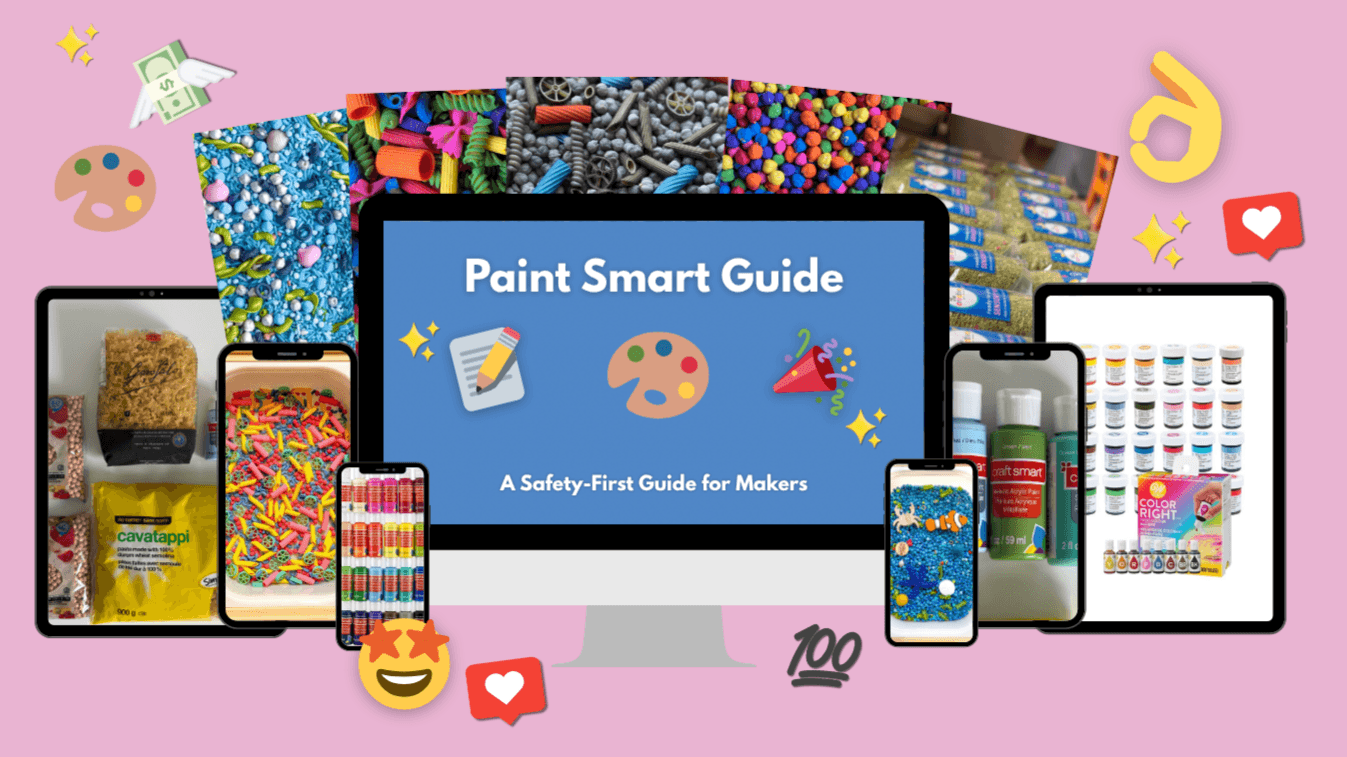
Paint Smart: A Safety Guide for Makers
$7
Confidently choose safe, non-toxic paints for your sensory bins, dyed materials, and handmade kits.
💡 What You’ll Learn:
The difference between AP-certified and CL-labeled paints and why it matters
How to vet paints for non-toxic, kid-safe use
What “non-toxic” really means (hint: it’s not taste-safe!)
How to label your products to protect your customers and your business
Common myths about paint safety and what to say instead
Where to find AP-certified paints at Michaels and online
🧠 Who This Is For:
Makers, moms, and sensory shop owners who want to:
Create safe, beautiful sensory mixes
Build trust with parents and customers
Avoid liability and platform restrictions
Feel confident sourcing and labeling materials
📦 What’s Inside:
Paint safety comparison chart (AP vs. CL)
Labeling phrases you can copy and paste
Trusted paint brand sourcing list (Michaels + online)
Taste-safe alternatives for mouthing-age kids
Legal tips for CPSIA and EN71 compliance
Disclaimer: This guide is for educational purposes only. I’m not a licensed safety professional, and this is not legal advice. Always verify certifications and consult with a compliance expert if selling to children under 12.
💬 What Makers Are Saying:
“This guide helped me finally understand what those paint labels mean and how to explain it to customers.” - Morgan
“I feel so much more confident sourcing materials now. No more guessing!” - Sara
✅ Ready to feel confident about paint safety?
Grab the guide now and protect your peace, your customers, and your brand.

Amanda
Finally!!! clarity on paint safety! I used to feel totally lost when choosing paints for my sensory bins. This guide broke everything down so clearly..AP vs. CL, what ‘non-toxic’ really means, and how to label my products with confidence. I’ve already updated my listings and feel so much more protected.
Tasha
totally worth it. I thought I knew what ‘safe paint’ meant… turns out I didn’t. Juliana’s guide helped me avoid risky materials and gave me real phrases I can use in my product descriptions. It’s practical, easy to follow, and packed with info I wish I had years ago.
Bri
I feel so much more legit now. This guide helped me understand CPSIA, labeling laws, and how to source paints that won’t get me flagged on marketplaces. I’ve started keeping batch notes and even added a disclaimer to my shop. soooo helpful!
Jess
A must-have for sensory makers. I’ve been making sensory kits for a while, but this guide helped me tighten up my sourcing and labeling. I especially loved the myth-busting section, it gave me the language to explain safety to my customers without sounding scary.