TL;DR
After rigorously analyzing what has worked on LinkedIn in the last 6 months, the biggest predictors of posts that spark conversations are: longer length (1,000–1,800 characters) with heavy formatting (line breaks), a hook under 60 characters in the first line, ending with a direct question, and keeping links out of the post body (put them in comments). Generic LinkedIn advice is based on vibes, not data. This playbook is based on what actually drove engagement over 180 days of real posts.
Forget generic advice. We looked at six months of real data to find out what separates posts that spark conversations from those that disappear into the feed.
Everyone has an opinion about what works on LinkedIn. Post in the morning. Keep it short. Use emojis. Add a selfie.
The problem? Most of that advice is based on vibes, not data.
So we decided to do something about it.
Our data team conducted a rigorous analysis of what has worked on LinkedIn in the past six months, comparing Creators of every size on equal footing. This is the kind of analysis that powers the weekly insights we send to Stanley LinkedIn users—and today we’re sharing the highlights with everyone.
What we found challenges a lot of the conventional wisdom and gives you a clear, data-backed playbook for writing posts that actually get seen, shared, and discussed.
Let’s dig in.
1. Longer Posts Win—But Only If You Format Them Right
Here’s the first surprise: short posts don’t actually perform better. In fact, they perform significantly worse.
Posts with 1,200+ characters consistently get 3x the engagement of short ones under 200 characters. The sweet spot sits right around 1,200–1,800 characters, where median engagement peaks at 0.464%.
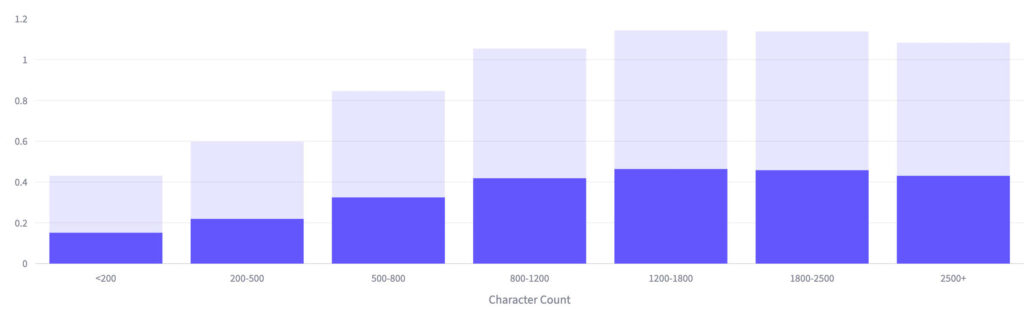
But here’s the catch—and it’s a big one. Length alone isn’t enough. A 1,000-character wall of text actually performs worse than a shorter, well-formatted post.
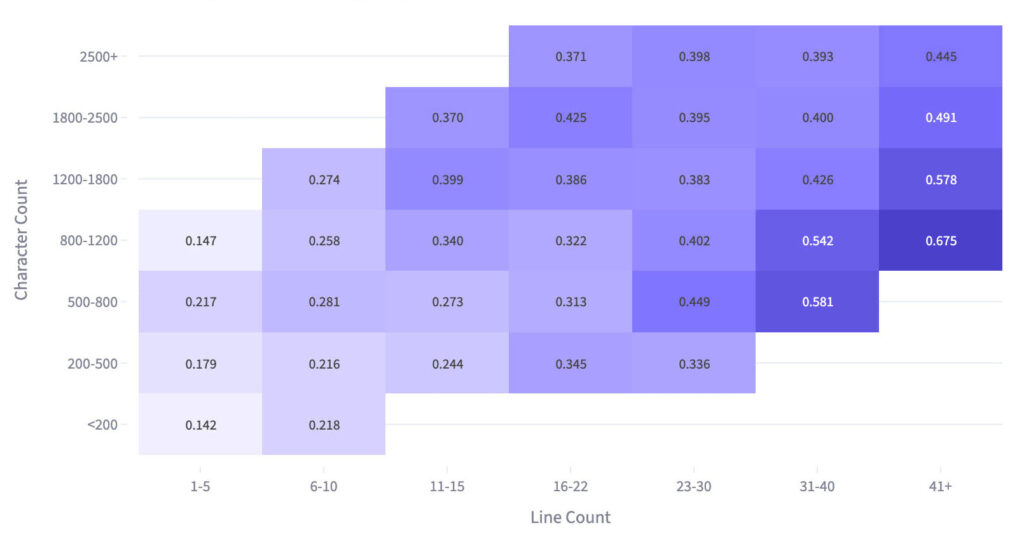
The real magic happens when you combine length with scannability. When we crossed post length against line breaks, the data told a dramatic story.
For example, take two posts in the 800–1,200 character range. The one with 41+ line breaks gets a 0.675% engagement rate. The one with just 1–5 line breaks? A measly 0.147%.
Same length. Same topic potential. A 4.6x difference from formatting alone.
What to do: Write posts in the 1,000–1,800 character range. Break them up aggressively with short lines, white space, and single-sentence paragraphs. Think “mobile-first”—most of your audience is scrolling on their phone. If your post looks like a wall of text in the composer, add more breaks.

2. Your First Line Is Everything (Keep It Under 60 Characters)
LinkedIn truncates your post after the first line or two, hiding the rest behind a “see more” link. That means your hook has one job: stop the scroll and earn the click.
The data here is strikingly linear (and unforgiving). Hooks under 60 characters achieve a 0.422% engagement rate, while hooks over 250 characters manage just 0.191%. That’s a 2.2x difference, and there’s no recovery point anywhere in between.
At 60–120 characters, you’re already down to 0.335%. By 120–180, it’s 0.291%. The decline is perfectly steady—every additional character in your opening line is literally costing you engagement.
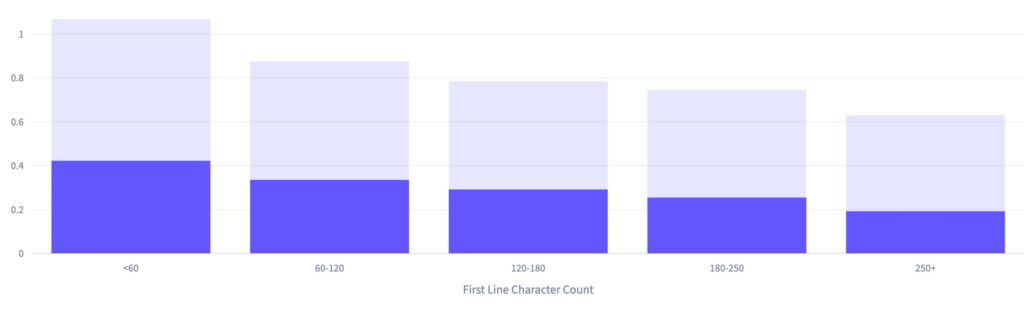
What’s interesting is that short hooks are already the most common approach in our dataset—nearly half of all posts use them. The fact that they still outperform despite being the default tells you this isn’t just a novelty effect.
Short, punchy openers are genuinely more effective at earning attention. The algorithm rewards them, and so do human thumbs.
What to do: Write your hook last. Draft your post first, then craft a punchy first line under 60 characters that creates curiosity or tension. Think of it like an email subject line—it should make someone need to click “see more.” Avoid starting with full sentences or context-setting. Lead with the payoff.
3. Questions Are Your Secret Weapon for Comments
If engagement is the goal, questions are probably the single most underused tool in most Creators’ arsenals. The relationship between question count and engagement is one of the clearest signals in the entire dataset.
Posts with zero questions get 0.30 comments per 1,000 followers.
Posts with four or more questions? 0.92.
That’s a near-tripling of discussion from simply asking your audience to think and respond.
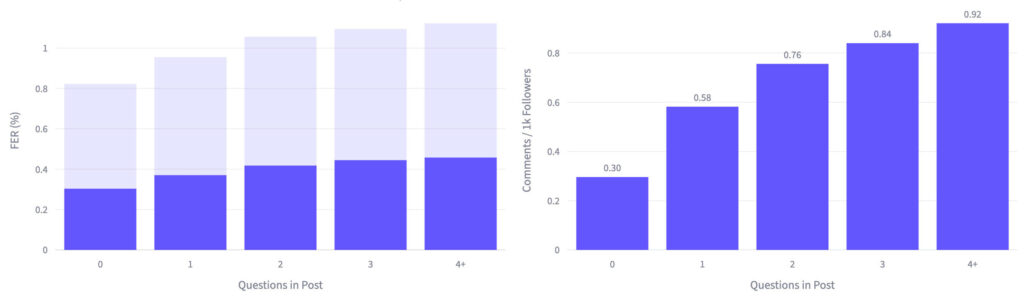
You don’t need to overhaul your entire post. Just ending with a question adds 26% to overall engagement and a massive 85% to comment density. And adding a question mark at the end nearly doubles the discussion your post generates.
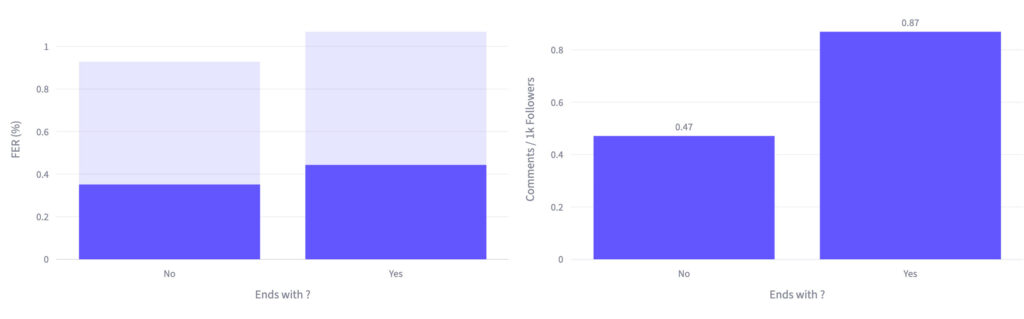
What to do: At minimum, end every post with a genuine question that invites your audience to share their perspective. For maximum discussion, weave 2–3 questions throughout the body of your post as well. Make them open-ended and opinion-driven. For instance, “What’s been your experience?” works better than “Do you agree?”

4. Links Kill Your Reach (Put Them in Comments)
This one won’t surprise experienced LinkedIn Creators, but the magnitude of the penalty might.
A single link in your post drops engagement by 38% and cuts comment density by 59%. The damage is done with the first link—going from zero to one link is the steepest drop. Additional links barely make it worse because the penalty is already so severe.
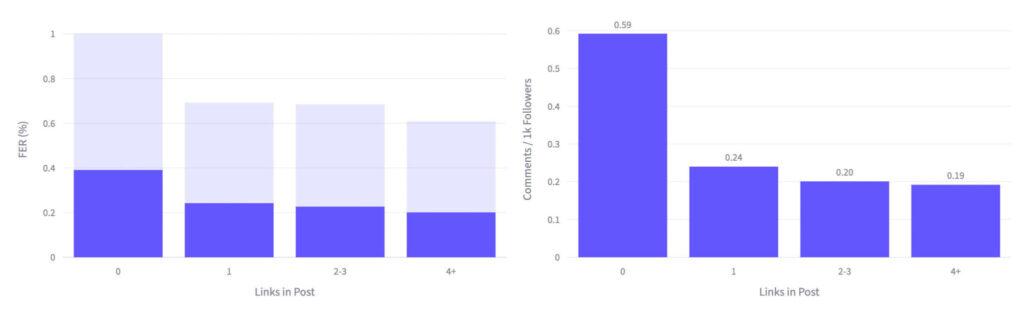
Look at the comment density chart on the right. It’s a cliff: 0.59 comments per 1K followers with no links, then it plummets to 0.24 with just one.
LinkedIn deprioritizes posts that send users off-platform. And the penalty hits top performers just as hard—the 75th percentile drops from ~0.98% to ~0.70% with a single link.
What to do: Never put links in the body of your post. Write a compelling, self-contained post and add any relevant links as the first comment. If you’re sharing an article or resource, summarize the key insight in the post itself and tell readers to check the comments for the link.
5. When You Post Matters (But Less Than You’d Think)
Timing is the least dramatic variable in this study, but it’s still worth optimizing once you’ve nailed the content fundamentals.

Monday through Thursday are your strongest days, with engagement rates clustering between 0.355%–0.382%. Friday already starts to slip, and weekends drop ~15–20% overall.
Interestingly, Sunday slightly outperforms Saturday, making it the better option if you need to post on a weekend.
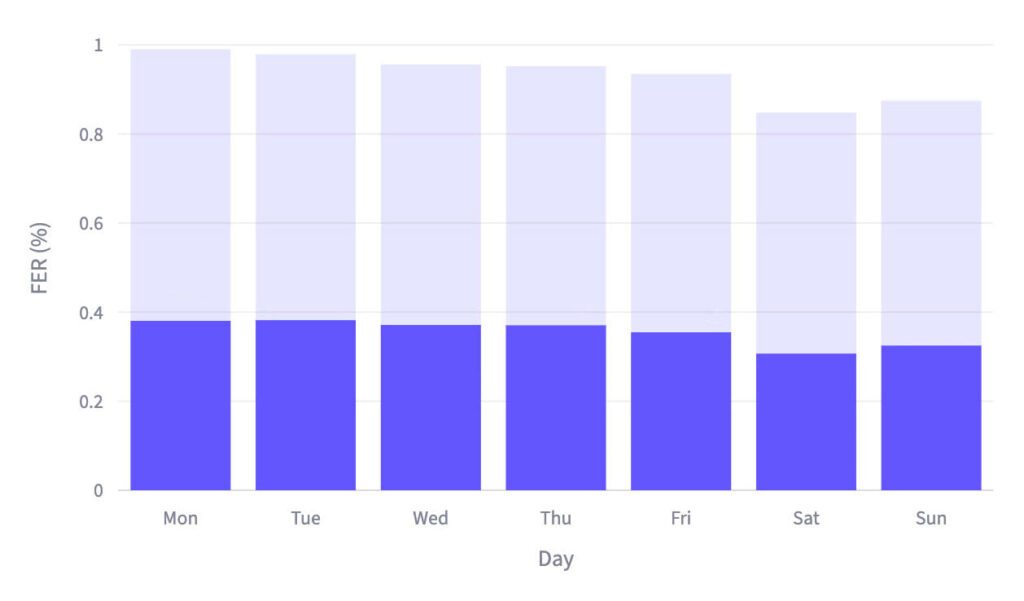
For time of day, early morning (5–8 AM ET) consistently produces the best results. There’s also a secondary evening window around 8–11 PM ET that performs pretty well—likely catching a second wave of scrollers winding down for the night.
What to do: Schedule your posts for Tuesday through Thursday, published between 5–8 AM ET. If you have a second post to share during the week, Monday morning is your next best bet. Save weekends for rest, when there’s likely a smaller audience and lower engagement.
The Playbook: Putting It All Together
If you only remember five things from this study, make it these:
- Write 1,000–1,800 characters—long enough to deliver real value, short enough not to lose people. This range consistently outperforms both shorter and longer posts.
- Format aggressively—use short paragraphs, single-sentence lines, and plenty of white space. The same content formatted for scannability gets 4.6x more engagement than a wall of text.
- Hook them in under 60 characters—your first line is an audition. Make it punchy, specific, and curiosity-driven. Every extra character costs you.
- End with a question—this single change adds 26% to engagement and nearly doubles comments. It’s the highest-ROI edit you can make.
- Keep links out of the post body—even one link drops your engagement by 38%. Share them in the first comment instead.
None of these findings require more talent, a bigger audience, or better ideas. They’re structural choices—formatting, length, placement—that you can apply to your very next post.
The data says they work. The rest is up to you.
Want These Insights Working for You Every Week?
This study is a snapshot of what we’re building into Stanley LinkedIn—an AI content coach that analyzes your LinkedIn performance, learns your voice, and helps you write posts that land. Weekly analytics, personalized post ideas, and a creative teammate that gets better the more you use it. Try Stanley LinkedIn Free
FAQ: LinkedIn Engagement
The data from this six-month study found that post timing matters less than post quality, length, and formatting. However, most research consistently points to Tuesday through Thursday mornings (7–9 AM) in your audience’s primary time zone as the peak window. What our research confirmed is that posting twice within 24 hours actually hurts reach—LinkedIn’s algorithm suppresses the second post when it detects back-to-back publishing from the same account. Spacing posts at least 18–24 hours apart consistently outperforms clustered publishing regardless of the specific hour.
Yes—links in the post body reduce organic reach on LinkedIn. The data in this study confirmed that LinkedIn’s algorithm deprioritizes posts containing outbound URLs in the text, likely because LinkedIn wants to keep users on the platform. The workaround is placing the link in the first comment rather than the post body, and referencing it in the post (“Link in the comments”). Posts using this format consistently outperformed identical posts with links embedded in the body across the six months of data analyzed.
More than most people use. The engagement heat map in this study shows that posts in the 800–1,200 character range with 41+ line breaks achieved a 0.675% engagement rate—versus just 0.147% for posts of the same length with only 1–5 line breaks. That’s a 4.6x difference from formatting alone. As a rule, try writing in single-sentence or two-sentence paragraphs, add white space aggressively, and treat mobile readability as the primary formatting goal since most LinkedIn readers are on phones.
Hashtags are no longer a LinkedIn growth lever—and may actively hurt reach. According to research from LinkedIn algorithm expert Richard van der Blom, posts without hashtags now perform approximately 8% better than those with them. LinkedIn’s 360 Brew algorithm classifies posts by topic through semantic analysis rather than hashtag signals, making hashtags redundant for discovery. Our data backs up that finding: hashtag use showed no positive correlation with reach or engagement in the six-month sample.
Hooks under 60 characters—short enough to display fully before LinkedIn’s ‘see more’ cutoff—consistently outperform longer opening lines. The highest-performing hooks create a pattern interrupt or open a loop without front-loading information. For example, statement hooks that challenge a widely held belief, personal confessions that feel specific rather than generic, and numerical claims that create immediate curiosity. The key rule: never start with information in the first line. Start with something that makes the reader need to click ‘see more.’
Using AI to write your posts verbatim is risky on LinkedIn specifically. LinkedIn’s 360 Brew algorithm has developed detection capabilities for AI-generated content patterns, and posts flagged as AI-generated receive suppressed reach—a form of shadow-banning. The effective approach is using AI as a collaborator: drafting, editing, and reshaping ideas in your voice rather than generating finished posts wholesale. Tools trained on your previous writing samples or capable of preserving your voice outperform generic AI generators for LinkedIn specifically.
The optimal LinkedIn post length sits between 1,000 and 1,800 characters, where median engagement peaks at 0.464% in this six-month study. Posts under 200 characters performed significantly worse. However, length only drives results when paired with aggressive formatting—line breaks, short paragraphs, and mobile-first structure. Posts at 1,200+ characters with heavy formatting achieved 3x the engagement of short posts under similar topic conditions. Posts that are long but densely formatted (wall of text) perform worse than shorter, well-formatted ones.