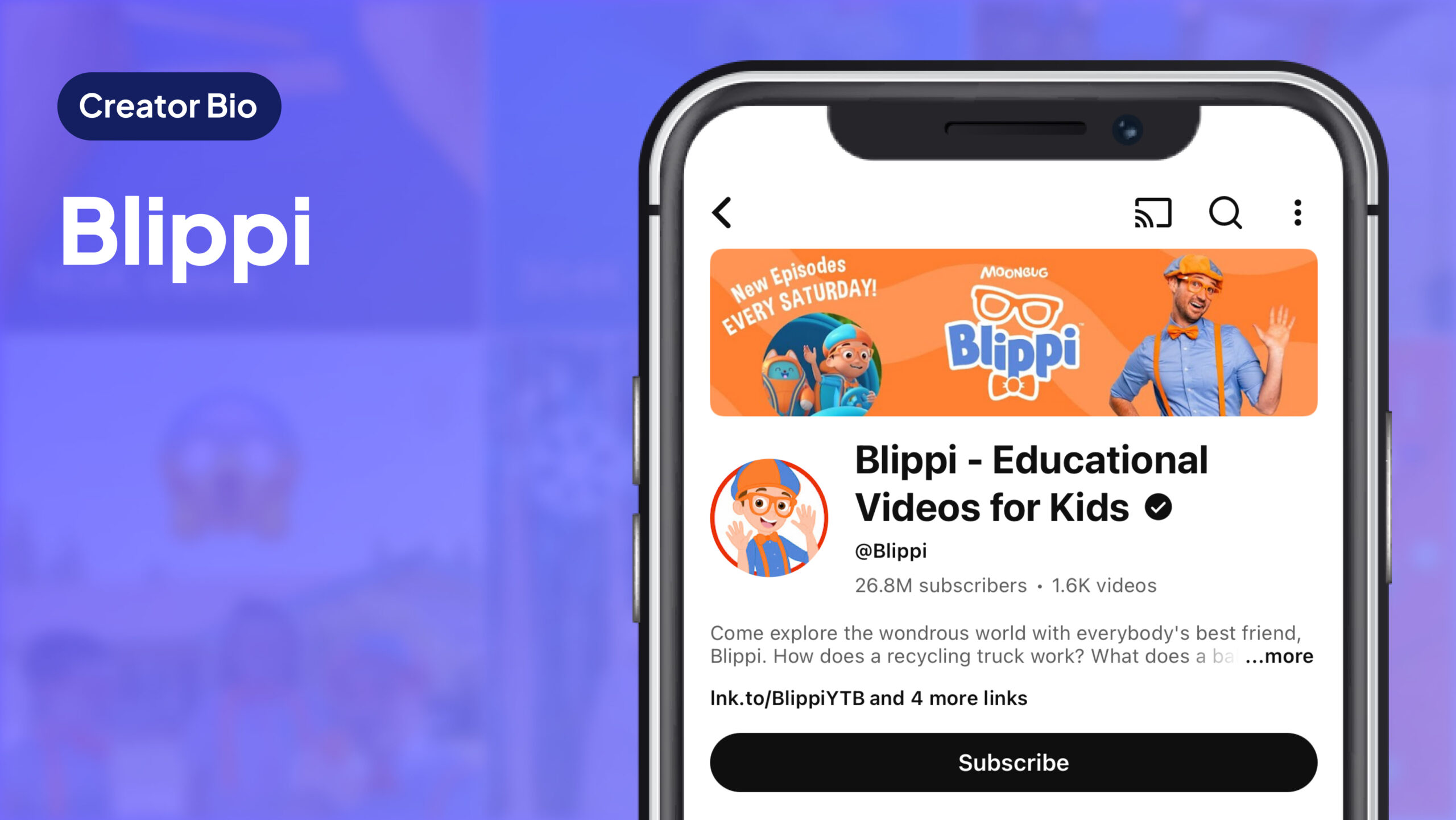

TL;DR: Blippi, created by Stevin John in 2014, started as a DIY YouTube project aimed at giving preschoolers higher-quality educational content. His colorful character, real-world field-trip format, and simple teaching style generated strong early traction, driven by repeat toddler viewing and high watch time. As the audience grew, Blippi expanded into music videos, streaming platforms, toys, books, and live shows—eventually becoming a global children’s franchise. Key growth drivers included evergreen content, strategic introduction of additional actors, international dubbing, and Moonbug Entertainment’s acquisition. The brand navigated challenges such as public scrutiny and cast transitions through consistency and transparency. Today, Blippi stands as a leading example of how creators can turn character-driven content into scalable, globally recognized IP.
At a time when children’s content on YouTube ranged from random toy unboxings to low-quality nursery rhyme loops, Blippi emerged as something entirely different: a bright, energetic, curiosity-driven character designed to help young learners explore the real world.
Created by Stevin John in 2014, the Blippi universe began as a one-man production filmed and edited in small-town America. Today, it stands as one of the most successful kids’ Creator brands on the planet, spanning YouTube, streaming platforms, merchandise, toys, global dubbing, and live touring experiences.
Blippi’s rise is more than a story of viral success: it’s a blueprint for how creators can identify underserved audiences, build repeatable formats, evolve from solo operations into scalable IP, and diversify into a multi-platform business.
In this Creator Bio, we break down how Blippi started, what fueled his explosive growth, how he adapted through setbacks, and the business principles behind turning a single character into a global educational franchise.
Blippi: Complete Bio Stats
| Category | Details |
| Full Name | Stevin John |
| Creator Name | Blippi |
| Age | 36 years old (as of 2025) |
| Birthday | May 27, 1988 |
| Zodiac Sign | Gemini |
| Height | 5’8″ (173 cm) (estimated; not officially confirmed) |
| Location | Originally Ellensburg, Washington; later Los Angeles, CA |
| Nationality | American |
| Education | High school graduate; later military training (U.S. Air Force) |
| Early Career | U.S. Air Force loadmaster; marketing/video production roles |
| Creator Career Start | 2014 (first Blippi YouTube video on Feb 18, 2014) |
| Primary Platforms | YouTube, Netflix, Amazon Prime Video, Hulu |
| YouTube Subscribers | 50M+ across Blippi-branded channels |
| Actors Portraying Blippi | Stevin John (original), Clayton Grimm (from 2021), plus international/localized performers |
| Business Ventures | Merchandise, toy licensing (Jazwares), live tours, books, streaming licensing |
| Team/Company | Acquired by Moonbug Entertainment (2020) |
| Net Worth (Estimated) | Commonly reported: $20M–$40M (not officially verified) |
| Famous For | Educational kids’ entertainment, real-world exploration videos, distinctive character design |
Becoming Blippi: The Early Creator Journey of Stevin John
The Blippi journey began with a simple but powerful insight: young children were spending increasing time on YouTube, but much of the content available to them lacked intentional educational value, structure, or production quality.
In 2013, Stevin John noticed his two-year-old nephew watching low-budget videos—random toy clips, poorly edited animations, and content that didn’t truly teach. That moment sparked the idea for a creator-led educational character who could make learning both engaging and developmentally meaningful.
Early Vision: Creating a Character with Purpose
John’s background made him uniquely suited for the challenge. His U.S. Air Force experience taught him discipline and operational precision, while his later work in marketing and video production gave him hands-on skills in scripting, shooting, editing, and branding. He decided to build a children’s learning persona from scratch—one centered on curiosity, exploration, and positivity.
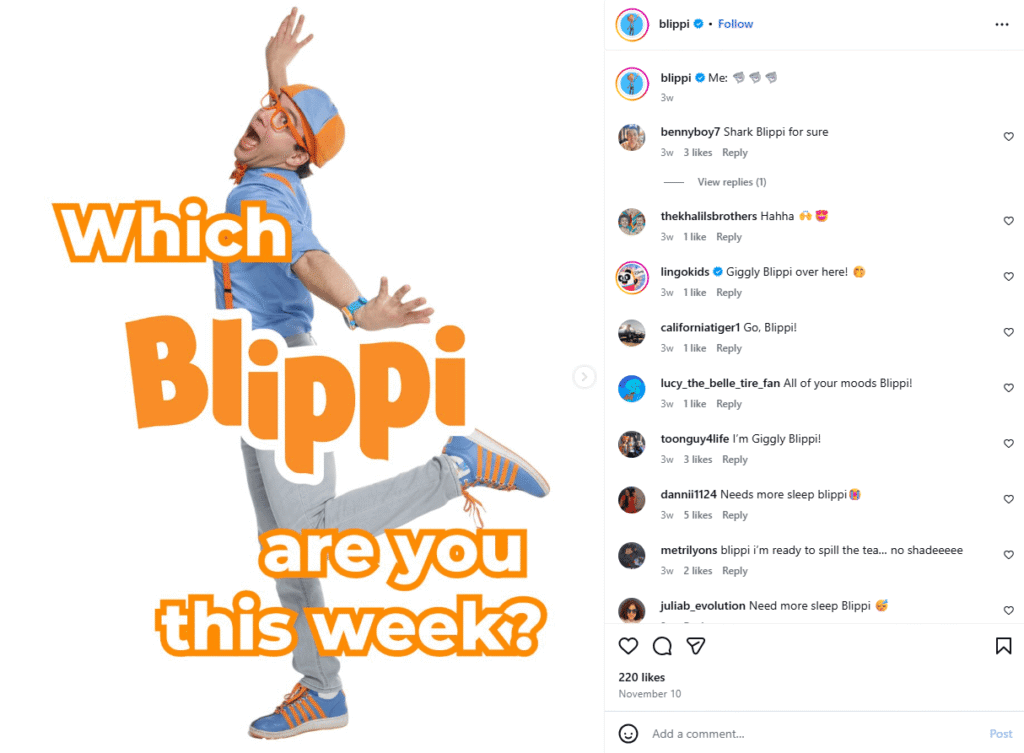
The character design was intentional: bright colors for attention, a playful voice for approachability, and a friendly, enthusiastic persona designed to help preschoolers explore the world with joy. The blue-and-orange outfit, the suspenders, the hat, the bow tie—all were crafted to be visually iconic and instantly recognizable.
Launching the First Videos (2014)
On February 18, 2014, John uploaded the first Blippi video to YouTube.
In the earliest days, he handled everything independently: writing the educational segments, filming on location, performing the character, editing the footage, and creating graphics.
The videos often featured real-world environments—tractors, zoos, fire trucks, construction sites—because John believed that young children learn best through concrete, sensory-rich experiences.
These early episodes created an immediate foundation for traction. Preschool viewers connected with:
- Simple educational themes (colors, shapes, vehicles)
- Real-life environments
- High-energy explanations
- Repetitive hooks ideal for early learning
- A friendly guide who felt like a real companion rather than a performer
Without knowing it yet, John had built a content blueprint that would eventually transform into one of the most successful children’s creator brands in digital history.
A Creator-Led Approach to Educational Media
Blippi’s earliest growth did not come from algorithmic luck—it came from creator instinct. John designed every detail with preschoolers in mind, created repeatable formats, and maintained a creative philosophy centered on learning through exploration.
The first traction wave came from parents discovering the videos organically and recommending them to others. The repeat-viewing behavior of toddlers—watching the same videos many times—boosted early watch time and helped Blippi gain algorithmic visibility.
Blippi was not just a character; it was a creator-led education system. And that system was about to scale far beyond what a solo creator could imagine.
How Blippi Became a Global Educational Franchise
Blippi’s rise from a one-man YouTube project to a global children’s franchise did not happen by accident. It was built through strategic content design, audience understanding, operational scaling, and a brand vision that expanded far beyond a single character or platform.
This section breaks down the key inflection points, growth mechanics, and business decisions that transformed Blippi into one of the world’s most recognizable kid-focused Creator brands.
Early Traction & the First Viral Wave (2014–2016)
In the first two years, Blippi videos began gaining momentum through organic parent-to-parent sharing. The educational themes, upbeat pacing, and real-world exploration resonated with both parents and preschoolers.
YouTube’s recommendation system heavily favors repeat-view content—especially in the children’s category—and Blippi’s early episodes generated unusually high watch time because toddlers rewatched their favorite videos repeatedly.
Key drivers of early traction:
- Field-trip style videos featuring tractors, zoos, and fire stations
- Clear educational hooks (colors, shapes, vehicles)
- Simple, repetitive scripts ideal for early learning
- High retention due to toddler viewing patterns
- DIY production that allowed frequent uploads
This combination made Blippi’s videos uniquely aligned with YouTube’s algorithmic signals long before “kid content” became a defined category.
Scaling a Character from Solo Creator to Full Production Brand (2016–2020)
As viewership climbed into the millions, the Blippi channel began systematizing its production approach. Stevin John expanded beyond DIY editing and filming, gradually bringing on additional help to improve educational structure, polish graphics, and increase upload cadence.
Format Evolution
Blippi diversified its content pillars to keep its audience engaged:
- Real-world adventure videos (construction sites, farms, factories)
- Educational music videos
- Simple science, colors, shapes, and counting lessons
- “Vehicle-focused” episodes—some of the brand’s highest performers
The content matured while preserving the character’s core identity: curiosity-driven learning delivered through fun exploration.
Multi-Platform Reach
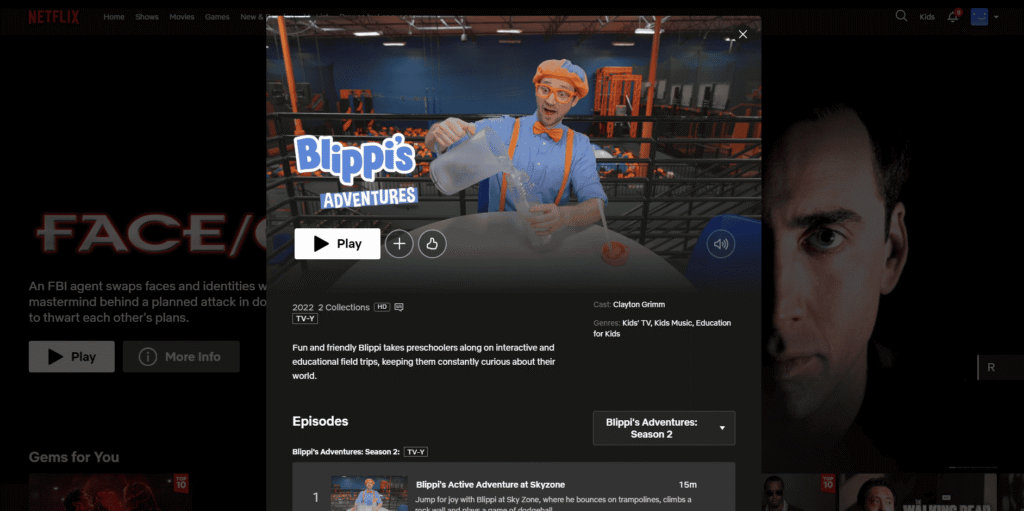
By 2018, Blippi expanded from YouTube to streaming platforms including:
- Amazon Prime Video
- Hulu
- Netflix (regional availability varies)
This multi-platform strategy significantly broadened Blippi’s reach, especially among households where parents prefer safer, curated children’s media environments.
The Multi-Actor Strategy & Brand Scalability (2021–Present)
One of the most pivotal growth decisions came in May 2021, when actor Clayton Grimm appeared as Blippi for the first time. While many parents were initially confused or frustrated, this moment represented a strategic shift: Blippi was no longer the identity of just one creator—it was a scalable intellectual property (IP).
Why this mattered for growth:
- Allowed higher production volume
- Enabled touring while maintaining regular uploads
- Opened the door for localized performers in global markets
- Reduced reliance on a single performer (a major risk factor for kids’ IP)
Today, multiple performers portray Blippi for live shows, international content, and touring—similar to how established children’s franchises (Sesame Street, Blue’s Clues, etc.) scale globally.
Expanding the Blippi Universe: Meekah, Spin-Offs & New Story Worlds
A major innovation came with the introduction of Meekah, a new character added to the Blippi universe. She stars in her own content arc, appears in videos alongside Blippi, and has become a beloved figure for young fans.
Growth advantages of adding Meekah:
- Expands storytelling possibilities
- Diversifies audience interest beyond a single persona
- Allows gender-inclusive representation
- Strengthens franchise longevity
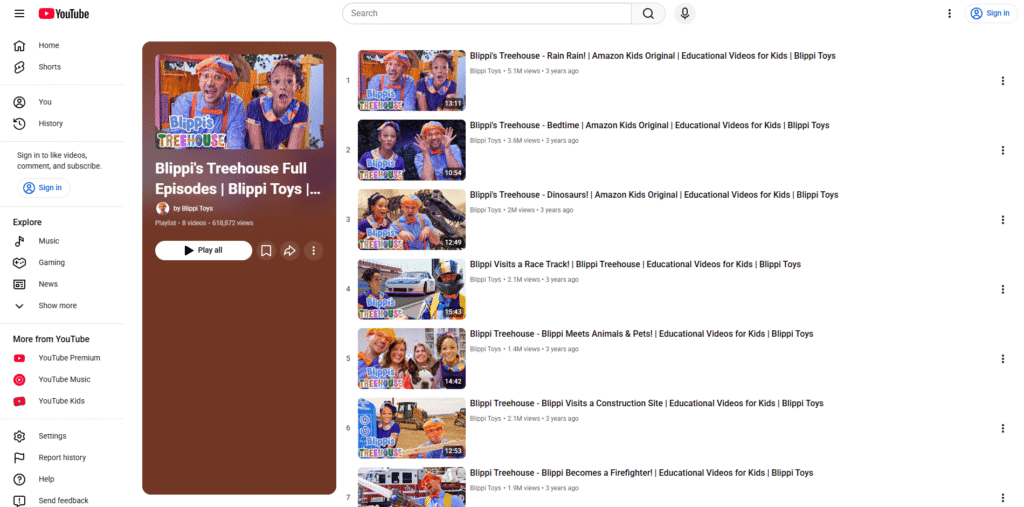
Additional series such as Blippi’s Treehouse further extend the brand’s storytelling and educational range.
Licensing, Merchandising & Revenue Expansion
A turning point for Blippi’s business model came in 2020 with the brand’s acquisition by Moonbug Entertainment, a powerhouse in children’s media. This acquisition unlocked a new era of global scaling.
Merchandise & Toy Lines
Through partnerships (including Jazwares), Blippi now offers:
- Plush toys
- Costumes
- Playsets & vehicles
- Books
- Apparel
Merchandise brought Blippi off-screen and into children’s daily lives—an essential step for any franchise-style brand.
Live Shows & Touring
Blippi The Musical and global touring events introduced immersive experiences that deepened audience connection and diversified revenue.
Streaming & Licensing
Moonbug expanded Blippi’s reach through international licensing deals, subtitled and dubbed versions, and syndicated content—transforming a U.S.-based YouTube brand into a global educational franchise.
Current Scale (2025)
Today, Blippi spans:
- Billions of YouTube views across multiple channels
- Global streaming distribution on Netflix, Amazon, Hulu
- Multiple live shows and touring events
- Dozens of merchandise lines
- One of the world’s most successful children’s creator brands
Blippi is no longer just a creator-led project—it is a multi-platform educational IP with worldwide cultural impact.
Turning Points in Blippi’s Growth: Adaptation, Scaling, and Brand Stability
Even the most successful kids’ creators face pressure points that force them to evolve. Blippi’s journey includes moments of public scrutiny, operational strain, platform policy changes, and audience confusion during cast transitions. These setbacks shaped the franchise and contributed to the durable brand it is today.
Navigating Public Scrutiny in 2019
In 2019, media outlets resurfaced a shock-style comedy video from Stevin John’s pre-Blippi years. The content was unrelated to the children’s brand, but it appeared at a time when parents were increasingly concerned about the safety and quality of kids’ online content. This created reputational risk because Blippi serves a preschool audience and trust is central to its appeal.
How the brand responded:
- Addressed the situation publicly and clarified the timeline
- Reinforced brand safety standards
- Centered communication around Blippi’s educational purpose
- Maintained a consistent publishing schedule to stabilize perception
Audience Reaction to New Actors Playing Blippi
In May 2021, actor Clayton Grimm appeared as Blippi in a YouTube episode. Parents noticed the change immediately and some expressed confusion, largely because they associated the character closely with Stevin John.
The transition, however, was an important operational step. A single performer cannot sustain global tours, frequent uploads, filming schedules, and international content needs all at once. Multiple actors allow the Blippi character to appear consistently across platforms and formats without interruptions in production.
How the brand addressed the transition:
- Communicated openly that Blippi is a character, not a single individual
- Continued appearances by Stevin John
- Maintained the same visual identity and educational tone
- Expanded the universe with new characters such as Meekah, which reduced pressure on the original role
Adapting to Children’s Content Policy Changes
In 2020, YouTube updated its policies related to COPPA, which changed how advertising is handled on kids’ content. This created revenue uncertainty across the children’s creator landscape.
Blippi was able to adapt because the brand already had multiple revenue channels. These included merchandise, licensing, streaming distribution, and live events.
The acquisition by Moonbug Entertainment in 2020 offered additional operational support and helped stabilize long-term growth.
Managing Operational Scale as a Solo Creator
Before Blippi became a global franchise, Stevin John was responsible for writing, performing, filming, and editing nearly every video. As the audience grew and content demands increased, operating as a solo creator became unsustainable.
To address this, the brand:
- Added on-screen performers
- Built stronger production teams
- Delegated operational functions
- Expanded into spin-offs and parallel content formats
These decisions ensured that Blippi could continue releasing high-quality content without relying on a single individual’s availability.
Keeping the Brand Evergreen While the Audience Ages Out
Preschool viewers cycle quickly: many outgrow the content after only a few years. To maintain long-term relevance, Blippi needed content that remains fresh for each new wave of young viewers.
The brand addressed this by:
- Focusing on evergreen educational themes
- Maintaining a consistent tone across episodes
- Creating new characters and new series
- Expanding into international markets with dubbed and localized versions
This approach keeps the franchise accessible and discovery-friendly for new families year after year.
What Every Creator Can Learn from Blippi’s Global Success
Blippi’s path from a self-produced children’s show to a global educational franchise offers practical insights for creators who want to build long-lasting, scalable brands. These lessons reflect what worked, what changed, and how the creator behind Blippi adapted at each stage.
1. Identify a Clear Gap in the Market
Blippi began when Stevin John noticed preschoolers watching low-quality videos. He created educational content with better visuals, storytelling, and structure. Focus on problems you can solve for your audience. Clear purpose beats chasing trends.
2. Start Small and Improve Through Consistency
Early Blippi videos were written, filmed, and edited entirely by John. This allowed rapid learning and refinement before scaling. You do not need large budgets to start. Consistent output leads to creative clarity and audience insights.
3. Build Repeatable Formats That Age Well
Blippi’s real-world exploration videos worked because they were simple, structured, and easy for young learners to rewatch. Create formats you can produce regularly and that remain relevant over time.
4. Treat Characters and Concepts as Scalable IP
The success of adding new Blippi actors showed that the character could grow beyond one performer. This protected the brand as production demands increased. Design your brand so it can scale. If everything depends on you alone, growth will stall.
5. Diversify Revenue Early
When children’s content rules changed on YouTube, Blippi’s business remained stable because the franchise also earned through merchandise, streaming, licensing, and live shows. Build multiple income streams to reduce risk and increase long-term stability.
6. Build a Team Before You Reach Capacity
As Blippi expanded, production needs outpaced what one creator could handle. Bringing in additional performers and operators helped sustain consistency. Growth becomes easier when you delegate key tasks and protect your time.
7. Think Like a Business, Not Just a Channel
Moonbug’s acquisition of Blippi highlighted how creator-led brands evolve when they have systems, structure, and licensing potential. Build operations and processes that support your brand’s growth across platforms and products.
The Future of Blippi: What’s Next for the Global Educational Brand
Blippi’s future continues to build on the foundations established through Moonbug Entertainment, which actively produces new episodes, manages multiple performers, and distributes the franchise across global streaming platforms, including Amazon Prime Video, Hulu, and select regional Netflix markets.
Ongoing development of characters like Meekah expands the educational universe while supporting a multi-performer model that keeps production scalable. Live experiences such as Blippi The Musical remain part of the franchise’s confirmed programming, and international dubbing efforts continue to introduce Blippi content to new audiences.
These sustained initiatives indicate a focus on consistent educational storytelling, multi-platform distribution, and character-led expansion without projecting or speculating on future moves.
Building an audience of your own? Stan Store is the easiest way to monetize your following by selling digital products, courses, and memberships. Try it for 14 days and start earning sooner.
Follow Blippi’s Journey
YouTube: Blippi channel
Instagram: Blippi on Instagram
TikTok: Blippi on TikTok
Website: Official Blippi website