TL;DR
User-generated content Creators get paid to make authentic, short-form videos that help brands sell through trust— without needing a large following. Want to become one? Start by studying what converts, choosing a niche you understand, filming sample videos with products you already own, building a simple portfolio, pricing your work, and pitching brands or UGC agencies consistently. You can use early wins to build a rate card, then expand your offers with Stan Store to turn your UGC skills into owned products and services.
You’ve probably seen Creators on TikTok or Instagram getting paid to make short videos for brands and thought, “I could do that.” Then you scroll through their pages and wonder if the secret is having thousands of followers or expensive gear.
The reality? It’s not.
Brands today want content that feels real—videos that look like something a friend would share, not an overly polished ad or product shot. That’s why UGC Creators are in such high demand.
If you can speak naturally on camera, tell a story, and show how a product fits into everyday life, you already have what it takes. You just need to have the right plan, an understanding of what brands are looking for, and the know-how to turn clips into steady income.
That’s exactly what we’ll show you in this guide. Let’s get into it.
What’s a UGC Creator?
UGC stands for user-generated content, which simply means photos or videos made by everyday people instead of brands.
Think of the short, casual clips you see on TikTok or Instagram—someone testing a skincare product, unboxing a gadget, or showing how a meal kit fits into their routine.
A UGC Creator is usually the person behind that kind of content. They get paid by brands to create authentic, relatable videos that feel natural on social media.
Most of these Creators aren’t influencers with big followings. They don’t need to share content on their personal social media channels to earn—they’re purely hired to make high-quality content brands can use that converts.
For brands, UGC feels like social proof—real people using real products. And for Creators, it’s a way to make money doing what they already enjoy: creating short, engaging videos that fit each platform.
So when you see an ad on a brand’s account that looks like a normal TikTok but promotes a product or offer, there’s a good chance a UGC Creator made it.
UGC Creator vs Influencer: What’s the Difference?
It’s easy to confuse UGC Creators with influencers since both make content for brands. But what separates them comes down to ownership and purpose.
Brands pay influencers for access to their audiences—they want to capitalize on the trust a Creator has built with their audience and get their offers in front of more eyeballs. Brands partner with influencers to reach people who already trust their recommendations, so the Creator’s personal brand is the product.
UGC content Creators, on the other hand, get paid for their content itself. They create videos that brands can post on their own pages or use in ads. They know UGC marketing tends to perform better than traditional advertising, so they’re willing to pay for branded content that feels real and relatable while putting their brand front and center.
Here’s a quick breakdown:
| Aspect | UGC Creator | Influencer |
| Main Value | Quality of content | Size of audience |
| Goal | Create high-performing ads or organic videos for brands | Promote products to followers |
| Ownership | Brand owns the content | Creator owns the post on their page |
| Followers Needed | None | Essential |
| Payment Model | Per project or content package | Sponsored post or brand partnership |
| Longevity | Skill-based (anyone can start) | Personality-based (takes time to build trust and grow an audience) |
UGC Creators are the behind-the-scenes storytellers shaping how brands connect with audiences today. Influencers get a lot of attention when it comes to creating, but UGC Creators also fuel results. It’s the easier, faster way to break into the Creator economy and start earning.
Why UGC Is Booming Right Now
If you scroll through your feed for five minutes, you’ll notice something: the videos that stop you aren’t the perfectly curated brand videos. They’re from real people.
And you’re not alone—in 2026, 92% of consumers trust recommendations from other people over branded content.
People see so many ads per day, they’ve learned to tune them out (and tune authentic, human-generated content in).
The marketing world has caught on. Big and small brands alike are realizing that authenticity sells better than polish. A Creator with an iPhone and good lighting can usually outperform a full production team, because their content feels human.
Over the past few years, UGC has exploded for three big reasons:
- Trust has shifted. Consumers are tired of traditional ads. They want to see products in everyday life, not studio setups.
- Short-form video took over. TikTok videos, Instagram Reels, and YouTube Shorts opened up a world of new UGC opportunities, making it easier for brands to blend advertising with entertainment.
- Brands need more content than ever. We’re living through the attention economy, where posting consistently isn’t just a nice-to-have—it’s essential to maintaining relevance and a good brand reputation. Hiring UGC Creators to produce content at volume just makes sense.
The result? UGC Creators are now in constant demand. From startups to global brands, companies are paying Creators who can make content that feels real (but still sells).
What Brands Want from UGC Creators
Before you start creating, it helps to know what brands are actually paying for. It’s not perfect lighting or a flawless background—it’s how engaging and believable your content is.
Brands use UGC to connect with audiences who tune out traditional ads. They’re looking for content that feels natural, relatable, and native to the platform it’s posted on.
Here’s what most brands look for in UGC Creators:
- Authenticity over aesthetics. Brands want Creators who look and sound like their customers. Your tone, reactions, and small imperfections make the video feel real.
- Clear communication. Whether it’s showing how a product works or why it solves a problem, the message should be simple and direct.
- An understanding of platform trends. Brands want Creators who can keep up with trending sounds, hooks, and editing styles that can get higher engagement on TikTok, Reels, and Shorts.
- Content that sells without selling. The best UGC doesn’t push a product. It shows the experience of using it, usually by storytelling or a casual “try-on” moment, and lets it naturally drive conversion rates. More importantly, it creates a strong connection with their target audience—and builds brand loyalty.
If you can make a viewer stop scrolling, smile, and think “That’s exactly what I need,” you’ve already got what most brands are looking for.
How to Become a UGC Content Creator
Becoming a UGC Creator doesn’t happen overnight. It starts with learning what brands want, creating a portfolio that shows your skills, and knowing where to find paid opportunities.
Let’s walk through the steps that take you from beginner to booked.
1. Study What Works
The fastest way to become a paid UGC Creator isn’t by filming right away. It’s by studying what the best UGC Creators do. The Creators who earn the most understand what performs, why it works, and how to recreate that success for any brand.
Start With Real UGC Ads
Open the TikTok Creative Center or Meta Ad Library. These platforms feature thousands of real ads, many created by UGC Creators just like you.
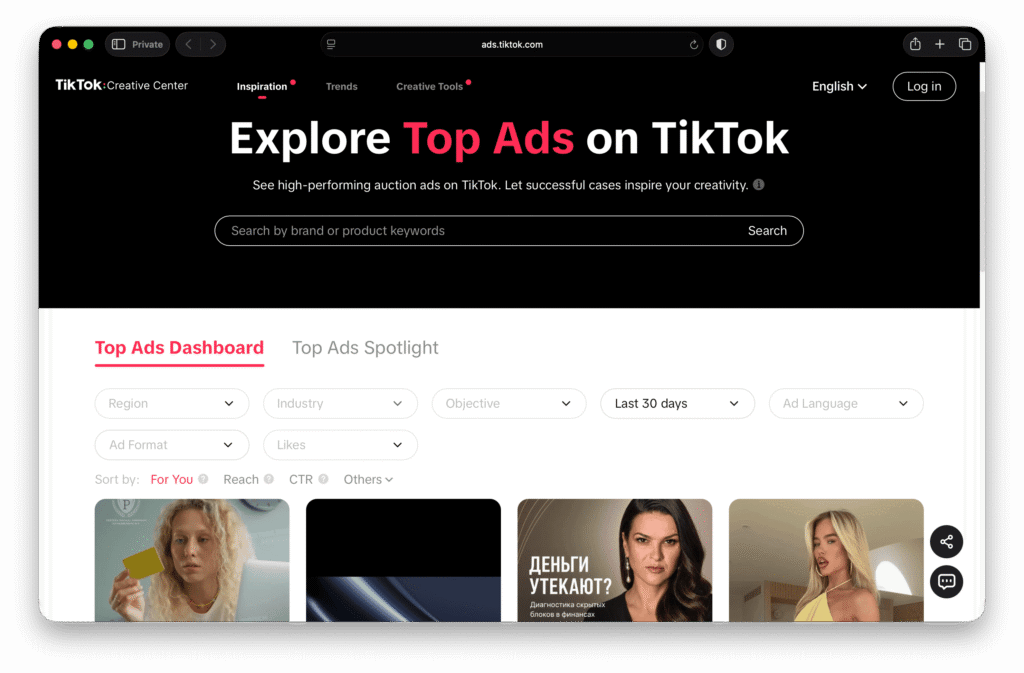
Spend a few minutes studying them. Notice how the best ones open. Every strong ad hooks attention within the first three seconds, keeps a conversational tone, and follows a simple Spend a few minutes studying them and notice how the best ones open. Every strong ad hooks attention within the first three seconds, keeps a conversational tone, and follows a simple flow: problem → product → result.
Forget cinematic editing—the top-performing UGC videos feel casual. They look like something you’d see from real people on your feed, and that’s exactly what makes them believable.
Pay Attention to What Brands Ask For
Go through campaign listings on platforms like Billo or Collabstr and read the brand briefs. These short descriptions reveal exactly what companies want. Most of them ask for:
- Vertical (9:16) videos under 30 seconds
- Natural lighting and phone-shot content
- Voiceovers or storytelling that feels personal
- Clear before-and-after moments
This helps you understand what to create before you start shooting. You’re no longer guessing what “authentic” means. You can see it in black and white.
Study Top UGC Creators
Search “UGC Creator” on TikTok or Instagram and watch how the pros operate. Notice how they talk to the camera, structure their videos, and present products like it’s part of their routine.
You don’t need to copy their style, but studying them trains your creative eye. Over time, you’ll start spotting patterns and understanding why certain clips grab attention while others fall flat.
Create a Swipe File
As you’re scrolling, start collecting what inspires you. Create a Notion page or Google Doc where you’ll regularly save standout UGC examples and note why they work: the hook, pacing, angle, or tone. You can use this as your creative library—something you’ll return to every time you need ideas or want to pitch a new brand.
The more you analyze what’s already performing, the faster you’ll find your footing. And once you know what “good” looks like, you can adapt it to your own voice, niche, and story. That brings us to the next step.
2. Pick a Niche You Understand
Not every Creator fits every product, and that’s a good thing. The best UGC Creators don’t try to appeal to everyone. They choose a niche that matches their lifestyle, interests, or experience, then build authority within it.
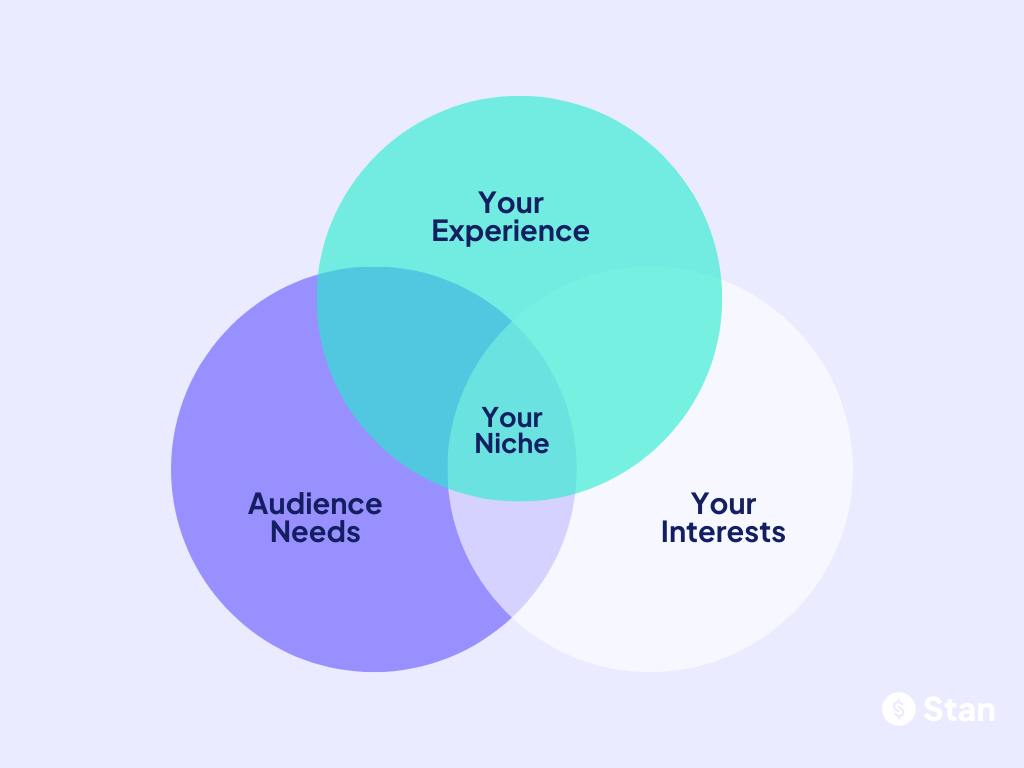
Why? Because brands can tell when you actually understand their product. You know the language, the pain points, and what feels natural in the content.
Choose a Space You Can Speak About Naturally
Think about the products you already use or talk about. That’s often your easiest entry point.
For example:
- Beauty and skincare: Creators who can show real results, routines, or tutorials.
- Fitness and wellness: Creators who demonstrate exercises, supplements, or recovery gear.
- Food and lifestyle: Creators who love cooking, hosting, or reviewing home goods.
- Tech and gadgets: Creators who enjoy testing new tools and simplifying features.
- Pet and baby products: Creators who can capture relatable, real-life moments.
When you create within a niche you know and share brands you actively use, your delivery will inevitably sound natural, not scripted.
Don’t Worry About Being “Too Small”
You don’t need to dominate a niche. In fact, brands often prefer Creators who represent a specific slice of their audience. A skincare brand might hire ten different UGC Creators, each with a unique background or skin type, to test how their content performs across audiences.
Your job isn’t to be the best Creator in your niche. It’s to create genuinely good content that helps brands drive results.
Test a Few Niches Before You Commit
If you’re unsure where you fit, experiment. Create a few sample videos for different industries, then see what resonates most creatively and comfort-wise. You’ll discover pretty quickly what comes easiest and what gets the best reactions.
After that, double down on a direction. Build your portfolio and outreach strategy around that niche and start attracting brands that align with it organically.
3. Create Sample UGC
You don’t need a paid brand deal to prove you can create great UGC. In fact, most Creators start by making sample videos, which is usually called spec content, to show potential clients what they can do.
This is your opportunity to turn what you’ve learned into something tangible. Brands want to see your style, storytelling ability, and camera presence before hiring you. Their main focus is on hiring the right Creators for the job, and sharing a few examples can be the differentiator that helps you stand out.
Start With Products You Already Own
Look around your home. The skincare you use, the coffee maker on your counter, your favorite supplement—all of these are perfect candidates for spec UGC.
Pick one and record a 15–30 second video that highlights a clear benefit. And remember: it doesn’t have to feel like a hard-sell to be high-converting. Speak naturally, as though you’re talking to a friend, and integrate the product into a relatable narrative.
For instance:
- Show your morning routine using a moisturizer.
- Film how your favorite blender makes smoothies faster.
- Capture an unboxing or first impression moment.

Focus on the experience, not just the product. Brands want content that makes viewers want to experience something for themselves.
Keep It Real, Not Perfect
Your goal isn’t to make a cinematic ad. UGC works because it feels organic. Film in natural light, use your phone camera, and talk naturally as if you’re recommending the product to a friend. Avoid heavy filters, loud music, or overly polished video editing.
If you’re doing voiceovers, record in a quiet space and use a mic. Keep your tone casual, confident, and conversational.
Now, let’s break down UGC Creator Hannah‘s quick tips for filming and editing UGC content.
Structure It Like a Mini Story
Every great UGC video should follow a simple structure:
- An Attention-Grabbing Hook in the first 2–3 seconds, like, “I didn’t think this would actually work.”
- A problem or desire with a relatable setup. “I’ve tried so many moisturizers that gave me breakouts.”
- An intro to the product that clearly shows what you’re using and why.
- Results or a takeaway. You can end with a transformation, reaction, or recommendation.
Create Variety
Don’t make all your videos look the same. Instead, mix in different formats to show your range, such as:
- Talking head videos
- Voiceover with product B-roll
- Unboxing or demo-style content
- POV clips
3-5 strong examples are enough to start building your portfolio.
Edit and Export the Right Way
Use simple tools like CapCut or Descript for clean cuts and captions. And stick to vertical video(9:16) formats under 30 seconds unless a brand requests otherwise.
When you’re done, export your videos in high resolution (1080×1920) and save copies for both social and ad use. Some brands may also request the raw footage, so keep everything organized.
4. Build Your Portfolio
Your portfolio is your storefront. It’s usually the first thing brands see—and the #1 thing they’ll use to decide whether to work with you.
Even if you haven’t completed any paid projects yet, a clear, professional portfolio helps you look established and trustworthy. Those two things matter more than follower count.
Here’s how to build one.
Keep Things Simple
You don’t need a website with animations or a custom domain. A clean, easy-to-scroll page is enough. Many successful UGC Creators host their portfolios using:
- Canva or Notion pages for drag-and-drop simplicity
- Google Drive folders with clear labeling
- A link in bio page that showcases videos and contact links
What matters most is clarity. A brand should be able to click into your portfolio and understand what you do and the kind of content you create within 10 seconds.
Include Social Proof
Make your UGC portfolio stand out by including:
- 3-5 of your best videos: If you’re new to UGC, start with the sample videos you created in Step 3. Try to mix formats to show range—like one talking head, one voiceover, one lifestyle shot.
- A short bio: Add a short paragraph that breaks down who you are and what your niche is. For example: “I’m a fitness and wellness UGC Creator who specializes in authentic, first-person videos that highlight everyday routines.”
- Brands you’ve worked with: Even if you’ve done small collaborations, including their logos or names in your portfolio gives you more credibility.
- Contact and booking links: Add an email button or a simple contact form so brands can easily reach out to work with you. If you’re using Stan Store or another platform to host your links, include a “Work With Me” link directly.
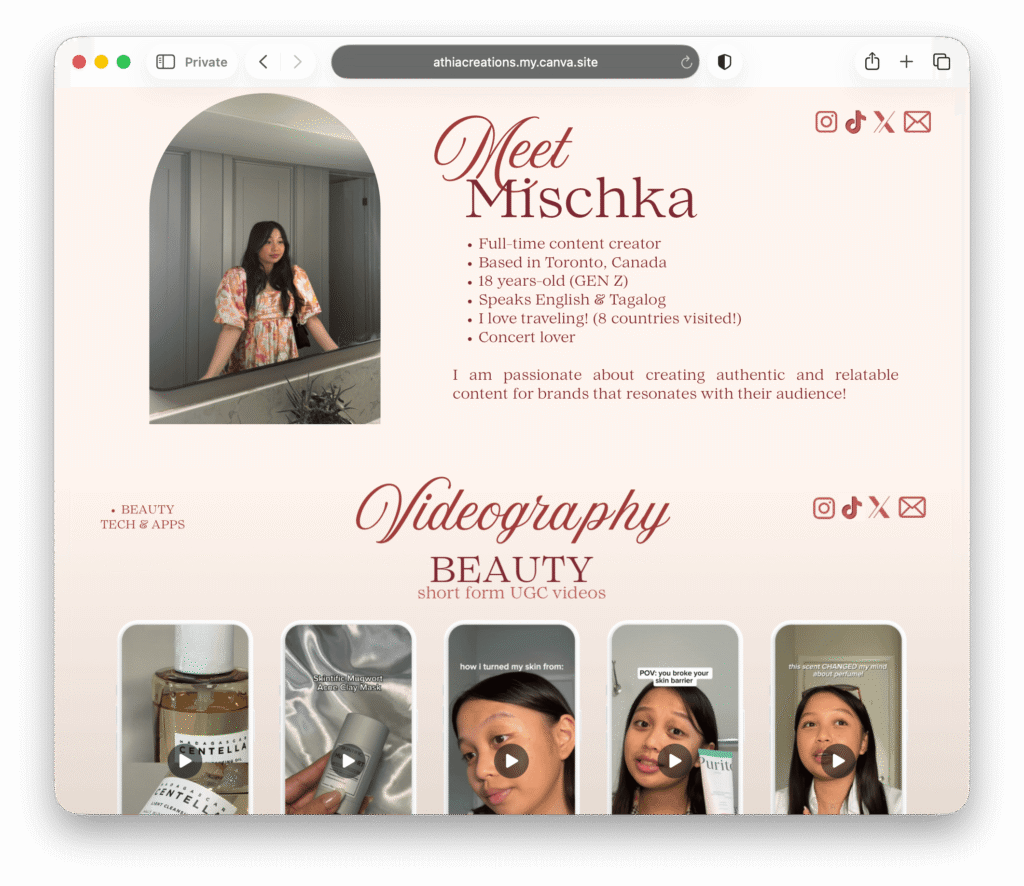
Here’s an example of a simple, clean Canva portfolio layout from UGC Creator Mischka Abadiano.
Make It Skimmable
Most brand reps scroll through Creator portfolios fast, so make sure you use short, skimmable text, headings, and visual previews. If you’re using Canva or Notion, arrange your clips in a grid with titles like Product Demo, Voiceover UGC, or Unboxing Video. The goal is to make evaluating your portfolio effortless.
Keep It Updated
Your portfolio should evolve with your skills and UGC performance. Each time you create new content or sign a campaign, replace weaker examples with stronger ones. Treat it like a living résumé—always current, always relevant. And always full of clear signals that your content sparks the kind of customer engagement that will help brands grow across top platforms.
5. Set Your Rates and Packages
Pricing is typically one of the biggest hurdles for new UGC Creators. If you charge too little, brands might not take you seriously, and you risk burning out from taking on too many UGC creator jobs.
But if you charge too much. you can struggle to land deals. The goal is to find a rate that reflects both your effort and the value your videos deliver.
Understand What You’re Really Selling
You’re not selling 30 seconds of footage. You’re selling a piece of marketing content that can be used across many platforms and generate thousands in sales.
Brands are paying for:
- Your time (planning, shooting, editing)
- Your skill (storytelling, hooks, angles)
- Usage rights (permission to post or run as ads)
- Exclusivity (if you can’t work with competitors)
Once you view your content as an asset, pricing becomes less about hours worked and more about outcomes.
Know the Going Rates
UGC pricing varies by experience and deliverables, but here’s a general range you can use as a benchmark:
| Type of Deliverable | Beginner Rate | Experienced Creator Rate |
| 1 UGC video (15–30 s) | $75 – $150 | $200 – $500+ |
| 3-Video bundle | $200 – $350 | $600 – $1,000+ |
| Raw footage add-on | +$50 – $150 | — |
| Ad usage rights (30 days) | +15–25% of base price | — |
| Exclusivity (clients in same niche) | +20–50% premium | — |
These numbers aren’t fixed, but they can give you a realistic starting point. If a brand’s potential ad spend or audience is large, your content is worth more. And if there are specific brands they ask you not to work with, you can charge more, too.
Create Packages That Simplify the Decision
Instead of offering random prices for every new client, build two or three pricing tiers that make sense for most types of content:
- Starter Package: 1 video + raw clips for testing content
- Standard Package: 3 videos + 30-day usage rights
- Premium Package: 5 videos + usage rights + custom hook scripts
Clear packages make negotiation smoother and position you as a professional.
Don’t Skip the Fine Print
Before you sign any contract or agree to a UGC deal, always clarify:
- How long the brand can use your content (usage rights)
- Whether they can run it as a paid ad (ad usage)
- If you’re granting exclusivity within your niche
Put it in writing, and don’t make these common Creator legal mistakes.
6. Pitch to Brands and Agencies
Getting noticed as a UGC Creator doesn’t typically happen by luck. The Creators landing consistent deals are the ones sending thoughtful pitches, showing real examples of their work, and explaining how their content can help a brand’s business growth.
Here’s how.
Start With the Right Targets
Don’t waste time pitching to brands that don’t need UGC. Focus on companies that:
- Already run TikTok or Instagram ads.
- Engage with Creators in your niche.
- Have products you’d genuinely use.
Small to mid-sized brands are ideal. They move faster than large corporations and are usually open to working with new Creators if your style fits their audience.
Find the Right Contact
When you find specific brands you want to work with, look through their social media accounts or website for a PR or marketing email you can contact. Or better yet, try searching LinkedIn for roles like Influencer Marketing Manager, Content Marketing Strategist, or Social Media Manager. These are the people who typically handle Creator partnerships and marketing strategies.
Keep a simple spreadsheet of the brands you’ve contacted—name, email, date, and status. Treat it like a business pipeline.
Write a Short, Direct Pitch
You don’t need paragraphs of self-promotion to find brands ready to work with you. The best UGC pitch emails are short, personalized, and focused on the brand’s goals.
Try this simple framework:
Subject: UGC content for [Brand Name]’s next campaign
Body:
Hi [Name],
I’m a [your niche] UGC Creator who helps brands create scroll-stopping videos that feel authentic and drive conversions. I’ve worked on content in [related niche or product type] and would love to create something similar for [Brand Name].
Here are a few examples of my work: [link to your portfolio]
If you’re open to new Creators for upcoming campaigns, I’d love to chat about ideas or send a quick concept your way.
Thanks for your time,
[Your Name]
Lead With Value, Not Need
Don’t start a pitch with “I’d love to work with you.” Pitch by sharing how you can help attract people who are genuinely interested in the brand and convert them into customers. Share hard metrics that show the results of your work, social media profiles featuring your content, and your content delivery process.
Mention a recent brand campaign or a post you liked and how you could improve or extend it. Brands get hundreds of generic emails, but only a few that show genuine understanding and proof you’ve done your market research.
Stay Consistent
Reaching out once and stopping there doesn’t work. Make pitching part of your weekly routine. Even one email per day adds up. Most Creators who land ongoing engagements are simply more consistent.

Pitching gets you noticed. Staying active ensures you’re remembered.
Show Up Where Brands Are Searching
Brands don’t just find Creators through cold email—they scout them out through hashtags, comment sections, and Creator groups. The more visible you are in the right places, the more likely you are to attract inbound offers without even trying.
Start by posting your UGC samples on TikTok and Instagram. Use discovery hashtags like: #ugccreator, #ugccreatorswanted, #ugcportfolio, #ugccreatorcommunity. These are the exact tags marketing teams use to find fresh talent.
You don’t need to post daily. Consistency matters more than volume. Two to three high-quality posts per week, each showing a different product or style, can be enough to position you as active in the community.
Join UGC Communities
Join UGC-focused groups on Facebook, Discord, and Reddit. Many are free and packed with feedback threads, real campaign briefs, and Creators sharing what’s working right now.
Sometimes, you’ll also find brands posting about UGC gigs directly.
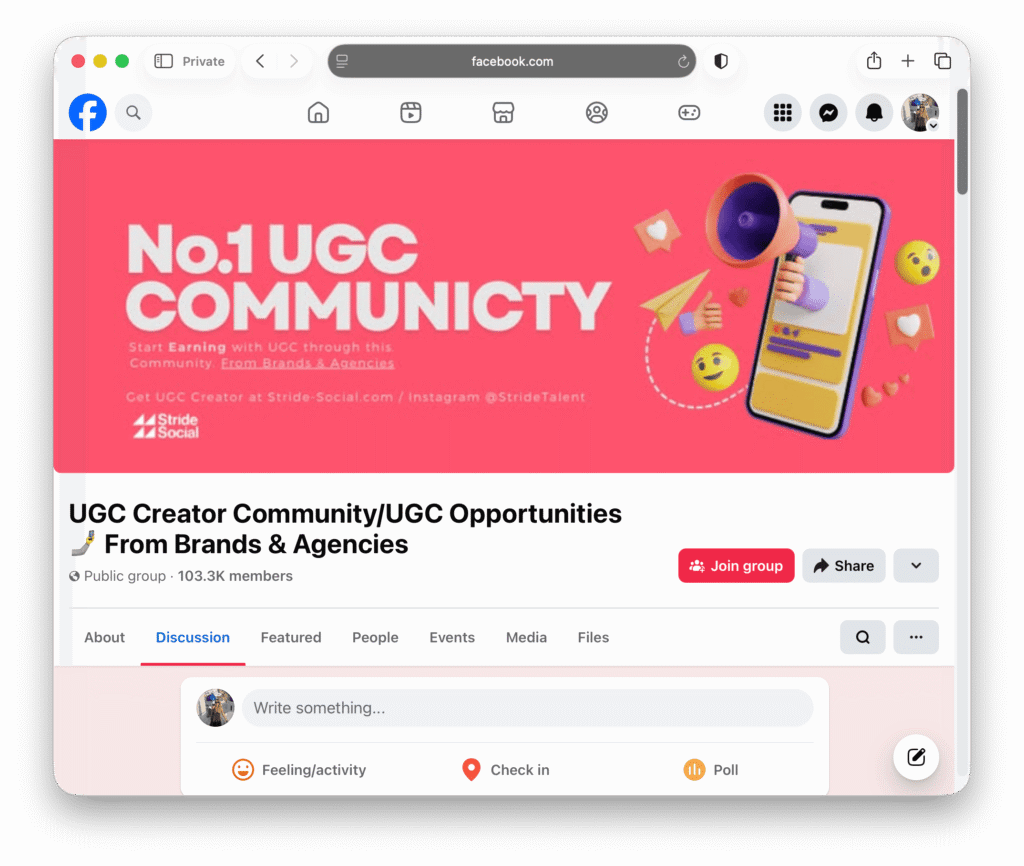
Engage with other Creators, share tips, and ask questions. It’s a fast way to stay up-to-date on rates, contracts, and new platforms hiring UGC Creators. You can also begin to build real relationships that lead to referrals or take overflow projects when another Creator is fully booked.
Engage With Brands Organically
Before pitching, follow the brands you want to work with. Comment on their posts, share their campaigns, and interact genuinely. That way, when they come across your email or DM later, your name will already feel familiar—a small advantage that can boost your odds of landing a deal over someone else.
Tools for UGC Creators
You don’t need a professional studio to create UGC that sells. Most top Creators build their workflow around simple tools that make filming, editing, scripting, and delivery fast and repeatable.
Here are the essentials to make your process smooth and your content look polished:
Filming and Setup Tools
- Smartphone with a good camera: An iPhone or recent Android model is enough. Focus on good lighting and steady framing.
- Tripod or phone stand: Keeps your shots consistent and professional.
- Ring light or natural window light: Bright, soft lighting makes any video look clean.
- Clip-on mic: Optional, but helpful for clear audio during talking-head videos. You can go for something simple like a Boya M1 or a low-cost wireless lav mic on Amazon.
Editing Tools
- CapCut: A free, mobile-friendly video editor used by most UGC Creators. It includes auto captions, templates, and transitions that match TikTok and Instagram trends.
- VN Editor: Ideal for quick cuts and syncing audio with visuals.
- Descript: Transcribes audio automatically and lets you edit videos by editing text, perfect for voiceovers or testimonial-style content.
- InShot or Canva Video: Great for adding text overlays, resizing clips, or repurposing your videos across platforms.
Scripting and Ideation
- Stanley: The AI Head of Content that connects directly to your social media account, learns your voice and data, then helps you turn it into high-performing content.
- ChatGPT: Use it to brainstorm hooks, outline talking points, or draft natural-sounding voiceover scripts.
- Wordtune: Helps you rewrite your portfolio bio or polish copy into a clean, professional tone.
- CoSchedule: Analyze your hooks and headlines to test their impact before you record.
Organization and Delivery
Once brands start hiring you, things can get busy fast. Use these to stay on track:
- Trello: Track clients, campaigns, and deadlines.
- Google Drive: Store deliverables in clearly labeled folders (for example, “Raw Footage,” “Edited Clips,” “Usage Rights”).
- Stan: Keep your portfolio link, service packages, and contact options all in one place.
AI for Efficiency, Not Imitation
AI tools can speed up scripting, editing, and admin work, but they can’t replace your perspective. What makes your UGC valuable is your voice, your face, and the trust you bring to the camera. Use technology to enhance those strengths, not to hide them.
Where to Find Paid UGC Jobs
You’ve got your videos, your portfolio, and your confidence. Now it’s time to land paid work.
There are more opportunities for UGC Creators than ever before, but they’re scattered across different corners of the internet. The key is knowing where to look and how to position yourself so brands can find you easily.
Let’s break down the best ways to find consistent UGC projects.
1. UGC Marketplaces
Marketplaces are platforms built specifically to connect brands with Creators. They act as matchmakers: brands post briefs, and Creators apply with their portfolios.
Some of the best options include:
- Trend.io: Curated campaigns for lifestyle, wellness, and fashion Creators.
- Collabstr: Combines UGC and influencer deals; great for early exposure.
- Billo: Lets you apply for short-form video projects directly in the app.
- JoinBrands: A growing platform focused solely on UGC content creation.
These marketplaces are perfect for beginners because they handle most of the logistics: briefs, communication, and payments.
Pro Tip: Apply even if the budget looks small. Your early projects build proof and lead to bigger brand relationships.
2. Freelance Platforms
If you’re comfortable managing your own clients, freelance platforms like Upwork and Fiverr are great long-term plays. To stand out:
- Create a profile optimized for keywords like “UGC Creator” or “UGC video ads.” Use your spec videos as samples.
- Build clear packages (1 video, 3 videos, or ad variations) and include thumbnail previews from your portfolio.
Freelance platforms reward consistency, so once you complete a few projects successfully, your visibility and client trust will start to grow organically.
Many brands hire directly through social media. Stay active on TikTok and Instagram, using hashtags like: #ugccreator, #ugccreatorswanted, #ugccontent, #ugcportfolio.
Post your samples regularly, tag brands you’d love to work with, and engage with their content. Even a simple comment can put you on a brand manager’s radar.
4. Creator and Marketing Agencies
Many brands outsource their UGC campaigns to Creator or marketing agencies. Partnering with these agencies can help you get a steady stream of projects without having to pitch every brand individually.
Start by researching agencies that specialize in UGC or Creator marketing and introduce yourself with a short, professional pitch. When you build genuine relationships, one good agency connection can keep your project pipeline full for months.
Pro tip: Agencies charge brands a fee on top of what they pay you, so sometimes they’ll try to push Creators for lower pricing. Don’t be afraid to negotiate and ask for more money. Know your worth, and consider offering bundled pricing or a monthly retainer for ongoing work.
5. Direct Outreach to Brands
Never underestimate the power of direct pitching. Once you’ve built your portfolio and a few strong examples, reach out to brands that fit your niche. Many smaller businesses—e-commerce brands, local companies, or startups—are looking for affordable, high-quality UGC Creators but don’t know where to find them.
Top 10 UGC Creator Platforms to Join in 2026
Finding the right platform can fast-track your UGC career. Instead of cold-pitching brands, these marketplaces connect you with companies actively hiring Creators.
Here’s a breakdown of the best UGC Creator platforms, their rates, and what makes each one unique.
| Platform | Best For | Average Rate | Payment Timeline | Key Features | Available Regions |
|---|---|---|---|---|---|
| Influee | Fast turnaround projects, bulk orders | $100-$300 per video | 7-10 days after approval | 80k+ vetted creators, AI video editing tools, 23 countries | Global |
| Twirl | EU & UK creators, whitelisting opportunities | $130-$300+ per video | Within 10 days | 200+ brands, Stripe/Lumanu payments, strong community | UK, US, Canada, Australia, Ireland, Western Europe |
| Billo | Video ads for social media | $100-$250 per video | 10-14 days | 5,000+ vetted creators, pro editing add-ons, US/UK/Canada focused | US, Canada, UK, Australia |
| Collabstr | Instagram, TikTok, YouTube content | $50-$500+ per video | Upon delivery | Influencer + UGC marketplace, direct brand communication, no platform fees | Global |
| The UGC Agency | High-volume opportunities | $100-$500+ per video | Direct bank transfer | 4,900+ creators, 200+ brands, 40+ countries, no follower minimum | Global |
| Insense | Creator ads & whitelisting | $150-$400 per campaign | 15-30 days | Meta & TikTok integration, creator marketplace, managed service option | US, UK, EU |
| Aspire.io | eCommerce brands, affiliate tracking | $200-$600 per campaign | Net 30 | Influencer discovery, affiliate tracking, enterprise features | US, Canada, UK |
| Brand Meets Creators | Building long-term creator rosters | $150-$350 per video | Automated upon completion | Pre-vetted network, integrated payments, ROI estimates | US primarily |
| Trend.io | Small budgets, fixed pricing | Credit-based ($99-$299) | Immediate upon approval | Fixed-price model, unlimited requests, full licensing rights | US, Canada |
| #paid | Premium brands, campaign strategy | $200-$800+ per campaign | Net 30-45 | Expert support team, data-backed matching, campaign strategy help | US, Canada, UK |
Pro Tips for Creator Platform Success
1. Join multiple platforms: Don’t put all your eggs in one basket. Most successful UGC Creators are active on 3-5 platforms at a time to maximize opportunities.
2. Complete your profile fully: Platforms with 100% complete profiles get 3-5x more brand matches than incomplete ones. Add your best samples, fill out all fields, and keep your portfolio updated.
3. Apply fast: Many platforms work on a first-come, first-served basis. Set notifications and apply to relevant campaigns within 24 hours of posting.
4. Start lower, scale up: It’s better to land your first 3-5 gigs at a lower rate and build reviews than to price yourself out of opportunities. Once you have proof, raise your rates.
5. Read the brief carefully: The #1 reason Creators get rejected is not following the brief. Brands are looking for specific content—deliver exactly what they ask for.
6. Track your applications: Use a simple spreadsheet to track which campaigns you applied to, when, and the outcome. This helps you identify which platforms convert best for you.
How to Scale From UGC Gigs to a Sustainable Business
Landing a few UGC deals is exciting. But if you want to turn this into steady income—something predictable, not just occasional—you need to think like a business owner, not a freelancer.
The difference between a Creator who makes a few hundred dollars a month and one who earns full-time income isn’t talent. It’s systems, repeat clients, and scalability.
Here’s how to grow beyond one-off projects:
Turn One-Off Clients Into Retainers
If a brand loves your first video, there’s a high chance they’ll need more content created. Don’t wait for them to reach out again—propose it yourself.
At the end of a successful project, send a short message like:
“If you plan to run more UGC campaigns this quarter, I’d love to create a few fresh variations for testing. I can also handle editing and ad optimization if needed.”
This simple follow-up can turn a one-off project into an ongoing retainer.
Offer Bundled Services
As you grow, think beyond filming. Brands need more than one video—they need multiple ad variations and supporting assets. You can expand your offers to include:
- Editing packages (repurposing content for different platforms)
- Scriptwriting or creative direction (helping brands craft their hooks)
- Content strategy consulting (advice on what performs best by platform)
- Campaign management (overseeing content creation for the full campaign)
By offering end-to-end packages, you position yourself as a creative partner, which helps you charge premium content rates and secure repeat work.
Build a Client Management System
Treat your UGC career like a real business. Use tools like Notion, Trello, or Google Sheets to track campaigns, deliverables, deadlines, and payments. When clients see that you’re organized, they trust you with larger budgets.
You can even use Google Drive or Dropbox to create branded folders for each client, with subfolders for raw clips, edited videos, and invoices. Professional presentation increases perceived value.
Collect Testimonials and Results
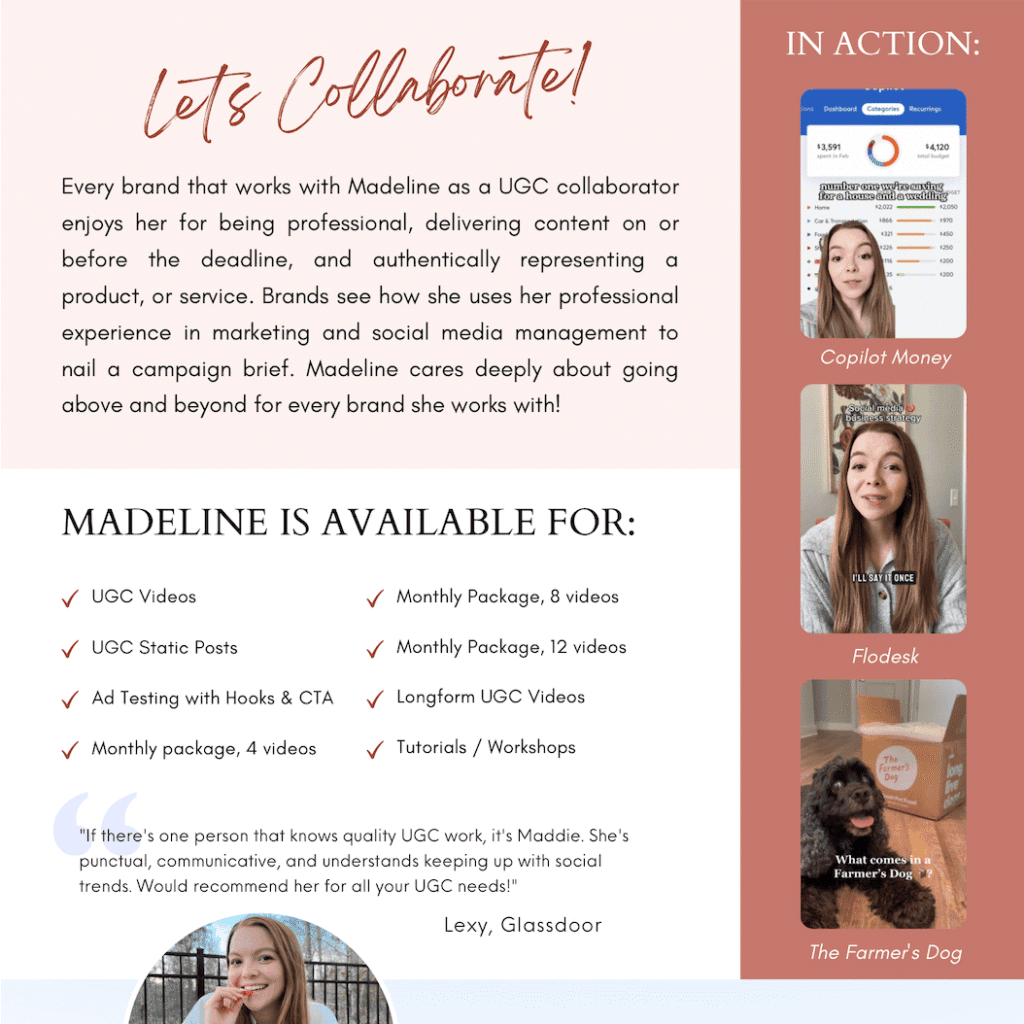
Ask happy clients for short testimonials or permission to share performance data. Even a message like “Your video doubled our click-through rate” can become powerful social proof. Add these quotes to your portfolio to increase your credibility when pitching new brands.
Here’s a great example from UGC Creator Madeline Eddi. In her portfolio, she clearly maps out what she offers backed by testimonials from clients she’s worked with. And to reinforce what she’s capable of, she’s included real examples of past work that give her added credibility.
Diversify Your Income
Eventually, you’ll want to rely on more than UGC brand work—especially if you plan on making a livelihood out of your Creator career.

You can diversify your income streams by:
- Selling digital products such as UGC script templates or portfolio kits.
- Offering consulting sessions for aspiring UGC Creators.
- Creating mini-courses or guides on UGC pitching, pricing, or your workflow.
This is where Stan makes a big difference. It lets you sell digital products, book calls, and share templates—all from a single link in bio store. With everything in one place and an easy setup, you can grow from creating UGC for brands to building a full-fledged Creator business of your own.
Common Mistakes New UGC Creators Make
Every UGC Creator starts somewhere. And even though it’s natural to figure things out as you go, some mistakes can hurt your growth or make brands hesitant to work with you.
Here are the most common traps beginners fall into, and how to avoid them.
1. Over-editing Content
Many new Creators think brands want cinematic transitions and heavy filters. In reality, that kills authenticity. UGC works because it looks real.
Keep your edits minimal. Focus on clean cuts, natural light, and an easy flow. If it feels like something you’d actually post on your feed, you’re doing it right.
2. Undercharging or Skipping Contracts
This is a classic rookie mistake. You might price low to get experience, but don’t undervalue your work—it hurts both you and the market.
And even for small projects, make sure you have a simple written agreement in place. Clarify usage rights, payment timelines, and deliverables. This protects you from unpaid work and miscommunication later.
If a brand seems hesitant to discuss contracts or payment terms, take it as a sign to tread carefully and make sure expectations are clear before starting.
3. Ignoring the Hook
The first three seconds of your video decide everything. If you start slow or sound overly rehearsed, viewers scroll away. Always test different hooks: a surprising statement, a question, or a quick result—anything that earns those first few seconds of attention.
4. Forgetting the Audience
UGC isn’t about you. It’s about the viewer. Many Creators focus too much on themselves instead of the pain points or desires of the target customer.
Before recording, ask yourself: What would make someone stop and feel seen? Then build your video around that moment of connection.
5. Not Delivering Variations
Brands need content they can test. If you deliver only one version of a video, you limit their results and your chance at repeat work. Record two or three intros, slightly different hooks, or alternative call-to-actions. It takes little extra effort but makes you look like a pro.
UGC Creator Examples
One of the fastest ways to grow as a UGC Creator is to learn from people already doing it well. Studying how they package their skills and land brand deals can help you shape your own approach.
Here are a few strong examples:
1. Taylor Ives
Taylor is a direct-response UGC Creator whose work leans heavily into beauty and wellness products, backed by strong visual hooks and scroll-stopping first lines. Her portfolio showcases ad-ready videos designed to convert.
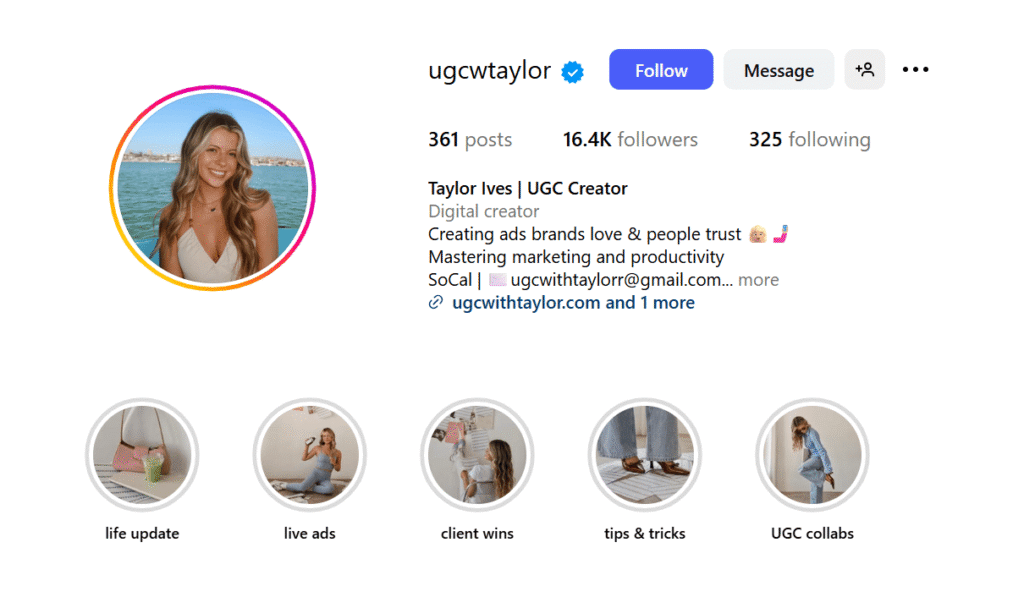
Niche: Beauty + wellness
Partners with brands like: Sephora, Maybelline, Starbucks
Portfolio: Taylor’s portfolio
2. Julia Phillips
Julia specializes in performance-driven UGC for beauty and personal care brands, with a portfolio that highlights paid media ad variations and analytics screenshots to prove results. She focuses on content that’s tested, measured, and optimized.
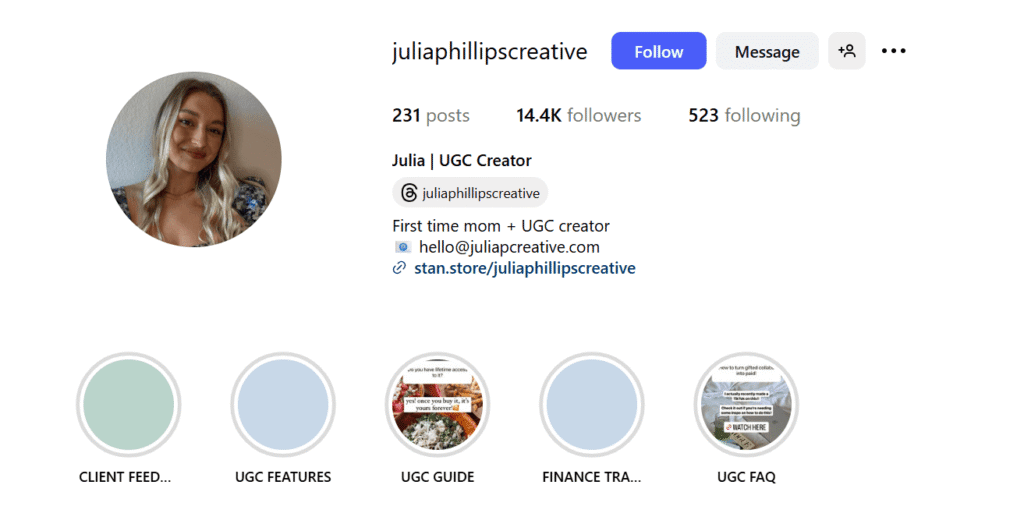
Niche: Beauty + personal care
Partners with brands like: Curious Elixirs, Carpe, and Nordstrom
Portfolio: Julia’s portfolio
3. Carolyn Marshall
Carolyn blends UGC creation with consumer psychology, and her portfolio reflects that—she combines lifestyle visuals with thoughtful messaging that taps into emotion and everyday behavior.
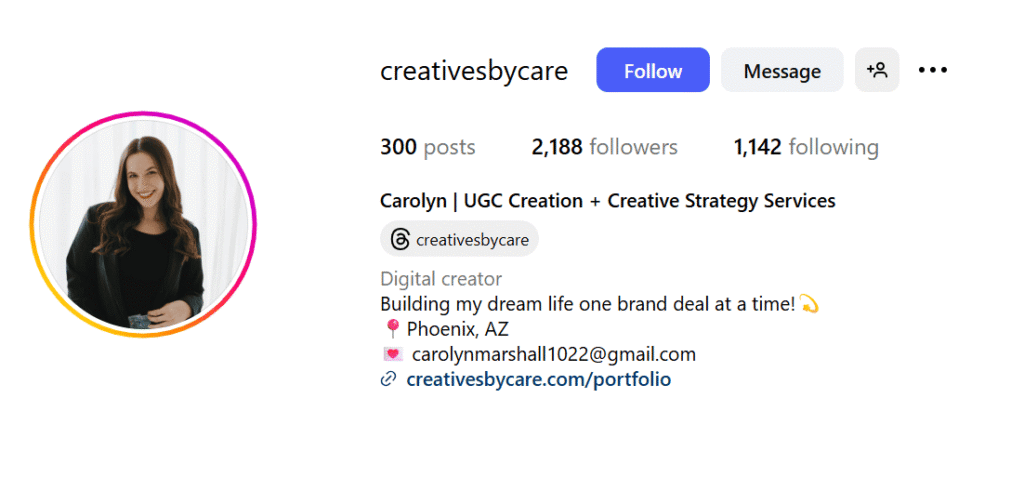
Niche: Personal care + wellness
Partners with brands like: Buff City Soap, ButcherBox, Hilo-Pill
Portfolio: Carolyn’s portfolio
4. Danielle Sabatini
Danielle focuses on travel, interiors, and hospitality-based UGC. Her portfolio features boutique hotels, luxury stays, and interior content that feels elevated, clean, and editorial.
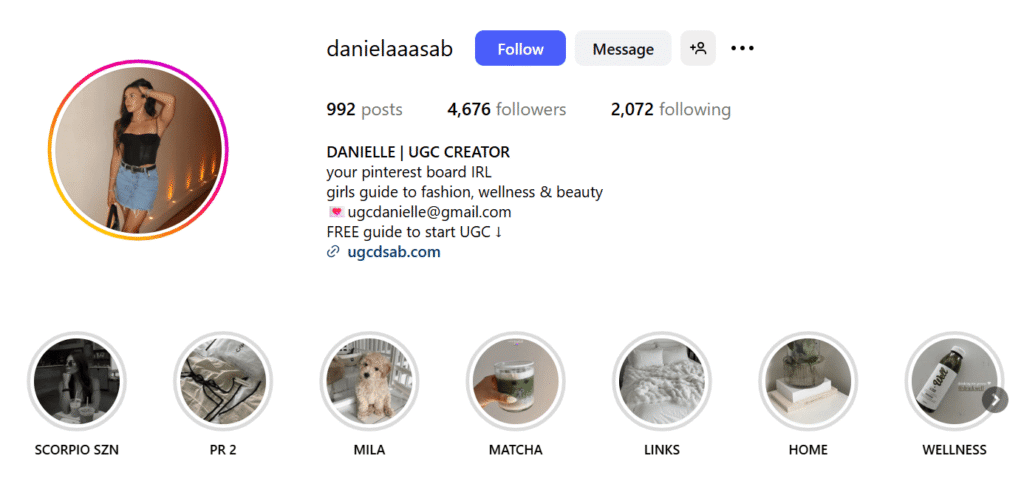
Niche: Travel + interiors
Partners with brands like: Villa Sunrise, Noble Nest, Park Hyatt
Portfolio: Danielle’s portfolio
5. Baotran Tran
Tran combines native TikTok culture with performance-focused angles, and her portfolio clearly shows high-level UGC integrations across well-known tech and lifestyle brands. She blends storytelling with direct response style hooks that feel organic, not “ad-like.”
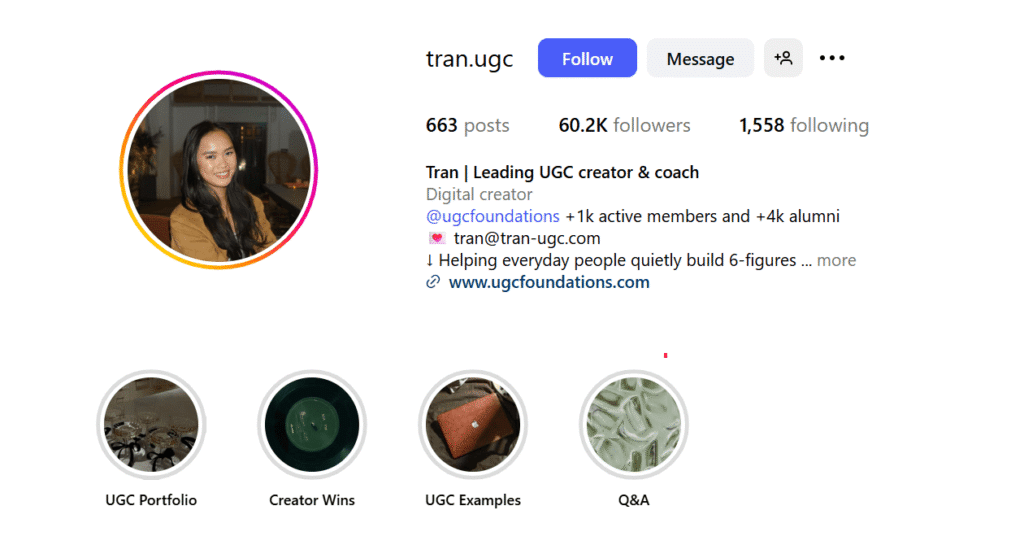
Niche: Tech + lifestyle
Partners with brands like: Adobe, Google, Western Union
Portfolio: Tran’s portfolio
Where UGC Fits in Your Creator Journey
UGC is one of the fastest ways to start earning as a Creator—but it’s also a stepping stone.
Creating UGC content for brands helps you earn while building core marketing and relationship management skills. You learn to tell stories that sell, position products effectively, and understand what gets an audience’s attention. These are the same skills every successful Creator-Entrepreneur uses to build lasting wealth.
After your first few brand deals:
- You’ll understand how to film, script, and edit efficiently.
- You’ll know how to price your time and manage clients.
- You’ll develop an eye for what resonates with people online.
These are the foundational skills of any great Creator business.
From here, you can start expanding beyond UGC gigs into offers you own—things that scale with you instead of relying on brand budgets.
You might:
- Build a personal brand and grow your own audience.
- Create digital products or templates that help other Creators.
- Offer coaching or consultations for brands that need help with UGC strategy.
- Launch courses or resources to teach what you have learned.
- Start a community that connects influencers and niche Creators around the world.
This is the path many UGC Creators eventually take.
Mehr Rajput is a prime example. She started with UGC brand campaigns, then used those same skills to create playbooks, mentorship programs, and consulting offers, all sold directly through her Stan Store.
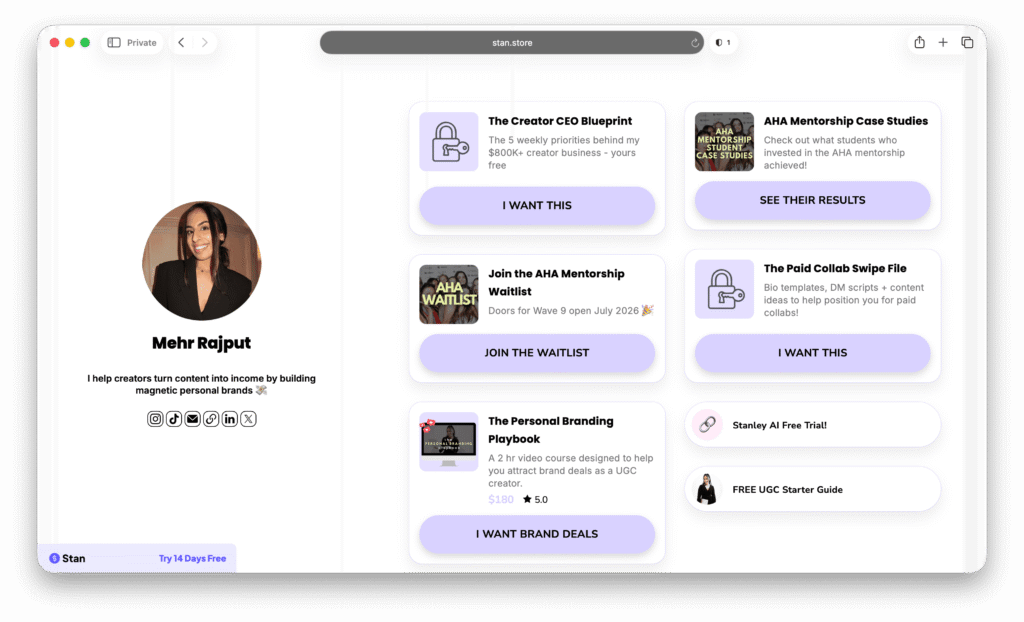
Mehr is proof of what is possible when you stop relying only on brand budgets and start building offers you fully own. And tools like Stan make this shift easier because everything can live in one place—from your digital products to your waitlists, affiliate links, and more.
If you’re ready to move beyond one-off UGC gigs and build offers you own, set up your Stan Store with a free 14-day trial today.
Your Turn to Build the Creator Life You Want
You’ve learned the process, the skills, and the strategies you can use to make it as a UGC Creator. What happens next is up to you.
Keep creating and refining your approach. Each project you take on builds trust, sharpens your storytelling, and strengthens your place in the Creator economy.
Whether you choose to keep collaborating with brands or branch into your own digital offers, remember this: the skills you’ve built through UGC are your foundation. They’re proof that you can create work people believe in—and that’s where every thriving Creator career begins.
FAQ: Becoming a UGC Creator
A UGC Creator creates authentic photos and videos for brands to use in their marketing campaigns. Unlike influencers who share content with their own followers, UGC Creators send their content directly to brands—who then use it across social media ads, websites, email campaigns, and other marketing channels.
Think of it as freelance content creation. Brands hire you to create relatable, user-style content that looks like something a real customer would post—not a polished ad.
No. This is the biggest difference between UGC Creators and influencers—you don’t need any followers to start getting paid for UGC work.
Brands hire UGC Creators for their content skills and authenticity, not their audience size. Many successful UGC Creators have less than 500 followers (or even private accounts) and still earn $2,000-$5,000+ per month creating content for brands.
Rates can vary a lot based on your experience, the content type, and usage rights, but here’s a general breakdown:
Beginners: $75-$150+ per video
Intermediate Creators: $200-$350+ per video
Experienced Creators: $400-$600+ per video
Premium packages: $1,000-$2,500+ for multi-video bundles with usage rights
Many full-time UGC Creators earn $3,000-$7,000 per month working with multiple brands. Part-time Creators typically make $500-$2,000 monthly, depending on how many projects they take on.
You can start creating sample content today. But landing your first paid collaboration typically takes a few weeks when you’re new to the space. Here’s where to start:
Week 1-2: Create 3-5 sample videos and build your portfolio
Week 2-4: Apply to platforms and pitch to 10-20+ brands
Week 4-8: Create content for your first paid gig (most Creators land something within 4-8 weeks of consistent effort)
The timeline varies based on how actively you pitch, your content quality, and your niche. Creators who apply to 5-10 opportunities per week tend to land work faster than those who wait for brands to find them.
You don’t need much to get started in the UGC industry, and you probably already have everything you need.
Start with the essentials:
Smartphone with a decent camera
Natural lighting or a basic ring light ($20-$40)
Phone tripod ($15-$30)
Free editing app (CapCut, InShot, or Descript)
Optional upgrades:
External microphone for clearer audio ($30-$100)
Additional lighting setup
Most brands prefer authentic, phone-filmed content over high-production videos, so start simple and upgrade as your UGC income grows.
Most brands and UGC platforms pay via:
PayPal (most common)
Direct bank transfer (ACH or wire)
Stripe
Venmo or Cash App (for smaller projects)
Platform-specific payment systems (like Influee, Twirl, or Billo)
Payment terms vary by brand:
UGC platforms: Usually 7-14 days after content approval
Direct brand deals: Net 15-30 days (sometimes Net 60 for larger companies)
Freelance marketplaces: Payments are usually released upon delivery
Always clarify the payment terms and method before starting work. And once you’ve delivered the content, send a simple invoice with your payment details, project description, and payment due date.
Absolutely. Every successful UGC Creator started with zero experience or brand deals.
Here’s the path most beginners take:
Watch successful UGC videos on the TikTok Creative Center and Meta Ad Library
Create 3-5 sample videos using products you already own
Build a simple portfolio (Canva, Google Drive, or Notion page)
Apply to UGC platforms and pitch to small brands
Use your first paid projects as proof to attract bigger clients
Brands care more about your ability to create engaging, authentic content than your résumé. If your sample videos look good, you’ll get hired.
Usage rights determine how a brand can use your content. When you create UGC, you’re granting the brand permission to use your video in specific ways, like:
Organic social media only: Brand can post on Instagram, TikTok, Facebook (lower rate)
Paid ads: Brand can run your video as a paid advertisement (higher rate—add 25-50%)
Website/email: Brand can use it on product pages, landing pages, emails (standard)
Whitelisting/Spark Ads: Brand runs ads directly from YOUR account for 30-90 days (add $100-$300)
Perpetual rights: Brand owns content forever vs. limited time (add 50-100%)
Always specify usage terms in your contract. If a brand wants to run your video as a paid ad reaching millions of people, charge accordingly.
You can find UGC work through:
1. UGC Creator Platforms, like Influee, Twirl, Billo, Collabstr, The UGC Agency, and Insense.
2. Direct Pitching, such as finding brands on Instagram/TikTok with active ad campaigns, emailing their marketing team your portfolio, or offering a test video at a discounted rate.
3. Freelance Marketplaces, like Upwork, Fiverr, and Contra.
4. Social Media Hashtags. Try searching #UGCcreator, #UGCcreatorswanted, or #contentcreatorwanted. Brands often post casting calls directly on TikTok and Instagram
For the fastest results, combine multiple approaches: join 2-3 platforms AND pitch 5-10 brands per week.
Yes—always. Even for small projects. A contract protects both you and the brand. It doesn’t need to be complicated. A simple email agreement covering these points works:
Project deliverables (how many videos, length, style)
Payment amount and timeline
Usage rights (where/how brand can use content)
Revision policy (1-2 rounds of minor edits included)
Delivery deadline
What happens if brand doesn’t approve content
Many UGC platforms (like Twirl and Influee) handle contracts automatically. For direct brand deals, create a simple template and send it before you start filming.
Generally, yes—but be strategic about it. Most brands understand that UGC Creators work with multiple companies. But to protect yourself:
Check for exclusivity clauses: Some contracts prohibit creating content for direct competitors for 30-90 days
Don’t post competing products back-to-back on your portfolio
Use different angles: If you review two skincare brands, vary your approach so it doesn’t look repetitive
Disclose when necessary: If a brand asks about conflict of interest, be honest
Premium brands sometimes pay extra for exclusivity (an additional 20-50% of your rate). If they want you to avoid competitors, make sure the compensation reflects that restriction.