TL;DR
Want to make money online? Online coaching is one of the fastest ways to start without much upfront investment. As demand grows, with coaching revenue nearly doubling in the last two years, now’s the time to get in on it. Here’s why you should consider coaching online, how to get started, and three ways to market it to keep more clients booking.
You could be getting paid for what you already know. Online coaching is one of the best ways to start earning online—it’s scalable, doesn’t require much setup or overhead, and can easily fit around your current job or schedule.
Plus, demand for it keeps climbing. In 2025, global coaching revenue crossed $5.34 billion—almost double the 2023 total.
People are tired of generic advice and saving posts they’ll never act on. What they want is proximity to someone who’s already figured out the obstacle they’re struggling with—access they’re willing to pay for. And if your field of expertise is nuanced, it can be a much more impactful format for your customers.
Some advice simply can’t be flattened into a PDF—it changes depending on the person, their timeline, and what they’ve already tried. Coaching lets you tailor your recommendations instead of sharing a one-size-fits-all approach to their problem.
In this guide, we’ll break down why coaching is worth your time, how to launch your first offer in minutes, and the marketing strategies that’ll keep your calendar booked out.
Let’s get into it.
The Benefits of an Online Coaching Business
Today, there are countless ways to make money online. So why choose online coaching over other business models?
For one, it’s relatively easy to get started with. Most coaching niches don’t require a formal certification or degree—they’re built on your areas of expertise, lived experience, and proven frameworks.
And because coaching tends to be much more personalized than a digital product, you can tailor your guidance to what your clients truly need.
It can be an incredibly rewarding and lucrative business model with numerous benefits, like:
- Being able to launch or pivot your coaching offers quickly, without investing time and resources into a tangible digital product
- Fostering closer relationships with your customers and getting to see the direct impact of your work
- Building authority as a leader in the space with a track record of measurable results
- Having the freedom to design your coaching business around your lifestyle and financial goals
- Making more money per sale. People tend to pay more for personalized coaching than digital products.
But, of course, there are pros and cons to every business. To build a successful online coaching business, you’ve got to get really clear on who your ideal clients are and find ways to consistently attract them—through marketing, referrals, speaking engagements, your existing network, and more.
With coaching, your business is also tethered to a finite resource: your time.
Realistically, you can only take on so many clients at a time. So if you want to build a living online coaching, you’ve got to get creative about how you package and price your offers. Let’s talk about how.
Types of Online Coaching Business Models
There are several ways you can make money coaching. You can build your business around one coaching format, or use a mixed approach. Sell one-off sessions, fixed coaching programs, or ongoing retainers.
What’s ‘right’ for your business ultimately comes down to:
- Who you want to serve. Do you want to help individuals, serve a community, or support teams?
- Your capacity for client calls. How much time can you dedicate to coaching calls each week? And if you’re running your coaching business alongside a 9-5, when can you fit those calls in?
- The type of coaching you offer. Some types of coaching tend to be more individualized than others, like relationship coaching, while some niches can actually benefit from a group dynamic, like business coaching.
- Your preferred working style. Some coaches prefer working with one person at a time, while others find more fulfillment from working with groups or teams.
- What your clients need. Listen to what your audience is asking you for and build coaching programs around their needs.
If you’re not sure where to start, experiment with a few different business models to see which feels most aligned. Here are the most common coaching formats to try.
One-on-One Sessions

When you think of online coaching, the first format that comes to mind is most likely 1:1 sessions, where you support one client at a time. This is usually the format most coaches start with, because it allows them to curate guidance to each client’s needs and get comfortable coaching.

Individual coaching typically commands a higher price point because you can only take on a select few clients and provide a lot of value in each session. You can sell one-off sessions or offer packages for those seeking continued support.
For example, a career coach might charge $200 for a single session, or $1,100 for a six-week package that includes weekly calls and interview prep. Since the work is tailored to one person’s industry, goals, and timeline, clients are typically willing to pay more per hour than they would for a group program.
Stan makes booking coaching calls unbelievably easy. Just add a Coaching Call product to your Stan Store, set your availability, and hit publish—no website necessary. Now, whenever someone visits your link in bio, they can book and pay for their next session on the spot.
Group Coaching

Another popular format is group coaching. Group coaching brings multiple clients together into structured sessions, allowing you to serve numerous people at once while giving participants an added layer of peer accountability.
When you’re struggling to fit individual coaching calls into your calendar, a group program gives you more room to scale. And it can be especially helpful for those looking to take action toward a goal in a fixed period of time.
Take UGC Creator and creative strategist Mehr Rajput, for example. When she found herself stretched thin with 1:1 coaching, she pivoted to a live group format—splitting her AHA program into segmented tiers and adding a lower-priced group option.
She was worried no one would buy. But within days of launching, her group coaching cohorts filled up, and the group dynamic made the student experience even better. The shift gave Mehr the financial and time freedom to finally leave her 9-5 and go all-in on her business.
Corporate Training or Workshops

As an online coach, you can also lead corporate leaders or teams through workshops. This format works really well if you’re into business coaching, leadership coaching, or any personal development. It’s also a natural fit for wellness coaches, since many companies set aside budget for health and wellness programming and are actively looking for experts to bring in.
The easiest way to approach corporate training is to take the topics you’re already supporting clients with and reshape them into a team workshop. For instance, a productivity coach who helps freelancers manage their workload can run a time management session for a marketing department. Likewise, a mindset coach can lead a burnout workshop for a company’s leadership team.
Companies tend to have much bigger budgets than individuals, so you can charge much more for a single session. And it’s easier to pitch teams on the broader impact your coaching could have, since you’re talking to a room full of people rather than one person.
The Fastest Way to Start Online Coaching: 4 Steps
Whichever coaching format you land on, you don’t need to pour months into creating a digital course, digital download, or challenge before you can sell it. All it takes is a few simple steps.
If you’re feeling the pull to try online coaching, here’s where to start.
1. Launch a Stan Store
It only takes a few minutes to set up a Stan Store and begin accepting clients. You can start a free trial, set up direct deposit, link your socials, and publish your store instantly.
And with everything you need to create online courses, digital downloads, memberships, communities, webinars, and coaching at your fingertips, there’s no stopping what you can sell on Stan.
2. Define Your Coaching Offer
Once you’re inside Stan Store, navigate to the My Store tab and add a Coaching Call product. Then, choose the style, add an image, and update the product copy (what people will see first when they visit your store).

Next, customize your checkout page. This is the last page a potential client will see before they complete their booking, so make sure it tells them exactly why they should work with you.
This is a great time to step back and clarify what you intend to offer. The coaching format you want to sell, the transformation you deliver, how many coaching spots you’ll open up, and your pricing.
Once you’ve mapped out all the details of your offer, update your Coaching Call checkout page to include:
- A title and description that highlights the transformation clients can expect.
- An image that conveys the type of coaching you offer.
- Pricing that aligns with the value you deliver. You can also offer payment plans, discount codes, or limit how many people can book a call with you.
3. Set Your Availability
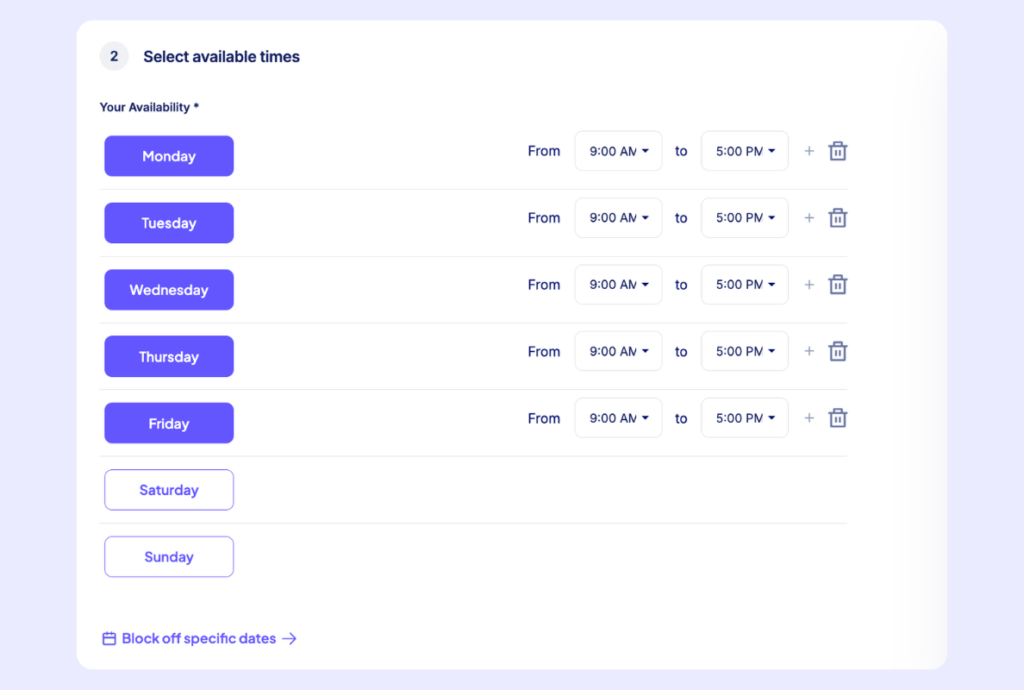
You’re nearly ready to launch your coaching offer. All that’s left is to set up your availability so you’re never double-booked. Within Stan, you can:
- Set the meeting platform and duration, so your clients know exactly how to join sessions and how long they’ll last.
- Add booking rules that protect your time, like a minimum booking notice period, maximum number of attendees, and how far ahead customers can schedule a meeting with you.
- Automatically schedule breaks between meetings, so you’re never left scrambling to jump from one call to the next.
- Mark your weekly availability for calls and block specific dates you’re unavailable.
4. Publish And Share
That’s it! Your coaching offer is ready to launch—all that’s left to do is hit publish 🎉
Once it’s live, share it with your community. Add your Stan Store link to your bio so your followers can easily find it, and share it in your social media posts, email, Substack, and wherever else you engage with your audience.
The key to financial success isn’t launching your coaching offers and passively waiting for bookings to start coming in. It’s making sure people know about them (and can’t wait to work with you).
3 Marketing Strategies to Book More Coaching Calls
Online coaching is a highly saturated market. So what separates the most successful online coaches from the rest?
Distribution. Trust. Positioning.
That’s it. The top coaches in the world have all gotten there by making sure people know about them, trust them, and believe they’re worth the investment.
Here are a few strategies you can use to do the same.
1. Build In Public
It’s tempting to wait until you’ve got a perfectly mapped out strategy, polished offer, and your first clients under your belt before you start talking about your coaching business online. But the best way to land those first customers—and attract clients well after you launch—is to start posting about it as you’re building it.
Document what you’re working on instead of forcing new content ideas. Tell your audience why you decided to start coaching, who you want to help, what you teach, and the ways you’re thinking about serving them. Then, ask them what they’d love your help with and really listen to their response.
Trust us—it works. Stan exists because our Co-founder, John Hu, decided to build in public on TikTok. Since then, we’ve continued building every new product in public, listening to our audience’s feedback in real-time and inviting them into the journey.
2. Share Social Proof
The last time you made an online purchase, did you buy it blindly? Or did you look to product reviews, Reddit threads, or client testimonials for reassurance that it was worth your money?

If the latter, you’re not alone. Today, 95% of customers look to reviews before making a purchase.
Before people pay for something, they want to feel confident it’s a good buy—especially if it’s a higher-priced investment, like coaching. That’s why social proof is crucial for building trust.
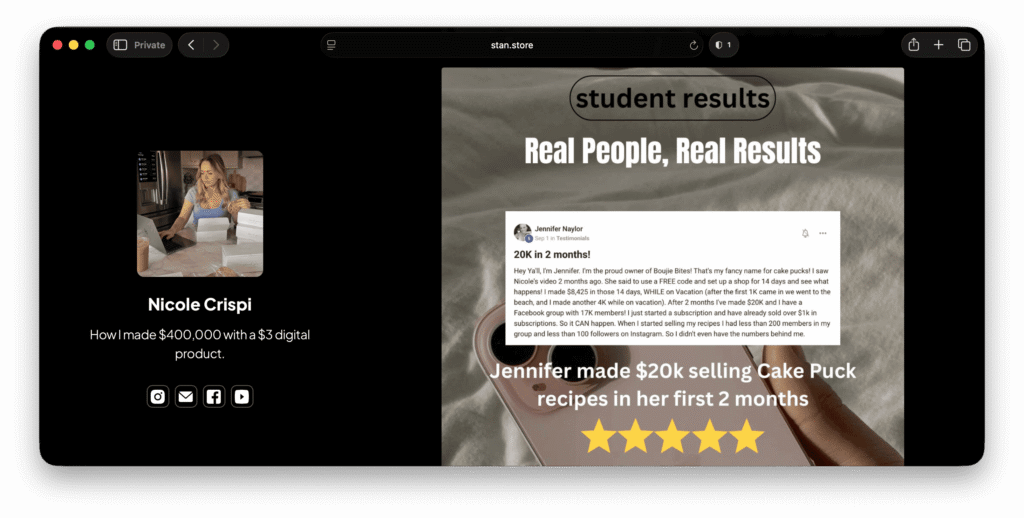
Social proof is how you forge that like-know-trust factor with your audience by sharing real client results, reviews, and testimonials. You can build it into your Stan Store checkout page, your marketing content, and your past clients’ content.
You don’t have to be a seasoned coach to start collecting and sharing social proof. When you’re just getting started, you can offer a few free sessions in exchange for testimonials. And once you’ve had your first few clients, start sharing your customer wins (with their permission, of course).
When clients have a great experience with you, most people are willing to share it or refer other clients your way, so don’t be afraid to ask.
3. Offer a Freebie
The most successful online coaches have mastered the art of positioning themselves as the obvious choice in their ideal clients’ brains. When clients book their coaching programs, they don’t question the pricing because they already see the value. They’re confident in the return on investment (ROI), whatever that may be.
So, how do you do the same?
By making sure:
- You’re viewed as an expert in your space who can deliver a real transformation.
- You’re building relationships with your audience by leaning into what makes you, you.
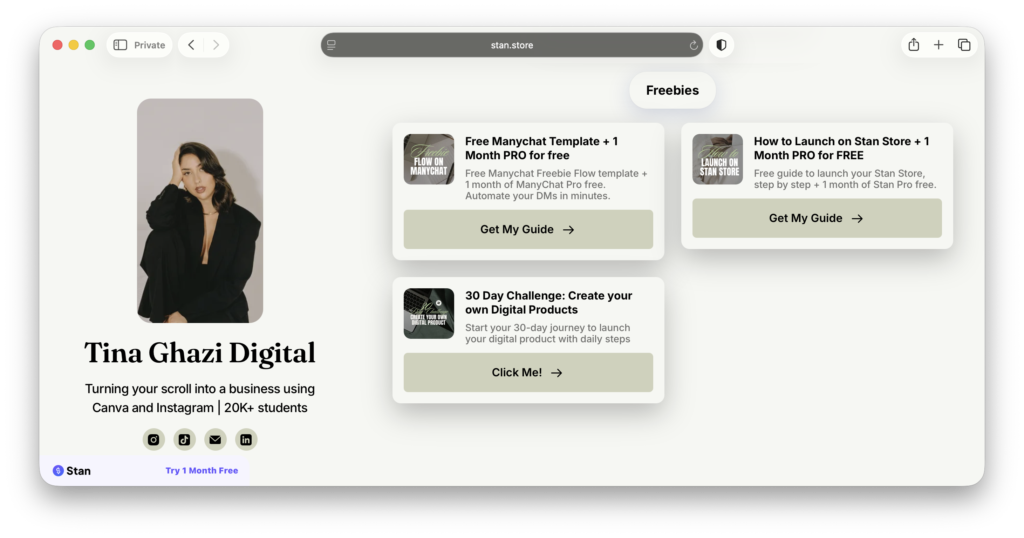
You can accomplish both by creating a freebie that nurtures your audience toward booking a session. Maybe it’s a free digital download, a webinar, or a mini course that gives them a taste of what you know and what it’s like to work with you before they ever pull out their credit card.
Whatever freebie you choose, make sure it feels relevant to your coaching offer, true to your brand, and captures their email. Then, set up an automated email series for new subscribers that gradually introduces who you are, what types of coaching you offer, and why you started doing this work.
By combining a freebie with an email nurture series, you’ll effortlessly sell new leads on your paid coaching options while deepening your relationship with subscribers.
Ready, Set, Sell with Stan Store
You don’t need months of prep to start coaching online. You need a clear offer, a price, and an easy way for people to book you.
Stan gives you the last part. Just add a Coaching Call product to your store, set your availability, and hit publish. You can book clients, collect payments, and manage your calendar in one place—without stitching together scheduling tools, payment processors, and landing pages.
Ready to try it yourself? Start your 14-day free trial.