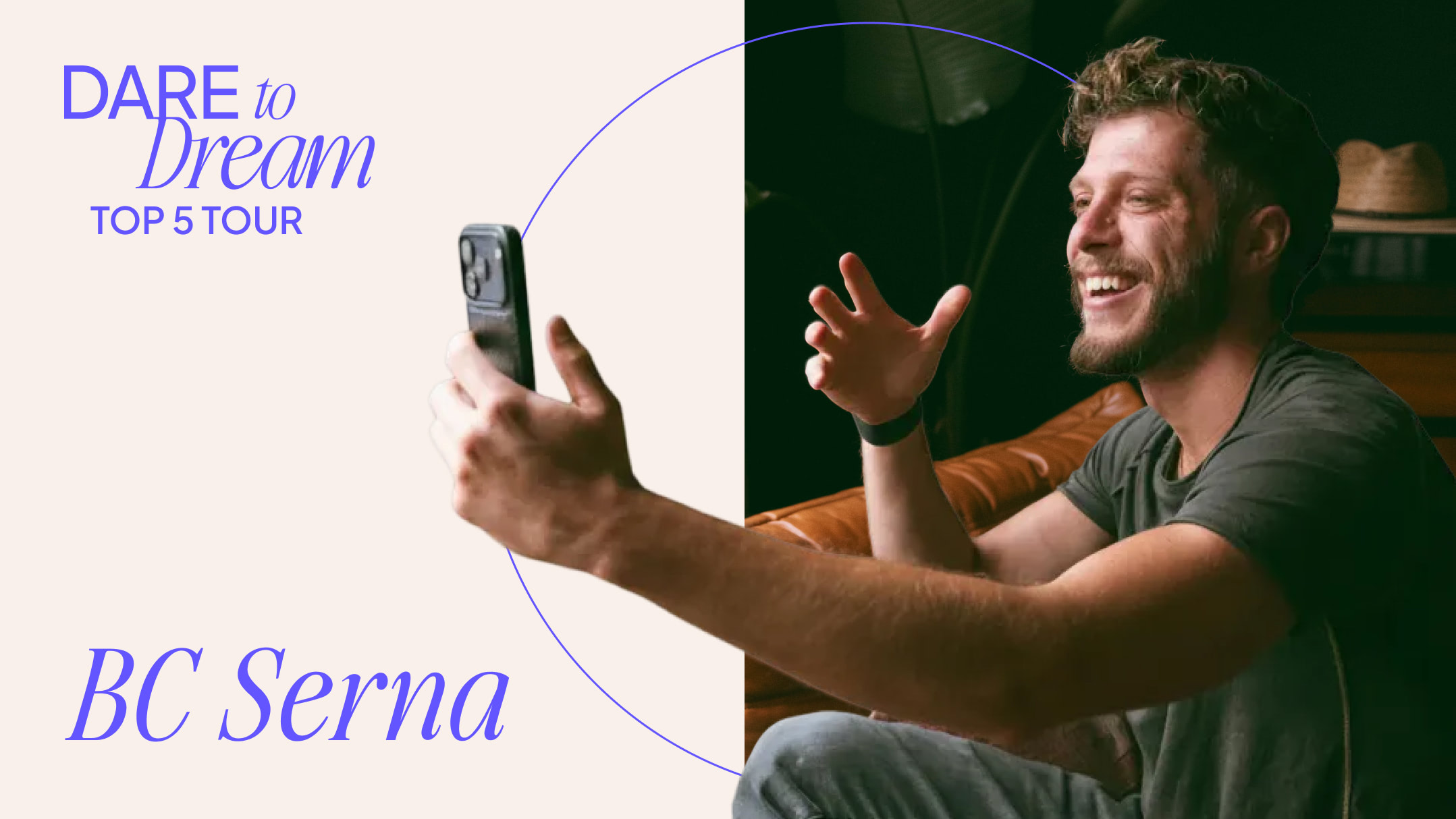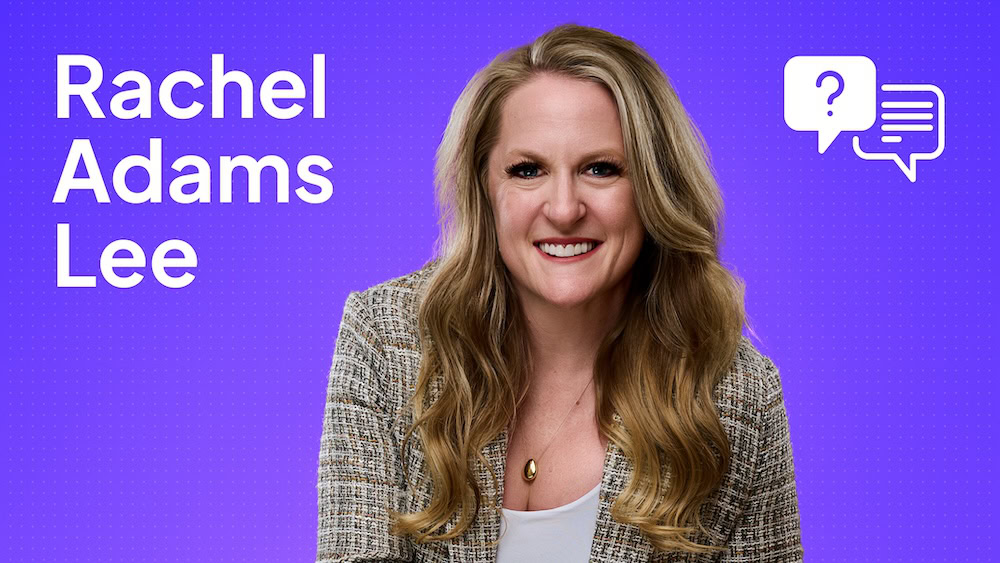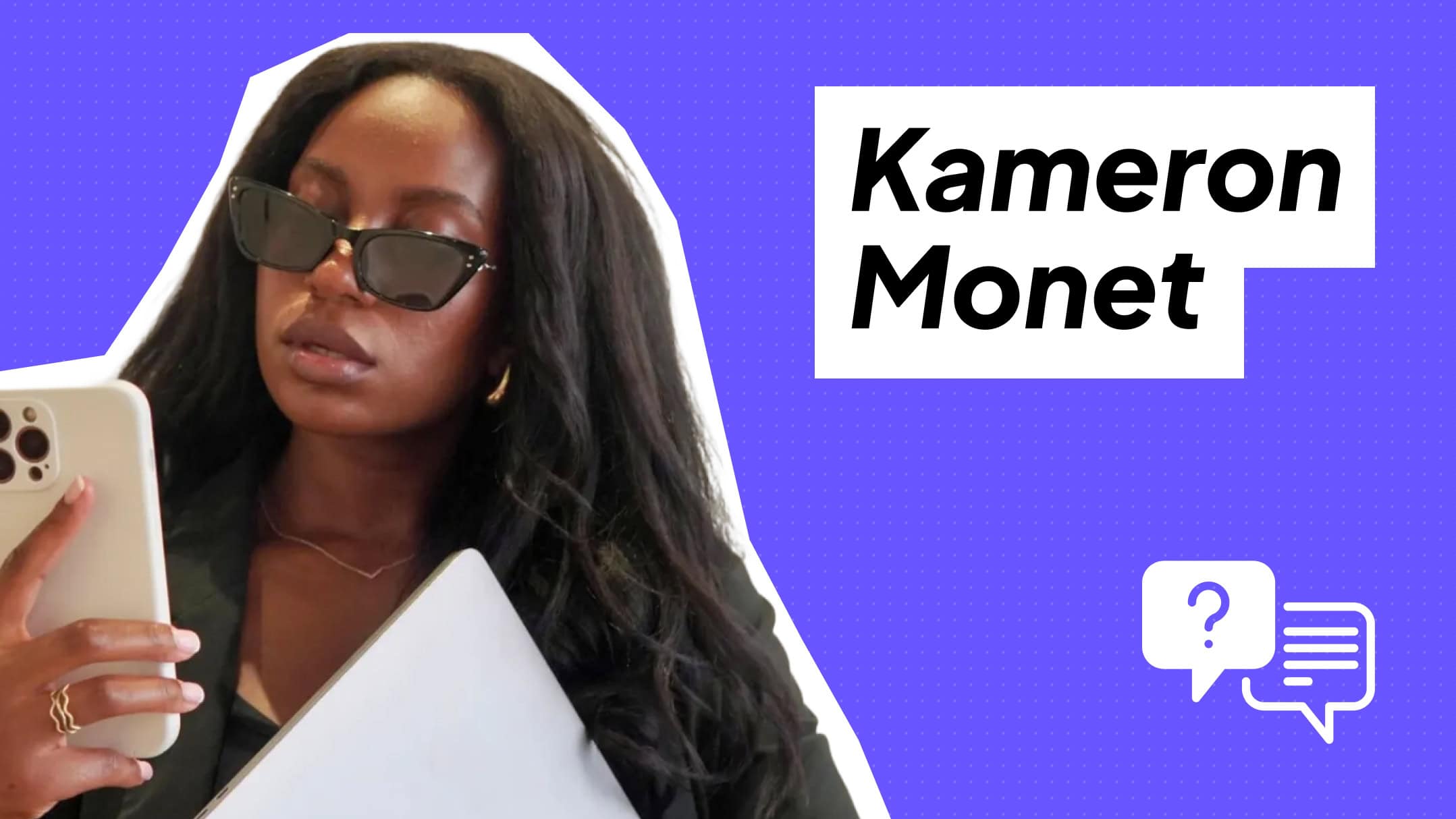

TL;DR: The legal stuff you’re tempted to skip? It can quietly cost your Creator business money, ownership, and leverage. Lawyer and Creator, Kameron Monet, breaks down the most common legal mistakes Creators make—so you can protect your work, set better boundaries, and build a business that lasts.
We know you’re busy creating, editing, managing payments, and juggling everything else it takes to be a Creator. But sometimes, the “boring” legal stuff you push to the bottom of your to-do list can become the biggest threat to the business you’ve worked so hard to build.
A contract you didn’t fully read. Usage rights you didn’t think to question. An exclusivity clause that felt harmless at the time.
These decisions compound—slowly limiting how you get paid, what you own, and how much control you have over your creative work. And yet, most Creators don’t know where to start when it comes to legally protecting themselves.
That’s why we sat down with lawyer, Creator, and tech founder, Kameron Monet, to unpack the most common legal mistakes Creators make, and simple ways to prevent them from harming your business.
Meet Kameron: Lawyer, Creator, and Tech Founder
Kameron understands the legal side of the Creator economy because she’s lived it from both sides. Long before becoming a lawyer, Kameron was a Creator posting beauty content and vlogs on YouTube as early as 2014.
That firsthand experience shaped how she saw the industry, even as she stepped away to pursue law school and practice employment litigation.
But while building her legal career, something unexpected happened: friends and fellow Creators kept coming to her with the same questions.
Can you review this contract? What does this actually mean? Am I signing away my rights?
Suddenly, Kameron found herself immersed in brand contracts, intellectual property (IP), and media law—helping Creators navigate deals she once signed herself without fully understanding.

Then the COVID-19 pandemic hit. At the time, Kameron was at a crossroads in her career when someone asked what she charged for contract reviews. That’s when everything clicked—there was a real need for legal support in the Creator economy.
That year, Kameron left her law firm to start a legal consulting business focused exclusively on Creators. In the five years since, she’s supported hundreds of Creators across industries—helping them protect their work, advocate for themselves, and avoid legal mistakes that cost them money, ownership, and leverage.
As her practice grew, Kameron was constantly at client capacity, yet fielding the same legal questions from Creators again and again. The demand was there, but most Creators didn’t have an accessible place to get answers.
That realization planted the seeds for Social Docket—a new AI-powered legal infrastructure that gives Creators a one-stop shop for legal education and support that aligns with the way they work and think.
“It’s been amazing to now come back to my Creator community and share everything that I’ve learned.”
The Top 11 Legal Mistakes Creators Make
Legal mistakes don’t usually happen all at once. They show up in the small moments—when excitement takes over, timelines feel rushed, or a contract “mostly” makes sense. And the reality is, most Creators are never taught what to look for in those moments.
That’s why Kameron is here to share the most common legal mistakes she sees Creators make, and how you can avoid them.
1. Not having a contract in the first place
When a brand you love approaches you to work together, it’s natural to feel excited and want to jump right into things. But where many Creators stumble is not requesting a contract when committing to an offer.
Asking for a contract doesn’t make you difficult to work with or ungrateful—it makes you responsible. You’re running a business, after all. It’s fair for you to treat it like one.
Coming to terms with brands will help you protect the relationship, align on key details like timelines and payments, and ensure everyone involved has clear expectations.
2. Signing before you understand what you’re agreeing to
When a brand does present you with a contract, it’s crucial to review every detail and make sure you fully understand it. More often than not, Creators rush into agreements with dream brands before comprehending what they’re truly giving them rights to.
Kameron gets it—she’s been there. But that burst of excitement you’re feeling? That’s the moment to pause, review the agreement through a CEO lens, and slow down enough to read what you’re signing.
If you’re unsure about the terms, you can consult with a lawyer or try using a Creator-specific tool like Kameron’s app, Social Docket, to get answers to your questions.
3. Disregarding usage rights
The real money in the Creator economy isn’t just in posting—it’s in usage. Usage rights determine how, where, and for how long a brand can use your content after it’s posted.
You’ll often hear brands use legal terms like “perpetual rights” or “irrevocable rights,” which can give them a runway to use your content indefinitely.
Things like reposts, ads, websites, emails, and multiple platforms? All of that carries a different value and should be priced accordingly. Instead of agreeing to broad terms that give brands more control over your content than you do, align on a specific period of use and add-on costs for use beyond the original scope.
4. Accepting broad exclusivity clauses
Brands love to ask for exclusivity, meaning you can’t work with their competitors. While this is a fair ask from brands who are investing in a Creator, a common mistake Creators make is agreeing to vague language like “you can’t work with any of our competitors” without knowing who those brands are.
Think about it: Exclusivity isn’t just a clause—it’s a restriction on your future income. When a brand asks for exclusivity, they’re not just paying for your content. They’re asking you not to work with other brands in that industry for a period of time.
That limitation has value. Time matters, the industry matters, and so does the platform. Exclusivity should always be intentional, clearly defined, and priced accordingly.
5. Ignoring payment timelines
When it comes to negotiating payment terms in a contract, many Creators fixate solely on the rate they’ll get paid—not when. Knowing how much you’re getting paid is important, but it’s equally important to understand the payment terms.
First, look at the payment timeline. When will you get paid? And does that timeline start when you submit the work, when you issue an invoice, or when the client grants approval?
For instance, companies tend to use terminology like “Net 60,” which means you won’t get paid for 60 days.
Next, look at any additional payment terms in the agreement. Are there specifics about what’s deemed billable work? Does the brand include any mention of timelines for internal content approvals or performance metric requirements?
Vague timelines or payment terms tied to things beyond your control are all reasons to slow down and ask questions. Getting paid isn’t a detail—it’s core to the deal, your wellbeing, and your Creator business.
6. Thinking like a freelancer, not a founder
Creators do founder-level work every day, but many still operate with a freelancer mindset. The shift happens when you stop solely asking “How much am I getting paid?” and start asking “What am I building, and what do I own?”
As a Creator and new tech founder, the mindset shift Kameron made while building Social Docket completely changed how she approaches her Creator business.
It’s made her zoom out and take a deeper look at:
- What contract terms she agrees to
- The assets and IP she owns
- How she structures her time and business
- And how she can sustain her business long-term
Thinking long-term about ownership, leverage, and protection changes everything. And the more you start acting on behalf of future you—not just where you’re at now—the more sustainable your Creator business will be.
7. Waiting too long to “officialize” your business
As a Creator, you’re not just posting for fun—you’re building a brand and may even be trying to monetize it. If that’s you, don’t wait to formalize your Creator business.
In America, the IRS starts treating you as a business as soon as you’ve earned $600 or more. And without a proper legal structure behind you, like an LLC or S-Corporation, you’re putting yourself at risk.
Formalizing your business can give you:
- Separation of personal assets from business liability, so you aren’t personally responsible for your business debts or obligations
- Tax and funding benefits like business write-offs, loans, and lines of credit
- Credibility, signalling to brands and sponsors that your business is a legitimate, serious entity, not a hobby
And no—you don’t need to wait until you have a massive following to formalize your business.
8. Agreeing to contract terms without clarification or negotiation
Many Creators assume that contracts are take it or leave it, especially when a well-known brand reaches out. But contracts aren’t personal—they’re documents. And unclear language almost always benefits the party who drafted it.
From Kameron’s perspective, most issues don’t come from bad intentions. They come from vague terms like “reasonable,” “as needed,” or “additional content upon request.”
Those phrases leave too much room for interpretation—and that interpretation usually doesn’t favor the Creator.
Try asking questions like:
- “Can you clarify what this includes?”
- What does this look like in practice?”
- “Can we add a specific example or limit to this in the contract?”
Asking these doesn’t make you difficult. You’re not pushing back—you’re clarifying. And remember: negotiation doesn’t have to feel aggressive or uncomfortable. Stay specific, calm, and grounded in the details.
9. Taking risks with music copyright
We see it all the time: Creators using trending pop songs in ads. While you might get away with it for a while, it’s a massive risk.
If you’re running an ad or creating sponsored content, you cannot use commercial music (like a Taylor Swift song) without a license. You’re not protected just because the music is available in the app’s library. Social platforms like TikTok may allow you to add the song, but that doesn’t mean you have the legal right to use it for commercial purposes.
If you get sued, it’s not a cheap fix. Defense costs for IP infringement lawsuits often start around $100,000 before damages.
And it’s not just big companies that get in trouble. Recent lawsuits over unlicensed music used in social media videos have named brands and the Creators associated with them in potential infringement claims—putting Creators directly at risk.
From Kameron’s perspective, this is one of the most avoidable mistakes Creators make, simply because the rules aren’t explained well.
10. Letting scope creep steal your time, energy, and money
Too often, Creators let brands sneak extra deliverables into their contracts without additional pay.
Scope creep usually doesn’t show up as a bold request—it starts casually:
- “Can you also post this to Stories?”
- “Can we get a quick TikTok edit too?”
- “Could you resize this for ads?”
Individually, these asks can feel small. But over time, they add up to unpaid labor, creative burnout, and blurred boundaries around what your work is actually worth.
From Kameron’s legal lens, your contract is the rulebook. If something isn’t listed as a deliverable, it’s outside the scope—and outside the agreement.
“If it’s not in the contract, you don’t owe it. Period,” she says.
Situations like this are exactly why Kameron built Social Docket, so Creators stop leaving money on the table and start protecting their businesses before scope creep becomes the norm.
11. Not including a termination or mutual morals clause
Most contracts include a clause that allows a brand to terminate the agreement if you do something illegal, offensive, or damaging to their reputation. That’s fair.
But the mistake Creators usually make is not asking for the same protection in return.
What if the brand you’re promoting gets exposed for unethical practices, offensive campaigns, or has a full-blown PR meltdown? When you’re locked into a brand deal, your audience associates you with that brand—whether you like it or not.
From Kameron’s standpoint, reputation is an asset. And just like brands protect theirs, you should protect yours too.
A mutual morals clause gives you the right to walk away if a brand’s actions conflict with your values or put your credibility at risk. Likewise, a clear termination clause gives you an exit if things go sideways mid-contract.
Putting These Legal Lessons Into Practice
Most Creators are learning as they go—juggling content, brand deals, income, and growth—without anyone ever walking them through how to protect what they’re building. And while legal topics can feel intimidating, a few small, proactive steps can make a massive difference in the longevity of your Creator business.
Reading contracts before signing. Asking clarifying questions. Defining scope. Being mindful of usage rights. These are foundational habits that will help you act in your own best interest and make educated decisions when legal support is needed.
“I have so much passion and purpose around helping my fellow Creators,” Kameron shares. “I’ve lived through the mistakes myself and don’t want you to.”
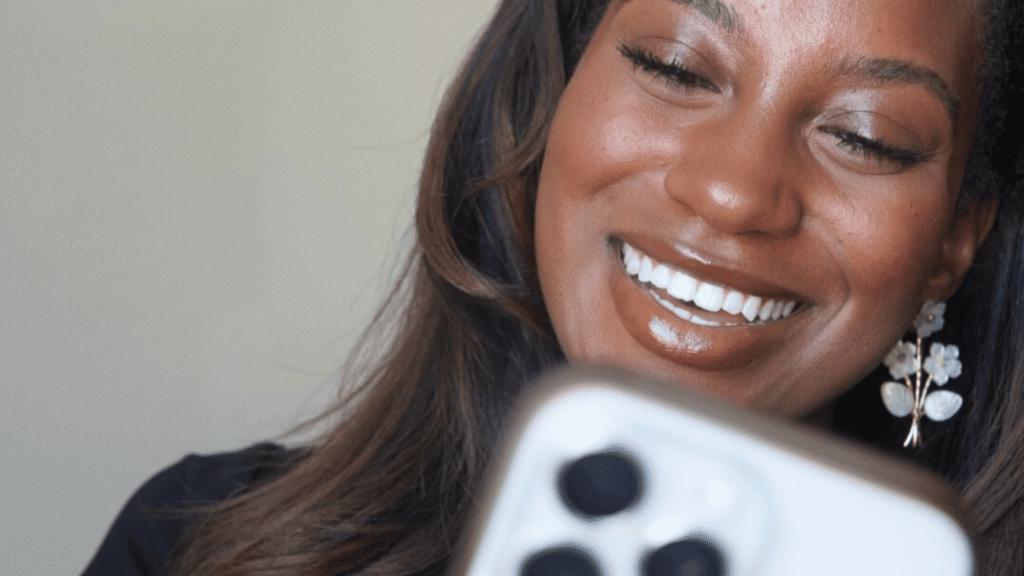
That’s why Kameron is so passionate about building Social Docket—she wants to help more Creators understand contracts, protect their work, and make informed decisions as their business grows.
“Our goal is to help you build that foundation and be knowledgeable about what you have going on so you can make educated decisions and hires.”
If you’re ever unsure about a contract, a business decision, or what your next legal step should be as a Creator, Social Docket is designed to meet you where you are. It’s currently in beta, but you can sign up for the waitlist to get early access and join their upcoming Creator events around the United States.
DISCLAIMER: This content is provided for educational purposes only and does not constitute legal advice. Nothing in this article creates an attorney-client relationship. For legal advice specific to your circumstances, please consult a qualified legal professional.
Follow Kameron’s Journey:
Stan Store: Kameron’s Stan Store
Instagram: @kameronmonet
TikTok: @kameronmonet
YouTube: @kameronmonet
LinkedIn: @kameronbuckner