
TL;DR: Mini courses are the fastest way for Creators to turn their knowledge into income without building a full program. They work because they’re short, specific, and focused on delivering one transformation your audience wants right now. A great mini course starts with a validated idea, uses a simple 3–5 lesson structure, and prioritizes clarity over production. Create your content efficiently, host it on a platform that reduces tech friction, and price it based on the value of the result, not the length of the videos. Launch with clear messaging, share actionable previews, and keep promoting through content, testimonials, and lightweight evergreen funnels. Once your first mini course is live, you can scale by bundling, expanding into a signature offer, or building a full product ecosystem.
You don’t need a massive audience or months of filming to build something that sells. Most Creators simply need a smaller, more realistic way to monetize what they already know.
That’s exactly where mini courses come in.
Mini courses sit in the sweet spot between free content and full programs: short enough to create quickly, yet powerful enough to establish expertise and generate your first sales.
If you’ve ever felt caught between “posting for free” and “launching a full course,” this guide will help you bridge that gap. Mini courses are how thousands of Creators are testing ideas, validating demand, and turning small lessons into consistent revenue.
A mini course doesn’t try to teach everything. It gives your audience one clear win, and that clarity is what makes it profitable.
So what does that look like in practice?
This guide will break it down step by step, starting with what a mini course is and why it’s become the go-to starter product for modern Creators.
Let’s get started.
Table of Contents
- What is a Mini Course
- Why Mini Courses Are Perfect Starter Products
- How to Create a Mini Course (Step-by-Step)
- Common Mistakes to Avoid When Creating a Mini Course
What Is a Mini Course?
A mini course is a short, focused learning experience that teaches one clear skill or solves one specific problem. It isn’t meant to cover everything you know. Instead, it delivers a quick transformation your audience can apply immediately.
Most mini courses fall under two hours of total content and follow a simple structure:
- 3–5 concise lessons
- One promise or outcome
- A straightforward format that’s easy to consume
Creators often deliver mini courses as:
- Short video modules
- Slide presentations with voiceover
- A written or Notion-based guide
- An email series that drips out lessons over a few days
The format doesn’t matter as much as the clarity. A good mini course goes straight to the point, removes overwhelm, and gives learners a fast win they can actually use.
Why Mini Courses Are Perfect Starter Products
Mini courses work so well because they lower the barrier on both sides—for you as the Creator and for the person learning from you. They let you test ideas, build trust, and start earning without the pressure of creating a full program.
Here’s why mini courses have become the most popular first product across the Creator economy:
1. Fast to Build, Easy to Validate
Most digital products take weeks or months to create. A mini course can be finished in a weekend because you’re teaching one specific outcome instead of an entire system.
This speed makes them ideal for validation. Instead of guessing whether people want your course idea, you put a small version out, watch how your audience responds, and make adjustments before investing in a larger offer.
For example, a fitness Creator might test a “7-Day Core Reset” mini course before building a full 12-week program. If the mini course gets strong interest, comments, or early sales, they know the demand is real.
2. Builds Trust and Audience
A mini course proves your expertise in a way free content can’t. It shows you can guide someone from point A to point B with intention. That builds credibility, and it grows your audience with people who are willing to invest in themselves.
Many Creators also use mini courses as lead magnets. A free or low-cost mini course attracts high-quality subscribers who are more likely to buy future products.
3. Teaches You the Product Cycle
Mini courses are a safe way to learn how digital products work:
- how to package your knowledge
- how to structure lessons
- how to price and position an offer
- how to deliver a product people enjoy
- how to collect testimonials and improve
Once you’ve done this cycle once, building a bigger offer becomes easier because the process is familiar.
4. Generates Real Income Without Overwhelm
Even though they’re small, mini courses can earn consistently. They’re simple to update, easy to sell repeatedly, and can fit naturally into your content.
Because they take less time to create, they don’t pull you away from your main platforms. You get to keep creating while owning a product that generates income in the background.
For example, a social media coach who sells a $29 “Reels Hook Templates” mini course can promote one lesson in a video, pin the link in their bio, and generate sales daily without active launching.
How to Create a Mini Course (Step-by-Step)
A mini course only works when the foundation is right. If the idea is too broad, the structure collapses. If the promise is unclear, people won’t buy.
This section walks you through the process from idea to delivery, starting with the step that determines everything else: choosing the right transformation to teach.
1. Find the Right Idea
If your idea is vague, your mini course will be hard to sell. If your idea is specific, people can say “That’s exactly what I need.”
Your goal at this stage is to move from “I want to teach productivity” to something like “I’ll show freelance designers how to organize their week so they can handle 3–5 clients without burning out.”
That’s the level of clarity we’re aiming for.
Start With Problems Your Audience Already Has
The best mini course ideas usually come from questions you’re already answering for free. Look for patterns in:
- DMs and emails
- Comments on your posts or videos
- Client calls or coaching sessions
- Q&A stickers, polls, or live streams
Ask yourself:
“What do people keep asking me to explain again?”
Those repeats are signals. They show you where people are stuck and willing to spend money to move forward.
A good example is Emily Kessler, a meditation and mindset coach. Her Anxiety Soother Kit focuses on issues like worry, overthinking, and nervous-system stress—topics her audience naturally seeks support with, given her niche.

It’s a simple illustration of how Creators can turn the recurring challenges in their space into a focused mini course that meets people exactly where they’re struggling.
Turn Topics Into Clear Transformations
Once you find a recurring problem, turn it into a clear transformation.
A topic sounds like:
“Instagram growth.”
A transformation sounds like:
“Grow from 0 to your first 1,000 followers using a simple 30-day content plan.”
The transformation answers one silent question every buyer has:
“What will be different for me after I finish this?”
A helpful way to structure this is:
“By the end of this mini course, you’ll be able to…”
For example:
- “By the end of this mini course, you’ll be able to outline and script a week’s worth of short-form videos in one sitting.”
- “By the end of this mini course, you’ll be able to create and publish your first Notion template and list it for sale.”
If you can’t complete that sentence in one line, the idea might be too broad. Tighten it until it describes one specific outcome.
Make It “Mini” On Purpose
A common mistake is trying to squeeze a full course into a mini course. That leads to overwhelm on both sides.
A strong mini course idea:
- Solves one main problem
- Targets one type of person
- Fits into 3–5 lessons
Ask yourself:
- Can I help someone get a real win in under 2 hours of content?
- Can this be broken into 3–5 clear steps or phases?
- Would someone realistically finish this in a weekend?
If the honest answer is “no,” consider slicing the idea smaller. Your first mini course could be:
- One phase of your full method
- One repeated task you can help people streamline
- One “sticking point” that stops people from getting results
For example, instead of “Everything about email marketing,” focus on “Write your first 3-email welcome sequence in a day.”
Validate Your Mini Course Idea Quickly
Before you spend time filming, you want to know if anyone actually cares. You don’t need complicated funnels for this. A quick validation pass can look like:
- Polls or question boxes on Instagram, TikTok, or YouTube Community
- A simple Google Form asking: “If I made this mini course, would you be interested?”
- A one-post test: “I’m thinking of creating a 1–2 hour mini course on [result]. Comment ‘INTERESTED’ if you’d want it.”
You’re not looking for thousands of responses. You’re looking for signals.
If people reply, ask follow-ups like:
- “What’s the hardest part about this for you?”
- “What would make this mini course a no-brainer?”
Those answers give you language you can reuse in your sales page, lesson titles, and promo content.
Sanity-Check Your Idea With Three Questions
Before you move on, run your idea through this quick filter:
(1) Is the result specific and measurable enough?
Example: “Go from zero to your first 5 paying clients using LinkedIn outreach.”
(2) Can I realistically teach this in under 2 hours of content?
If you feel yourself needing 20 lessons, the scope is too big.
(3) Does this solve an urgent or annoying problem for my audience?
People pay faster to remove pain than to chase vague “nice-to-haves.”
If you can confidently say “yes” to all three, you have a strong mini course idea worth building around.
2. Plan Your Course Structure
A strong mini course is built around progress. Your job here is to take the transformation from Step 1 and turn it into a simple, logical path your students can follow without confusion or overwhelm.
A clear structure doesn’t just make the course easier to create. It also increases completion rates, improves the learning experience, and makes your mini course feel polished and professional even if it’s short.
Here’s how to structure it the right way.
Start With the Transformation, Then Reverse-Engineer the Steps
Every lesson in your mini course should exist for one reason: to move the student closer to the promised outcome. So instead of starting with topics you want to teach, start at the end.
Ask yourself:
“What are the exact steps someone must take to achieve this result?”
Then work backward.
For example, if your transformation is “Write your first three high-converting emails,” the steps might be:
- Define your audience’s core problem
- Choose your angle or hook
- Draft the emails using a simple template
- Polish and schedule them
Those steps become your lessons.
Keep It Compact: 3–5 Lessons That Flow
Mini courses thrive on simplicity. Most high-performing ones follow a tight, predictable structure that guides students from introduction to transformation without any friction.
Here’s the cleanest structure to model:
| Section | What It Does | What to Include |
| Introduction | Sets the tone and prepares the student for the transformation | – What the course will help them achieve- Why the topic matters- What to expect in the next lessons |
| Lesson 1 | Establishes the foundation | – Core concepts or context they need- The first essential action |
| Lesson 2 | Delivers the main transformation | – Your primary method, framework, or process- The most important action step |
| Lesson 3 | Helps students implement and refine | – Practical application- Examples, walkthroughs, or demonstrations |
| Wrap-Up | Reinforces learning and guides next steps | – Summary of key actions- A clear CTA or next step (advanced offer, checklist, download, etc.) |
This structure keeps things tight and achievable. Students can see the finish line from the start, which makes them far more likely to watch every lesson and complete the course.
Give Each Lesson One Clear Purpose
A mistake many Creators make is squeezing multiple ideas into a single lesson. A mini course works because each lesson has one job.
Use this filter when outlining a lesson:
“If I removed this lesson, would the student still get the result?”
If the answer is yes, the lesson doesn’t belong. If the answer is no, it stays—and you tighten it until it becomes laser-focused.
For example, instead of:
- “Lesson 2: Research and Draft Your Email Sequence”
Break it down into:
- “Lesson 2: Research What Your Audience Wants”
- “Lesson 3: Draft Your Email Using the Template”
Small shifts like this make your teaching clearer and more actionable.
Decide the Format That Fits the Lesson (Not the Other Way Around)
Common mini course formats include:
- Talking-head videos for explanation or demonstrations
- Slide videos for frameworks or workflows
- Screen recordings for tutorials or walkthroughs
- Written or Notion-based lessons for templates, scripts, or reference materials
- Email drip format for daily tasks or habit-based learning
Mix formats if needed. Just make sure the delivery enhances the content, not complicates it.
For example, a Canva design tutorial makes more sense as a screen recording. A storytelling framework might work better on slides.
Make the Course Easy to Navigate
Your structure should feel intuitive at a glance. Use clear naming that sets expectations before a student even presses play.
Lesson titles like:
- “Lesson 1: Define the Problem You Solve”
- “Lesson 2: Create Your First Hook”
- “Lesson 3: Build Your Three-Email Sequence”
…work much better than vague titles like:
- “Getting Started”
- “Let’s Dive In”
- “Putting It All Together”
The more predictable the flow, the easier it is for students to follow and finish.
3. Create Your Content Efficiently
This is the stage where most Creators overthink things. They assume they need flawless production, a full studio setup, or hours of polished footage. You don’t. A mini course works because it’s simple, focused, and easy to implement.
Below is a detailed, streamlined process for creating high-quality mini course content quickly—without losing the depth your students need.
Start With “MVP Content”
Your audience cares about clarity. They want to understand how to get a result and follow your steps without confusion.
You don’t need:
- perfect lighting
- professional editing
- expensive gear
You do need:
- a clean explanation
- organized lessons
- stable audio
- actionable steps
The best mini courses often feel like sitting down with someone who knows exactly what you need to do, without wasting your time.
Choose a Simple Recording Setup
A solid setup doesn’t have to be complex. Here’s what most Creators use:
For talking-head videos:
- Your phone or webcam
- Natural lighting near a window
- A clip-on or USB microphone for clean audio
For slides or frameworks:
- Google Slides or Canva
- Screen recording with Loom or Zight
For tutorials:
- Screen-share recording
- Short walkthrough demonstrations
- On-screen annotations if useful
Pick the format that best conveys what you’re teaching, not what looks the fanciest.
Script Lightly to Stay Focused
You don’t have to write a full script. In fact, full scripts often make Creators sound stiff. Instead, outline your points and talk conversationally around them.
Try this format for each lesson:
- What they’re going to learn
- Why it matters
- How to do it
- What to do next (one simple action)
This keeps lessons tight and prevents rambling.
Batch Your Recording Workflow
Batching helps you finish your entire mini course in a few hours instead of dragging it across days.
A simple batching workflow looks like this:
- Finalize your lesson outlines
- Record all your videos at once
- Edit everything in one sitting
- Export and upload in bulk
Recording all at once ensures consistent lighting, energy, and tone.
Edit for Clarity, Not Complexity
You’re not editing a YouTube documentary. You’re creating a fast-learning product. Lightweight edits are perfect.
Focus on:
- Removing long pauses
- Cutting out mistakes
- Adding text prompts or timestamps (optional)
- Keeping lessons clean and to the point
Tools like CapCut, iMovie, or Descript are more than enough.

Add Assets That Make the Course “Feel” Premium
You don’t need long videos to increase value. Often, resources do that more effectively.
Consider adding:
- A fill-in-the-blank template
- A Notion hub for the course
- A checklist to follow after each lesson
- A small workbook
- Swipe files or scripts
- A step-by-step cheat sheet
These items help students take action immediately, which increases satisfaction, testimonials, and repeat purchases.
For example, a “30 Instagram Hooks” PDF in a social media mini course takes five minutes to create but drastically improves the perceived value.
Keep Each Lesson Short and Action-Driven
Aim for 5–10 minutes per lesson. This keeps the course digestible and prevents students from dropping off.
A strong lesson:
- Explains one key idea
- Shows one simple example
- Gives one clear action to take
Short lessons create momentum, and momentum drives completion.
Maintain a Consistent Learning Experience
As you record, keep the experience smooth and cohesive. This can be as simple as:
- Using the same slide template
- Keeping your camera angle consistent
- Starting each video with a quick recap
- Ending each video with a next step
These small touches make your course feel intentional and professional.
4. Choose Where to Host and Sell
The platform you choose determines how quickly you can get your mini course into the world. You don’t want complicated dashboards, endless setup steps, or tools that slow you down. You want something simple, reliable, and built for Creators who want to start earning fast.
Here’s how to choose a platform that supports your goals instead of complicating them:
Prioritize Ease of Setup (You Should Get Live in Minutes)
Your platform shouldn’t require a full tech tutorial. A mini course should feel light from start to finish. If it takes hours to “set up,” you’re using the wrong tool.
Ask yourself:
- Can I upload lessons quickly?
- Can I organize modules without clicking through ten menus?
- Does the checkout process feel smooth?
A clean, simple workflow helps you maintain momentum during creation—and reduces friction for your buyers later.
Choose a Platform That Gives You Audience Ownership
Some platforms hold your audience inside their ecosystem. Others let you own your customer list so you can follow up, upsell, and nurture your buyers directly.
For Creators building a long-term business, audience ownership is everything. You want access to:
- customer names
- emails
- purchase data
- the ability to contact buyers again
If a platform locks this behind paywalls or limitations, it’s not built with Creators in mind.
Make Sure Payments Are Smooth for Your Buyers
A mini course is a low-friction product. Your checkout should match that.
Look for:
- fast, mobile-friendly payment pages
- multiple payment options
- automatic delivery of your course after purchase
- order confirmation and onboarding emails
If people can buy in 1–2 taps, your conversion rate increases immediately.
Why Many Creators Choose Stan for Mini Courses
Stan is built around simplicity. You don’t need a website or fancy course platform. Everything connects directly to your link in bio, which means your audience can buy immediately from TikTok, Instagram, or YouTube with zero extra steps.

Here’s why Stan works especially well for mini courses:
- Upload your lessons in minutes
- Set any price (paid or free)
- Instant delivery after purchase
- Email list grows automatically with every sale
- No tech learning curve
- Perfect for Creators selling straight from short-form content
If your audience lives on TikTok or Instagram, linking your mini course through Stan gives you one of the easiest funnels in the Creator economy.
Ready to launch your mini course without overthinking the tech? Start your 14-day free trial on Stan and set everything up today.
5. Price Your Mini Course
Pricing is where many Creators freeze. Charge too little and your mini course looks low-value. Charge too much and your audience hesitates.
A strong mini course delivers a clear result in a short amount of time. That’s exactly why people buy it. They want to learn something quickly and apply it immediately. Your price should match the value of that outcome.
Here’s how to price your mini course with confidence and strategy:
Price Based on Transformation, Not Video Hours
People don’t pay for minutes. They pay for outcomes. An hour-long mini course that solves a painful problem is worth far more than a 10-hour course filled with fluff.
Ask yourself:
“What is the value of the result my students walk away with?”
For example:
- If your mini course helps freelancers land clients faster, that outcome can be worth hundreds of dollars.
- If it helps Creators batch a week of content in two hours, you’re saving them time and mental energy.
- If it teaches a technical skill they can use immediately, it has direct ROI.
Your price should reflect the usefulness, not the run-time.
Understand the Typical Price Ranges
Most mini courses fall within predictable pricing brackets. These aren’t rules, but they’re reliable benchmarks for Creator products:
- $15–$29: Ideal for small, practical topics or first-time Creators validating an idea.
- $29–$49: The sweet spot for most mini courses. High enough to signal value, low enough to encourage impulse purchases.
- $49–$99: Works for more advanced transformations, niche skills, or mini courses with valuable assets (templates, checklists, workflows).
Anything above $100 becomes a “signature course,” not a mini course.
Choose a price that feels aligned with the value and the transformation you offer.
When a Free Mini Course Makes Sense
A free mini course can be powerful when used strategically. It creates trust, grows your audience, and sets up a natural path to your paid offers.
Use a free mini course when:
- you’re growing your email list
- you’re validating a future paid product
- you want people to experience your teaching style
- you’re preparing a future upsell
Free doesn’t mean “low value.” It should still offer a concrete win—just not your deepest transformation.
A strong example of this is 100 School’s 30 Days of AI challenge. It’s a free, bite-sized learning experience that gives newcomers a clear win each day and builds trust in the instructors.

Since 100 School regularly runs paid AI bootcamps, the challenge acts as a natural entry point—letting people experience the teaching style before deciding whether to join a deeper, structured program.
Bundle When Appropriate
If your mini course pairs naturally with another product, bundling increases conversions and average order value.
Examples:
- A $39 mini course + a $15 checklist
- A $29 tutorial + a $29 template pack
- A $49 mini course + a $39 content planner
Test and Adjust Your Price
Your first price doesn’t have to be final. If your audience hesitates, or if sales are slower than expected, adjust. Creators often refine their pricing as they gather more data, get testimonials, and build trust.
A simple way to test pricing:
- Launch at a lower “founder’s price”
- Raise it once you have proof and feedback
- Monitor conversion rates weekly
Your pricing should evolve as your product and authority grow.
6. Launch and Market Your Mini Course
A great mini course doesn’t sell itself. It needs a clear, simple launch plan that builds anticipation, communicates the transformation, and helps your audience see why this product matters right now.
The good news is you don’t need a big launch campaign to make sales. Mini courses thrive on lightweight marketing. A few intentional posts, a clear message, and a focused rollout can generate strong results—especially if your audience already trusts you.
Here’s the simplest way to launch your mini course without overwhelm:
Warm Up Your Audience Before Launch
People buy faster when the idea feels familiar. Use the days leading up to your launch to plant seeds.
Warm-up content can include:
- Behind-the-scenes clips of you creating the course
- Polls or Q&As about the problem your course solves
- Quick tips related to your topic
- Stories about why you made the course
- Mini lessons pulled from your actual modules
- Screenshots or previews of templates or materials inside the course
This content shifts your audience from “interesting” to “I’ve been waiting for this.”
For example, if your mini course teaches Creators how to script viral short-form videos, tease a few of the hooks or frameworks you cover inside.
Use a Simple 3-Day Launch Plan
Mini courses don’t need long promotions. A quick 3-day launch is enough to capture excitement without exhausting your audience.
Here’s how to go about it:
Day 1: Announce
Tell your audience the course is live.
Share:
- the transformation
- who it’s for
- what problem it solves
- the price
- the link
Make it bold, clear, and direct.
Day 2: Educate
Drop a piece of content that teaches one actionable step from your mini course. This shows value and increases trust instantly.
Day 3: Social Proof and Urgency
Share:
- early testimonials
- real buyer messages
- before/after examples
- reminders that the launch pricing or bonuses end today (optional)
This day often brings 40–60 percent of your total launch sales.
Make Your Launch Content Short, Clear, and Repetitive
Consistency is key. People need to hear the same message several times before it finally clicks.
Use different angles to communicate the same value:
- frustration angle
- results angle
- “imagine if you could…” angle
- fast-win angle
- common mistakes angle
This keeps your content fresh without diluting your core message.
Use Your Best Channels for Promotion
You don’t need to be everywhere. Focus on where your audience interacts with you most.
Strong promotion channels include:
- TikTok videos
- Instagram Reels + Stories
- YouTube Community posts
- Twitter threads
- LinkedIn posts for B2B Creators
- Email newsletters
A mini course converts best when promoted alongside your regular content, not instead of it.
Keep Selling After Launch (Don’t Go Silent)
A common mistake Creators make is disappearing after the initial launch push. Mini courses are evergreen, which means they can continue selling long after launch day.
Keep momentum by sharing:
- student results
- snippets of lessons
- behind-the-scenes insights
- small examples or tips from the course
- weekly reminders
Your mini course should become a natural part of your content ecosystem.
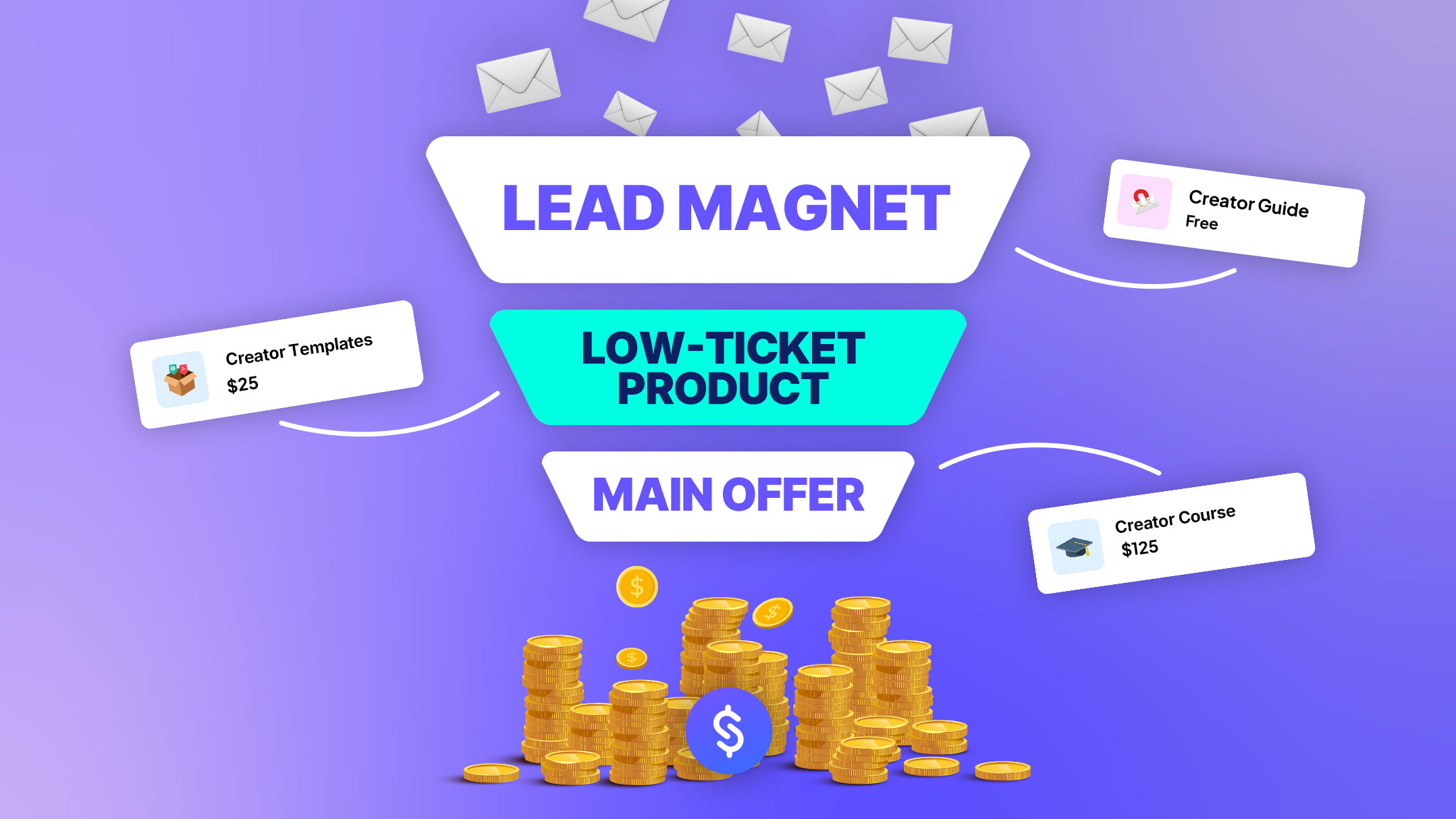
Create an Evergreen Funnel for Passive Sales
If you want sales to come in automatically, set up a simple evergreen funnel.
It can be as lightweight as:
- A short lead magnet (optional)
- A welcome email
- A 3-email value sequence
- A final “here’s the mini course” offer
Once set, this becomes a passive pipeline that turns new followers into buyers without you manually promoting every day.
7. Scale Beyond Your First Mini Course
Your first mini course is the starting point, not the finish line. Once it’s live and generating sales, you’ve gained something even more valuable than revenue—you’ve gathered data. You now know what your audience responds to, what they’re willing to pay for, and what gaps they still need help with.
This is where scaling becomes easy. Instead of guessing your next move, you build on real behavior, real feedback, and real results.
Here’s how to turn one successful mini course into a growing product ecosystem:
Turn Your Mini Course Into a Bundle
Once you have two or more mini courses in related topics, you can combine them into a bundle. Bundles help you:
- increase average order value
- give learners a more complete transformation
- create a higher-priced offer without more work
Examples of simple bundles:
- “Content Planning + Viral Hooks” bundle
- “Beginner Editing + Reels Strategy” bundle
- “High-Protein Recipes + 7-Day Meal Prep” bundle
Bundling builds instant leverage from what you’ve already made.
Expand Into a Signature Course
If your mini course validated strong demand, it can become the foundation of a larger program.
A signature course often includes:
- deeper explanations
- more detailed lessons
- hands-on walkthroughs
- additional templates
- coaching or community access
The easiest way to create a signature course is by expanding your mini course’s core transformation into a broader journey.
For example, a $39 mini course on “How To Shoot Aesthetic Product Videos” might evolve into a $297 full program covering:
- storytelling
- editing
- lighting
- portfolio building
- brand pitching
Your mini course becomes the “entry point” into the bigger, premium offer.
Build a Learning Path With Multiple Mini Courses
Think of your mini courses like chapters of a book. Each one solves one problem. Together, they create a complete transformation.
This structure works especially well in:
- fitness
- content creation
- design
- business systems
- cooking
- photography
- music education
A learning path might look like:
- Mini Course 1: Foundations
- Mini Course 2: Skill Practice
- Mini Course 3: Strategy + Application
Students can purchase individually or follow your recommended progression.
A simple example of this is how some Creators build a catalog of focused mini courses around related skills.
Nicole Marso does this with her TikTok Shop Mini Course and several other guides on affiliate marketing, digital products, and platform tactics.

Each one solves a different problem, and together they form a natural learning path her audience can follow.
Automate Evergreen Sales With Email Funnels
Your mini course doesn’t have to rely on active promotion. Automate your sales with a simple email funnel:
- Email 1: Welcome + your story
- Email 2: Teach something valuable (a preview concept)
- Email 3: Share a transformation or example
- Email 4: Introduce your mini course
- Email 5: Handle common objections
- Email 6: Final nudge
This turns new followers into customers on autopilot.
Tools like Stan make automation easy because your mini course integrates smoothly into your checkout and delivery flow.
Add a Community or Monthly Membership Later
Once you’ve built trust and students are getting results, you can create ongoing value through:
- a monthly membership
- a private group
- recurring templates or content drops
- weekly Q&A calls
- access to deeper lessons
Your mini course becomes an entry point into your ecosystem—a simple way for people to experience your teaching before joining something bigger. And since Stan includes community hosting in the same plan you use for mini courses, you can add a membership whenever you’re ready.
Use Student Feedback to Refine and Improve
Scaling isn’t just about creating more products. It’s about making your existing one better. Pay attention to:
- common questions students ask
- where they get stuck
- what they want more of
- what they skip or repeat
Simple tweaks, like adding a walkthrough video or improving a cheat sheet, can double your completion rate and boost word-of-mouth sales.
Continue Promoting Through High-Value Content
Your mini course becomes easier to sell as your content grows. In your everyday posts, reference:
- concepts from your course
- examples
- frameworks
- student wins
- behind-the-scenes moments
This creates long-term awareness and consistent demand without launching repeatedly.
Common Mistakes to Avoid When Creating a Mini Course
Creating a mini course is simple, but that simplicity can be misleading. Many Creators assume that because the product is small, the details don’t matter.
In reality, the most common mistakes aren’t about content quality—they’re about clarity, structure, and positioning. Avoiding these mistakes will help your mini course feel more valuable, convert better, and deliver stronger results for your students.
Here are the five mistakes to watch for as you create your mini course:
1. Making the Course Too Long or Unfocused
Mini courses work because they’re short, specific, and easy to finish. Overloading them with too many lessons or unrelated ideas removes the “mini” from the mini course.
Instead of thinking, “What else can I add?” ask:
“What can I remove so the transformation is even clearer?”
A focused mini course leaves no room for confusion. Students know exactly what they’re going to achieve and how.
2. Skipping Validation Before You Create
Validation isn’t optional. A topic that feels exciting to you might not be what your audience wants. Even a quick poll, a Q&A box, or a teaser post can save you hours of wasted work.
Keep in mind, you’re not looking for hundreds of responses—you’re looking for signs of genuine interest. Comments like “I need this,” “Please make this,” or “This is exactly what I’m struggling with” show you’re on the right track.
Without validation, even the best mini course can fall flat.
3. Underpricing in a Way That Reduces Perceived Value
Cheap doesn’t automatically mean appealing. Sometimes it means “not worth it.” Your pricing communicates the importance of the transformation. If it’s too low, buyers second-guess the quality.
Price based on:
- the urgency of the problem
- the value of the result
- the assets included
- the niche you’re serving
A price that feels intentional builds trust immediately.
4. Ignoring Production Basics That Affect Trust
Mini courses don’t require studio-level production, but they do require attention to basics. Poor audio, shaky visuals, cluttered slides, or distracting backgrounds can undermine good teaching.
People aren’t expecting movie quality. They’re expecting clarity. If they struggle to hear you or follow the visuals, they lose focus—and trust.
5. Ending Without a Clear Next Step
A strong mini course gives students a win. A great mini course gives them a direction. Many Creators forget the second part.
Your final video should answer:
“What should I do next if I want to keep growing?”
That next step could be:
- another mini course
- a downloadable template
- a call or deeper program
- your community or membership
A clear CTA turns your mini course into the start of a journey, not a dead end.
Build and Launch Your First Mini Course
A mini course is one of the simplest products you can create and one of the most effective. You don’t need a studio setup, weeks of filming, or a large audience. You need clarity, a real problem you can solve, and the willingness to package your knowledge into a small, focused transformation.
If you’ve been delaying your first product because it feels overwhelming, this is your sign to start.
Take what you know. Turn it into a clear learning experience. Share it with the people already asking for your help. That’s how every successful Creator begins.
Your first mini course doesn’t have to be perfect. It just has to exist. And once it’s live, everything else becomes easier.
If you’re ready, you can create and deliver your mini course directly through Stan. Upload your lessons, set your price, and share your link. It’s one of the fastest ways to turn your knowledge into something people can buy today.
FAQs
1. How long should a mini course be?
A mini course typically runs for 30 minutes to 2 hours of total content. Most Creators use 3–5 focused lessons that guide the student toward a single, specific transformation.
2. How much should I charge for a mini course?
Most mini courses fall between $15 and $99. Lower-priced options work well for beginner audiences or simple topics, while higher-priced mini courses suit more advanced skills or niches. Always price based on the value of the transformation, not the number of videos.
3. Can a mini course be free?
Yes. Free mini courses are a powerful growth tool. Creators often use them to build an email list, warm up their audience, validate future paid products, or introduce people to their teaching style before offering a higher-ticket program.
4. What’s the best platform to host a mini course?
The best platform is one that makes uploading and selling simple. Many Creators prefer Stan because it lets them upload lessons, set pricing, and deliver access instantly from their link in bio. Alternatives like Podia and Kajabi also work depending on your workflow.
5. Do I need professional equipment to create a mini course?
Not at all. A phone or webcam, decent lighting, and clear audio are enough. What matters most is how clearly you teach the steps and how easy the lessons are to follow. Many successful mini courses are recorded with simple setups.