
TL;DR: Stanley connects to your Instagram account and already knows your posts, audience, and performance data—but it can’t intuitively see the full picture of who you are. To get content that consistently sounds like you, build a Stanley AI training kit: a structured document covering your background, writing samples, your style choices, target audience, current goals, boundaries, and important personal context. You can customize Stanley by sharing written instructions, uploading files, or connecting to Notion. Grab our AI training template so Stanley has everything it needs to generate on-brand ideas, captions, and scripts every time.
If you’re a content Creator using AI tools like ChatGPT, you’ve probably fallen into a familiar pattern: You ask for a caption, a script outline, or help planning your content. The output it gives you is structured, but it doesn’t really sound like you.
The tone feels generic, and the strategy isn’t fully aligned with what you’re building. So you tweak the prompt. Add more detail. Try again.
All you want is to create your content faster. But suddenly, you’re caught in a loop of prompting, giving it the same context you’ve already shared a dozen times.
We built Stanley Instagram to change that. It connects to your Instagram, so it already knows your posts, your audience, and your brand. That intuitive context gives your outputs an edge that other tools can’t.
But there’s a layer of context Stanley can’t get from your Instagram alone.
It can see what you post and what performs. But it can’t see why you make the choices you make—your life off-screen, your philosophy, what you’re actually trying to build, or what you’re working toward.
When that context is missing, even a smart tool defaults to the average version of your niche. That’s why you need to customize Stanley with an AI training kit. This guide unpacks exactly how to build one, what to include, and where to put it so every conversation you have with Stanley feels consistent and aligned.
What We’ll Cover (Click To Jump Ahead)
- What “training AI tools” actually means for Creators
- How to customize Stanley
- How to get our Notion template
- How to build your AI training kit
- Common mistakes to avoid
What “Training AI Tools” Means for Creators
When Creators talk about training AI tools, they usually don’t mean fine-tuning a model or uploading complex datasets. They mean curating their go-to AI tools to understand how they think, who they speak to, and what they’re trying to build.
In practical terms, training AI means:
- Giving it structured context about you and your content
- Moving beyond one-off prompts toward systems
- Making sure it understands your niche, your audience, your goals, and the way you communicate
Most AI tools don’t retain your broader strategy unless you intentionally provide it. Each new chat starts almost from zero. Even detailed prompts only go so far if the model doesn’t understand the bigger picture behind your brand.
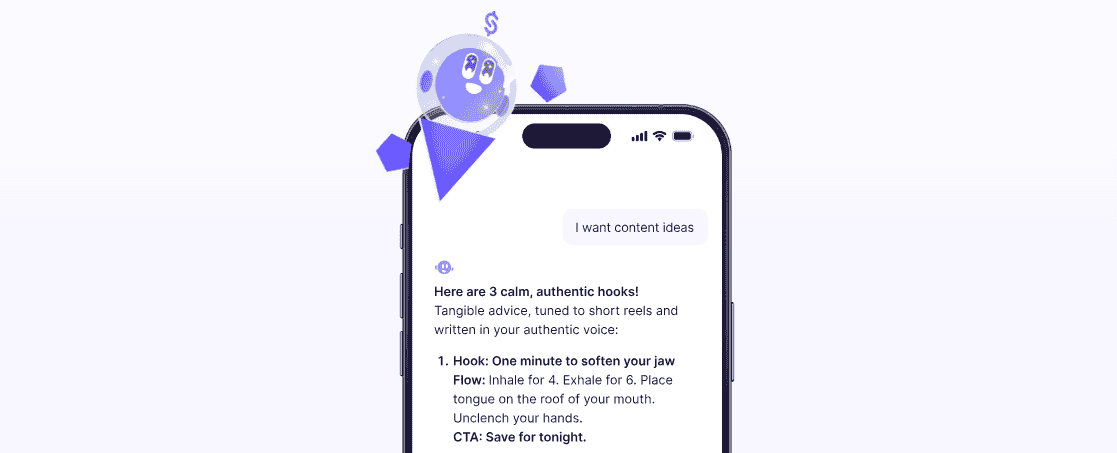
Stanley already knows your Instagram. But the more it understands your positioning, your goals, and your lived experiences, the better it’ll be at generating ideas and drafts that actually align with what you’d create.
As a Creator, context is more than your past captions, scripts, and videos. It covers:
- Your brand positioning and what makes you different
- Writing samples that show how you naturally sound
- Your target audience, current goals, and what you’re building toward
- Boundaries that protect your brand standards
- Personal context that makes your content feel grounded
Some of these live in old posts. Some sit in your notes app. Some of it is instinctive and never written down.
But AI can’t work with instinct. It can only work with what you make explicit.
So instead of feeding bits of context into every prompt, the smarter move is to organize that information one time in a way AI can consistently reference. That’s what “training AI” really means.
Not teaching the model something new, but making sure it understands you before it starts writing.
How to Customize Stanley

Stanley already has context on your Instagram data and audience, but that’s not the full picture of who you are. That’s why you can (and should) customize Stanley, so everything you create together is backed by deeper context from the start.
To customize your account, navigate to the left-hand sidebar in your Stanley dashboard and click Customize Stanley. This is where everything you create in this guide will live.
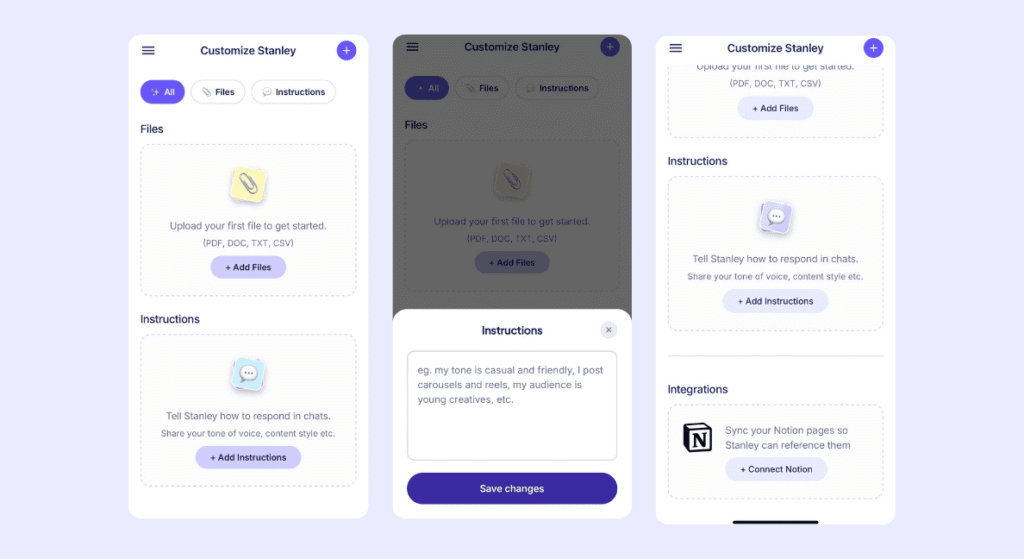
Inside, you can:
- Upload files—brand guidelines, off-platform content like newsletters or scripts, offer details, or any other relevant material.
- Add written instructions—tone preferences, response format, things to always include or avoid. This will impact how Stanley responds in your chats.
- Connect your Notion account so Stanley can reference specific pages and databases.
Once you’ve customized Stanley, every content plan, idea, and script Stanley generates will ground itself in that foundation.
You can update your training kit at any time as your strategy evolves. And you should, because the more up-to-date it is, the more useful Stanley becomes.
Use Our Notion Template to Build Your Stanley AI Training Kit
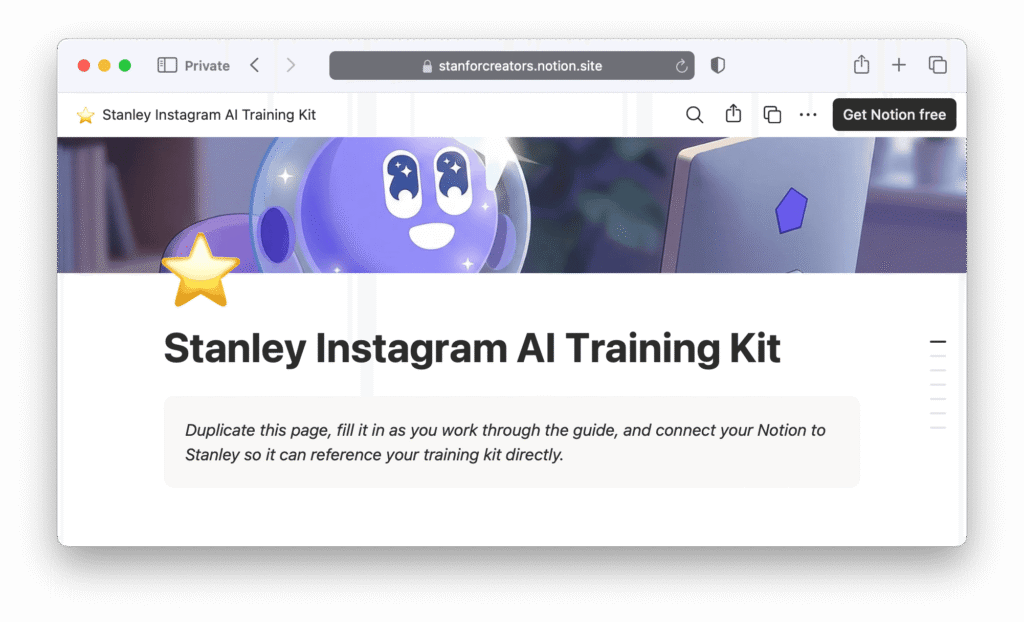
To make this as easy as possible, we’ve put together a Notion template with each section of the training kit already laid out. Duplicate it, fill it out as you work through this guide, and connect your Notion to Stanley so it can reference your training kit directly—no copying and pasting required.
👉 Get the Notion template here
Once it’s connected, Stanley can pull from your training kit automatically every time you create together.
How to Build Your Own Creator AI Training Kit
Instead of repeatedly sharing context about your brand, gather what makes your content yours and organize it into a structured document that AI tools, like Stanley, can work from.
Not sure where to start? Here’s a practical breakdown of what to include.
1. Your Creator Snapshot
Before AI can write like you, it needs to understand what you’re trying to build.
You can give Stanley a Creator snapshot by answering these four core questions:
- What do you create content about?
- Who is it specifically for?
- What’s your perspective within that space?
- What do you want to be known for?
For example:
“I create strength training content for busy professionals who want to get stronger without spending hours in the gym. My content focuses on efficiency, sustainability, and long-term consistency. I emphasize compound movements and simple programming instead of trendy workouts. I speak to people who feel overwhelmed by conflicting fitness advice. My goal is to simplify strength training so it feels manageable alongside a demanding career. I want to be known as a rational, evidence-based alternative to extreme fitness influencers.”
Notice what this does. It defines the audience, clarifies the angle, signals the tone, and sets the positioning—all in a short paragraph. With it, every idea and draft Stanley generates has a clear direction to work from.
2. Your Best Writing Samples
AI tools don’t just respond to instructions. They pick up on patterns: Sentence length. Structure. Vocabulary. How you transition between ideas. Whether you begin with a story or get straight to the point.
That’s why writing samples matter more than most Creators realize.
Stanley already knows how you sound on Instagram—it can see your post history, your captions, and video scripts. What it can’t see is your voice off-platform: how you write newsletters, long-form scripts, emails, or any other content that lives outside Instagram.
That’s why you should include writing samples, like:
- 1-2 newsletters or long-form pieces that show how you structure ideas
- A script or video outline that shows your narrative style
- Any long-form content that reflects the voice you want to emulate
Don’t just add content without any context. Give a brief one-sentence explanation of why you chose each piece, so Stanley knows what to pay attention to in each sample.
For example:
| Writing Sample (With Link) | Topic | Why |
| Instagram Post | Most People Overcomplicate Strength Training | This post reflects my calm, corrective tone. I challenge common misconceptions without sounding aggressive. |
| Newsletter | The 3-Day Strength Split for Busy Professionals | Shows how I break complex ideas into practical steps. Reflects my preference for structured frameworks over abstract advice. |
| YouTube Script | Why You Don’t Need 6 Days in the Gym | Demonstrates how I combine personal experience with evidence-based advice. Shows my calm, measured tone. |
3. Your Intentional Style Choices
Stanley can see your Instagram. What it can’t see is the intentionality behind every post—the deliberate choices you’ve made about how you write that aren’t obvious from looking at your Instagram content alone.
Start by documenting structural preferences you always follow or avoid, and conscious choices you make to do things differently from others in your niche.
For example:
“I never lead with a before-and-after framing. I always open with the problem or the mistake instead—something my audience recognizes from their own experience.”
Start With Tone
Describe your tone in clear, everyday language. Not abstract adjectives like “authentic” or “powerful.” Those are too vague. Instead, think in contrasts.
Are you calm or high-energy? Direct or exploratory? Structured or free-flowing?
Be specific. For instance:
“My tone is calm, practical, and grounded. I explain ideas step by step. I don’t shout. I don’t use dramatic transformation language. My content should feel realistic and sustainable.”
That level of clarity prevents AI from defaulting to clichés.
Get Specific About Your Brand Phrases
Most Creators repeat certain expressions. If you have go-to phrases that are part of your brand, write them down—because if Stanley doesn’t know them, it won’t use them.
For example, a fitness Creator might include:
- “The best workout is the one that fits your life—not the one that takes it over.”
- “Focus on the basics.”
- “You don’t need more volume. You need consistency.”
Clarify What You Avoid
This is just as important as what you include.
Be explicit about:
- Words you dislike
- Hooks that feel off-brand
- Tone that feels inauthentic
- Industry clichés you reject
For example:
“Avoid phrases like ‘crush your goals,’ ‘no excuses,’ or ‘beast mode.’ Avoid aggressive or shame-based motivation. Do not exaggerate timelines or promise unrealistic results.”
4. Your Target Audience
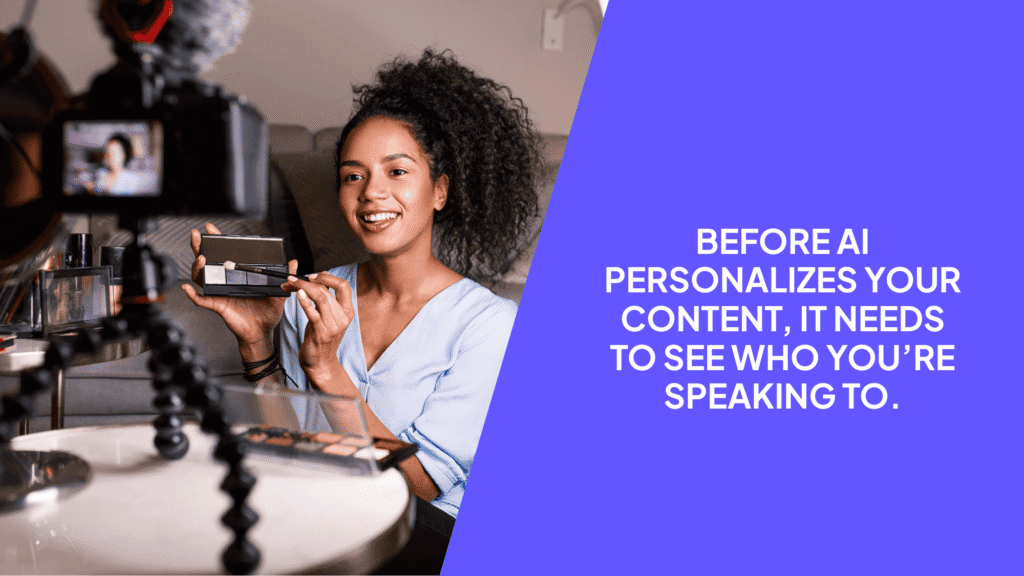
Your content only feels personal when it speaks to someone specific. This section is where you define that person—not in broad categories, but in concrete, practical terms.
Think about:
- Their stage of life or career
- Their current struggles
- Misconceptions they might carry
- What they value
- What they want to achieve
Stanley can see who your Instagram followers are and tell you more about them, but your existing audience might be different than who you want to target.
For example:
“My audience is busy professionals between 30 and 45 years old. They want to build strength and feel better physically, but they can’t commit to 90-minute workouts. Most have tried random YouTube programs and feel confused by conflicting advice. They’ve been told they need to train six days a week. They value efficiency and evidence. They’re not beginners in life, but they’re beginners in structured strength training.”
5. Your Current Goals

Stanley can generate endless ideas. But ideas are only useful if they move you in the right direction.
Your goals influence the types of hooks Stanley suggests, the calls to action it includes, whether it recommends broad or niche content, and how much it prioritizes education over entertainment.
That’s why you should be specific about what you’re focused on right now:
- Are you prioritizing audience growth?
- Are you building authority in a specific niche?
- Are you warming up your audience for a launch?
- Are you trying to increase engagement?
- Are you pushing newsletter signups?
For example:
“Over the next six months, my priority is growing my newsletter. I am preparing to launch a beginner strength program. I want my content to emphasize trust, clarity, and practical value. I’m not focused on rapid follower growth—I care more about attracting the right audience than maximizing reach.”
6. Your Boundaries and Non-Negotiables
If you don’t define your boundaries, AI will fill gaps with patterns it’s seen elsewhere. Sometimes that works, but often it doesn’t.
This section protects your brand standards. It makes sure Stanley doesn’t suggest messaging that technically “fits the topic” but doesn’t fit you.
In the short term, boundaries prevent awkward drafts. In the long term, they protect your brand. This ensures that even when you move fast, your standards remain consistent.
In your AI training kit, be explicit about:
- Topics or claims you avoid
- Hooks or framing that feel manipulative
- Tone that feels inauthentic
- Industry norms you disagree with
- Ethical boundaries
For example:
“I do not promote supplements or fat-loss teas. I do not promise visible results in unrealistic timeframes. I avoid before-and-after transformation framing. I do not use shame-based motivation. I do not use language like ‘guaranteed shredded in 30 days.'”
7. Personal Context That Makes You Human

Your content is built on lived experience—even when it’s not educational. Creators reference their past all the time. Lessons learned. Mistakes they made. Turning points that changed their perspective.
If that context isn’t included in your AI training kit, Stanley can’t use it. And when it tries to fill in personal details on its own, it can either become generic or inaccurate.
This section gives Stanley material to draw on when it needs to make your content feel grounded.
That’s why you should include personal details that shape who you are, like:
- Your professional background or origin story
- Key experiences that influenced your perspective
- Mistakes you’ve made that you can reference
- Lessons you come back to often
You don’t need to write a memoir. A few clear paragraphs are enough. The goal is to give Stanley authentic context it can pull from.
For example:
“I started training seriously after burning out from a demanding corporate job. I initially followed high-volume programs and trained six days a week, which led to fatigue and minor injuries. Over time, I shifted toward three structured strength sessions per week and focused on progressive overload instead of intensity. That change made fitness sustainable for me. I value efficiency, consistency, and long-term health.”
Now, when Stanley generates content about training or recovery, it can naturally reference real stories like:
- “When I was training six days per week…”
- “After burning out from long workouts…”
- “What I learned from reducing volume…”
Common Mistakes When Building Your AI Training Kit
Building an AI training kit is less complicated than it sounds—but a few common habits can get in the way of it working as well as it should. Here are five common mistakes Creators make to watch out for before you add yours to Stanley.
1. Being Too Vague
Many Creators describe themselves in language that sounds good but doesn’t guide output. If your description could apply to hundreds of other Creators, it needs more detail.
❌ Vague: “I create motivational fitness content for professionals.”
✅ Useful: “I create strength training content for busy professionals who can only train 3-4 times per week. I focus on efficiency and sustainable programming. I avoid transformation-based messaging.”
2. Adding Too Much Without Curating
Another common mistake is assuming more content automatically leads to better output. Pasting large volumes of old posts without context creates mixed signals—especially if your positioning has evolved. If you share unorganized examples in bulk without explaining them, Stanley might blend your old approach with your current one.
Instead of pasting everything you’ve ever written, choose representative samples that reflect who you are now. If your positioning has changed, state that clearly in the document.
3. Treating It As a Static Kit
Your brand evolves—even if you don’t always notice it. Your audience becomes more defined. Your positioning sharpens. Your goals and offers shift as you grow.
If your training kit reflects who you were a year ago (not now), Stanley could give you advice that no longer fits the direction of your brand.
A training kit works best when it reflects your current reality. Revisit it periodically, update your goals, and adjust your positioning if it evolves. You don’t need to do a full rewrite—just small updates that keep Stanley on-brand.
4. Writing It Like Marketing Copy
Your training kit isn’t a public-facing document. It doesn’t need to impress anyone. Instead of using overly polished or abstract language, like “I empower ambitious individuals to unlock their highest potential,” try to be honest and practical.
❌ Marketing copy: “I help ambitious professionals unlock their full potential and build the body they’ve always wanted through transformational fitness systems.”
✅ Honest and practical: “I help busy professionals build strength with just three sessions a week. I avoid extreme routines and focus on sustainable programming that fits around a demanding job.”
5. Not Testing and Refining It
Many Creators build the document and assume it’s finished. But you need to test it.
After creating your training kit, run a few prompts. Ask Stanley for a caption. A script outline. Content ideas. Then evaluate the output:
- Does this sound like me?
- Is the audience clear?
- Are my boundaries respected?
If something feels off, update the document. Your AI training kit—and the content it feeds into—will get better through iteration.
Train Stanley To Sound Like You Every Time
When you pair a training kit with what Stanley already knows about your Instagram, its outputs stop feeling like AI and start feeling like you.
If you’re serious about growing on Instagram, start your Stanley free trial, connect your Instagram, and use your training kit. You’ll see the difference immediately.