
TL;DR: Creators often feel pressure to “jump on trends early,” but copying the hook, format, or audio usually dilutes your voice and attracts the wrong audience. The smarter approach is to treat trends as raw material, not templates. Reverse-engineer what’s actually driving the trend (usually an emotion like uncertainty, burnout, belonging, or identity), then add value by identifying the missing nuance and anchoring the message in your lived experience. This keeps your content aligned, attracts people who want depth, and compounds into a recognizable point of view over time.
I can usually tell when something is about to become A Thing in my niche before it fully tips over.
It starts with one rapidly snowballing post. Then another… and another.
And without fail, that familiar little tension kicks in.
If I don’t talk about this, I’ll fall behind. But If I do talk about this, I’ll sound like a copycat.
It’s a very specific kind of creator paralysis. You’re not short on opinions or experience, you just don’t want to add another identical take to the pile. Especially when the trend already feels… well, tired.
And yet the advice, almost without exception, is: jump on it early.
Which sounds reasonable, until you realize that this advice assumes you’re okay diluting your voice just to keep up.
I’ve done that before. And yes, it can work in the short term, but it always comes with a weird, slightly bitter aftertaste.
Let me be clear, it’s not the trends here that are the issue. But treating them like templates is. If you simply grab the wording, format, hook, etc, and skip the part where you make it truly yours, that’s when you’ll find you sound like everyone else. Sure, you might get short-term engagement, but over time everything you post starts to blur together.
Why most “trend-jacking” advice kills your voice
Most advice about trends is built around one core assumption: faster is better.
And, yes, that can be the case if your only goal is to grow your account without adding any real depth. But speed has a cost, and that cost is often sacrificing your expertise, voice, and unique perspective in favor of more reach.
You can see this play out every time a new format takes off.
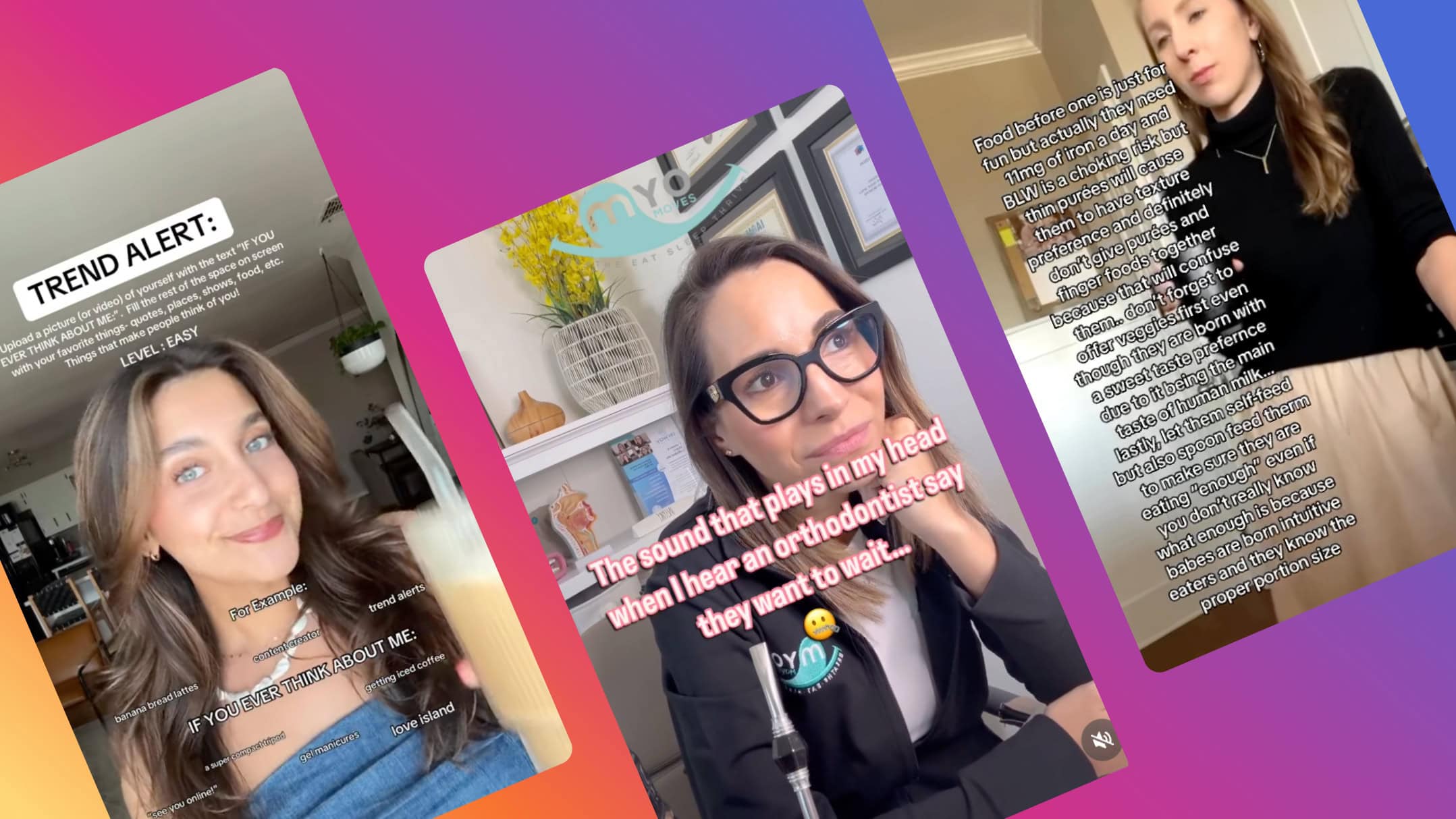
Once a new hook or trending audio or “perspective” has caught on, people start mimicking the output rather than interrogating the idea and adding their own lived experience or thoughts.
Instead of asking if the trend you’re about to hop on will “perform”, we need to be reframing it to whether it will attract the kind of people you actually want in your world.
If you don’t do this, you end up posting something very surface-level that may or may not have anything to do with what you offer or believe in. It might get saves and likes, but it rarely starts the conversations you want or need to be having.
I’ve had posts like this myself.
I’ve shared on-trend, well-timed posts that play into what’s hot. They get traction, but the people who followed me from them weren’t always aligned. Often, these people would expect more of the same (e.g. simplified takes, hot-button opinions etc) rather than the gritty lived experience of being a freelancer that I really wanted to share.
And this is the knock-on effect of trend-chasing. It shapes what you post and it shapes what people expect from you.
I’m not trend-bashing here at all. In fact, trends offer excellent clues about what people are paying attention to and what feels urgent right now. But they don’t tell you what your own personal take should be.
Why “popular” doesn’t always mean right
As Albert Einstein said a long time ago: “What’s right is not always popular and what is popular is not always right.”
If we put that into a social media context (sorry, Albert), this might read that just because something is popular, it doesn’t mean it’s right for you or your audience.
Once you see it from this perspective, trends stop feeling so urgent (and trust me, I’ve stayed up late too many times trying to take advantage of the latest trending audio before it takes off. It’s an art, so they say).
Instead, you can slow down and ask better questions:
Rather than “how can I recreate this”, try:
- What problem is this pointing to?
- Is this trend tapping into an uncertainty? Burnout? Decision fatigue? Reassurance? Belonging?
Most of the time, the answer to these questions has very little to do with the format itself and everything to do with what people are trying to resolve in their own heads.
This is where most creators tend to veer off track.
They replicate the hook rather than interrogating the anxiety underneath it… and then they wonder why the result feels hollow. The answer is because it is hollow if you’re not adding the substance of your own experience or opinions.
To tackle this, we need to look at trends as raw material. We can agree with the underlying idea, but we can also add nuance, challenge it, or use it as a jumping-off point to talk about what people aren’t saying yet.
How to reverse-engineer trends so you don’t lose your voice
Instead of seeing a trend and copying it, reverse-engineering gives you another option: extract what matters.
Step 1: Strip the trend down to its emotional driver
Whenever I see something taking off, I try to ignore how it’s being said and focus on why it’s become so hot.
The format here is a decoy by the way. It doesn’t matter if the trend takes the shape of a carousel or if it’s a hook, those are just the packaging. You have to dig beneath that to find the real value.
Ask yourself:
- What does the clip or audio really signify?
- Could it be interpreted in different ways?
- What questions or fears is it addressing, if any?
Let’s use the 5-9 trend as an example (a.k.a. people showing what they do after they finish work, like evening routines, gym classes, etc).
It’s harmless lifestyle content, but it resonated because it shines a spotlight on our collective tension around identity. For a long time, we were told our jobs should fulfill us and define us, but this trend pushes back on that.
This can be comforting or confronting depending on where you stand.
For some people, the trend calms the fear of being swallowed by their job. It validates the desire to reclaim time, energy, and personality outside of productivity.
For others, it surfaces a different discomfort. If your 5–9 feels empty, rushed, or non-existent, the trend can highlight what’s missing.
This is where adding your own voice matters.
A freelancer might use the 5–9 trend to talk about blurred boundaries while a creator in the personal brand space might flip it entirely and ask if we’re genuinely resting or just optimising our evenings now too.
Here’s how an engineer tackles the trend:
And here’s how a wellness influencer does it:
Step 2: Identify what’s missing (this is where your voice lives)
This is where your voice actually enters the room (hi, sit down and take a seat).
I’m not saying you should disagree with a trend for the sake of it. That’s just arriving at the same end result but via a different route.
Start by asking:
- What does everyone agree on a little too easily?
- What nuance keeps getting skipped here?
- Who does this advice not work for?
Take the 5–9 trend again. The unspoken agreement is that everyone has a 5–9… that evenings are flexible, restorative, and largely within your control.
But that’s not true for parents, carers, people with multiple jobs, freelancers with global clients, or anyone who doesn’t switch off at 5pm.
Or look at trends around “doing less” or “slow work.” The message everyone agrees on is that slowing down is better. The missing piece is how. How do you slow down when you’re not yet where you want to be? When income is unstable? When you’re early in your career and still building momentum?
When you analyze a trend, really think about what’s missing for your people or whether it even works for the people you’re talking to.
For example, someone who freelances on the side of their day job might show their 5-9 working on client work instead of relaxing, reading, cooking, and doing gym classes.
Step 3: Anchor the trend to your lived experience
Once you’ve stripped the trend down to its emotional driver and spotted what’s missing, the final move is to anchor it in something you’ve actually lived.
For example, instead of repeating a trend about posting every day, you might talk about how consistency helped with momentum, but also how it narrowed your thinking, burned you out, or trained your audience to expect speed over depth.
Or instead of echoing advice about niching down, you could explain how niching too early made it harder for you to grow.
The idea here is to contextualize the trend.
This signals something important to your audience: that you’re thinking for yourself.
An example of how different niches can make the same trend work
Let’s take the Jon Hamm clip that was used over 200,000 times at the end of 2025. You know the one – Jon Hamm is dancing, eyes closed, in a club, and it’s usually a skit that follows a hook like “the first sip of morning coffee” or “when you see the waiter walking toward your table with your food.”
On the surface, it’s just a relatable reaction meme… but that’s not why it spread.
What the clip is really doing is signalling contained joy, and that can be cross-pollinated across multiple different niches and reworked in many, many different ways.
For a creator or freelancer, the obvious version is “when a client pays on time”, but you could also use the clip to talk about building systems that remove constant anxiety, or what it feels like when your business finally hits its first milestone.
For someone in career or leadership content, the clip could be a metaphor for being trusted or finally being left alone to do your job well. It uses the same visual but with a completely different meaning.
In marketing niches, you could use the trend to showcase focus. Jon Hamm is absorbed, there’s no denying that. That’s a perfect entry point to talk about what happens when you stop chasing every new tactic and double down on what actually compounds.
Even in something like wellness or mental health, the clip works because it shows presence or being in your body.
Using your voice doesn’t mean commenting on everything that trends. It means knowing when a trend is a useful prompt and when it isn’t. Sometimes the best thing you can do is not jump on a trend.
The long game: why this compounds
The real payoff of reverse-engineering trends is what it does to how you think over time.
When you consistently break trends down instead of copying them, you train your critical thinking muscle. You get faster at spotting patterns, assumptions, and missing context.
That practice compounds.
Your point of view gets clearer because it’s built through repetition. Over time, people don’t just recognize your style, they actually recognize how you think, and that attracts a very specific kind of audience (people who want depth and who trust what you say because you have a solid, consistent perspective and opinions).
When I look back at my strongest opportunities, none of them came from jumping aimlessly on a trend in the hopes that I would go “viral”. They came from articulating what felt true to me and using my own lived experience to add context.
Your voice is your secret weapon
Some things will never change: Trends will always recycle. Platforms will always reward sameness. There will always be pressure to move faster, say less, and sound more certain than you really are.
That’s not going to change.
What does change is whether you treat trends as something to follow or something to interpret. Your leverage is your interpretation of trends and your ability to look at what’s popular and say something honest, contextual, and useful about it.