TL;DR
Most Creator businesses don’t flop because their product is bad—they flop because they built it in the dark and launched to nobody. Here’s the exact 5-step framework I walk Creators through to go from “I have an idea” to “I made a sale,” plus the Stan tools that make every step easier.
I’ve lost count of how many times a Creator has told me, “Lauren, I spent months building this course… and it flopped. I didn’t get any sales.”
And usually, their products are genuinely great. But if you build a product and have no customers, who’s it for? And how do they even know it exists?
Maybe this has happened to you before. Or maybe you’ve got an audience but no idea what to actually sell them. Either way, this guide is for you.
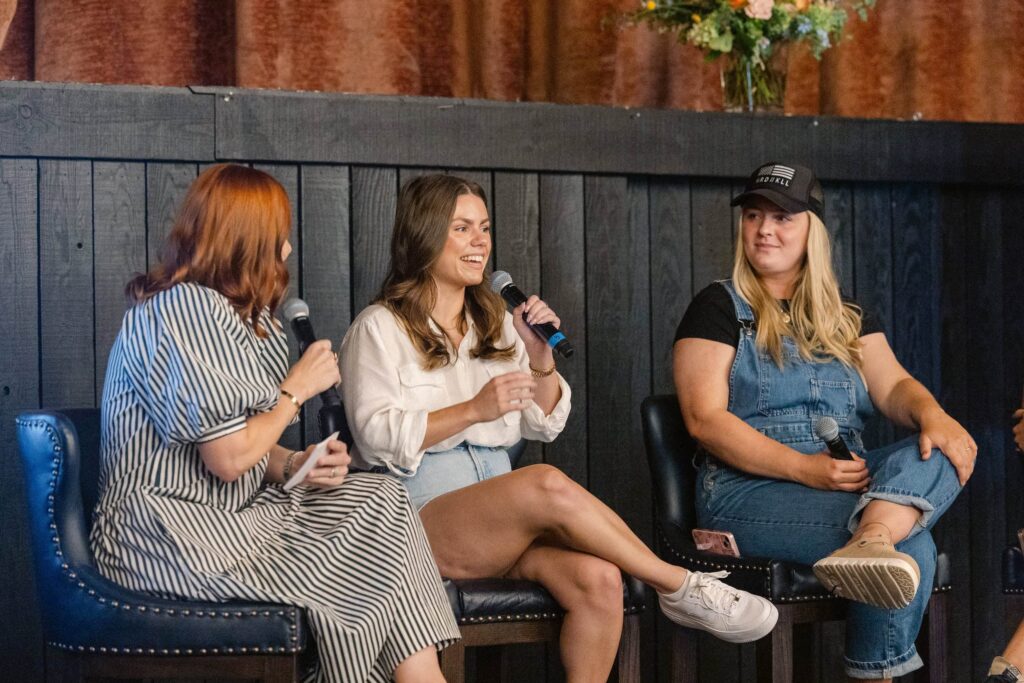
I’m Lauren, Stan’s Creator Marketing Manager and fellow Creator 👋 I started my career coaching Creators on how to turn viewers into customers and have been at Stan for over three years. So I’m coming at this from a few different angles—the coaching side, the platform side, and the “I’ve experienced this firsthand” side.
The most overwhelming part of making money as a Creator usually isn’t the work itself. It’s not knowing where to start. So today, I’m breaking things down into five simple steps that can help you go from idea to consistent sales.
You’ll walk away knowing:
- How to build your product suite from scratch
- How to figure out what to sell (even if you don’t think you’re an “expert” at anything yet)
- The content strategy that will help drive traffic to your products
Let’s dive in.
Missed the live webinar? Don’t worry—we’ve got the replay for you here 👇
Your 5-Step Roadmap to Sell Online
Step 1: Find the Right Thing to Sell
Start with what you want to sell. It sounds obvious, but this is the step most people rush—and it can quietly dictate whether everything after it works. Here’s how to build your first offer.
Never build in the dark
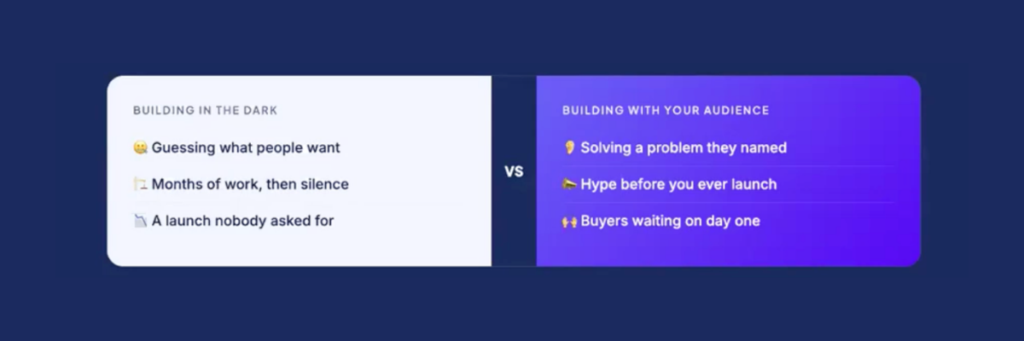
If there’s one thing you should take away from this whole guide, it’s this: never build your product in the dark.
When you build in secret, your audience has no idea what’s coming, so they can’t get excited or bought in. And you have no idea if you’re building the right solution.
When you build in public and actively share your journey, you invite your audience into the process—and you’re way more likely to attract people who are excited to buy from you when you launch.
Don’t try to sell before you’ve built trust
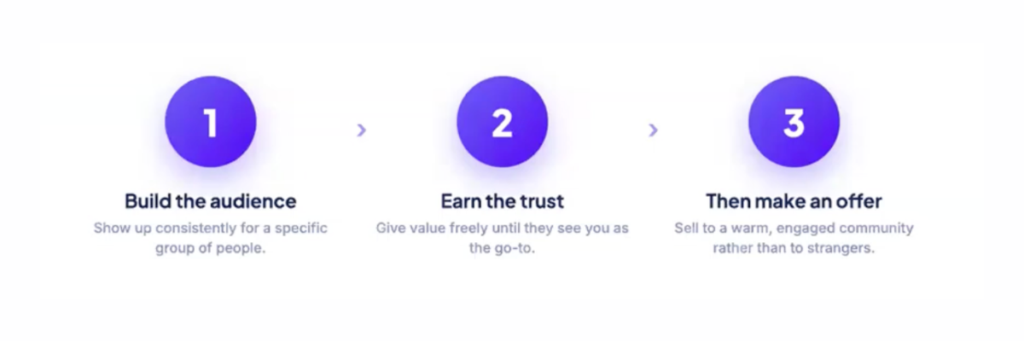
To make sales, you need to show up and give value first. People buy from Creators they know, like, and trust—which is why most Creators post for a year before they start monetizing.

Of course, that’s not a hard rule. If you post twice a day, you can build trust faster than if you post twice a week. But don’t expect to make millions on day one.
Let your audience tell you what to build
You don’t need a brand-new idea. The most successful Creators aren’t reinventing the wheel—they’re helping solve problems their audience actively turns to them for.
Look for patterns in your DMs, comment sections, and emails. That’s your strongest signal for demand, because a great product is really just the solution to a problem your audience already has.
If you get the same question multiple times a week, that’s your product. The demand already exists—you just have to create a product that answers it.
Name your who, your what, and your why
When you’re building your offer, get clear on:
- Who you’re building for
- What problem you’re solving
- Why people should buy from you
The more specific you can get, the easier it’ll be to attract customers. For instance,“Moms who struggle to organize their time” are much easier to speak to than a broad audience like “busy people.”
You don’t need to be an expert to start. Your unique insights as someone who’s just a few steps ahead of your audience are your strength. People don’t solely follow you for information—they follow you for your perspective and your story. Don’t be afraid to teach what you know right now.
Step 2: Build With Your Audience
Once you know what you’re making, resist the urge to disappear and build it alone. The real unlock at this stage is bringing your audience into the process before the product even exists.
Take Maya, for example—a Creator whose mission is to help new parents get a full night’s sleep. For months, she shared her wind-down habits—not selling, just giving value. Then comments started rolling in like, “I can’t catch all this in a Reel. I need more support!”
So Maya started:
- Posting content that opens a curiosity loop (her calm nightly routine)
- Listening to what her audience was asking for
- Promoting her waitlist—promising first access and a lower price for the people who joined early
She never reached for a random idea. She talked about something she lives, let her content spark the demand, heard it confirmed in the comments, and gauged interest for her product.
Launch a waitlist
A waitlist does a few things:
- It measures demand before you spend hours building.
- It builds an audience of potential customers who are raising their hands to be notified when you launch.
- It creates FOMO—early sign-ups get first access and a better price, so they have an incentive to join now.
It also helps you build an audience you own. Think about it: you might have 10,000 followers, but if you’ve never captured an email and a social platform disappeared tomorrow? You’d have no way to reach them. An email list changes that.
Rethink what “success” means
A waitlist that fills up is your green light. A waitlist that stays quiet saves you weeks of building the wrong thing. Both are wins.

If you’re struggling to get waitlist signups, tweak the messaging, rework the offer, or pivot ideas. Your time is your most valuable currency, and validating ideas before you build them can help you maximize it.
Step 3: Structure Your Product Suite
Once you’ve validated your idea and are building a waitlist, you need to decide how your offers fit together and what to charge. Here’s what I’d recommend.
Stick to 3-5 products
When someone lands on your Stan Store after scrolling their feed, you’ve got about 3 seconds to hold their attention—so make sure your offers are clear and scannable.
If you have 20 different offers, you create decision paralysis. Don’t cram more into your storefront just for the sake of it—having one validated offer is enough to start.
And when you start small, building one product at a time, you can gradually refine your offers as you go, rather than launching five products at once that compete for attention.
Price on a ladder, not a flat line
If everything in your store costs $27, it’s harder for customers to figure out where they should start. That’s why you should use pricing to give people a clear path from free to premium offers.
For example:
| Tier | Price | What it is |
| Freebie | Free | A lead magnet, where you exchange a free resource for their email. |
| Low-ticket Offer | Under $20 | An easy sell—give more value than your free content, but not everything. |
| Core Offer | $30–$90 | Your main, built-out product, like a course, a detailed guide, a workbook. |
| Premium Offer | $100+ | A personalized, high-touch offer, like 1:1 coaching calls, custom audits, or an exclusive membership. |
Try to avoid dumping everything into your cheapest pricing tier. A 60-page guide for $9 is overwhelming and gives buyers no reason to pay more for a higher-ticket offer. Create an entry product that’s genuinely valuable but leaves room for the next step.
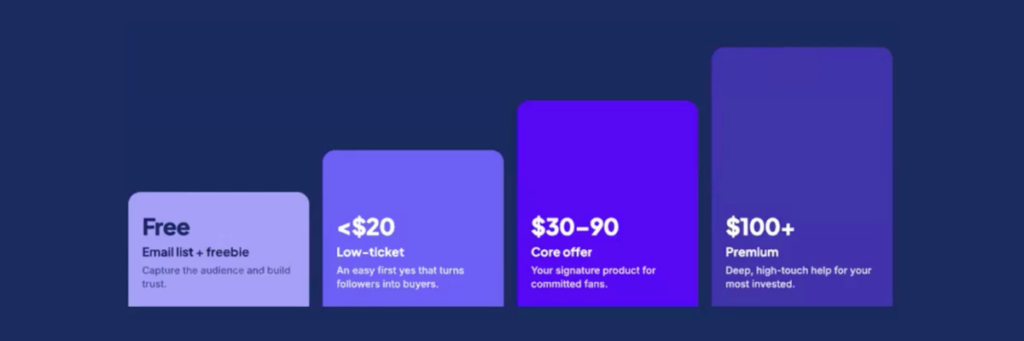
Pro Pricing Tip: The more of your personal, hands-on time goes into a product, the higher the price should be. For instance, you can sell a guide you make once and sell forever at a lower price than an hour of your time.
Sell everything in one place with Stan Store
Stan Store makes it easy to sell right from your link in bio—without multiple tools, coding, or a complicated tech stack. You can host and sell digital products, memberships, communities, coaching calls, webinars, and so much more in one simple storefront.
It only takes a few minutes to set up and has everything you need to build a profitable Creator business, just like Abigail Peugh and Millie Adrian.
Step 4: Create Content That Converts
Great offers won’t sell themselves if no one hears about them. Next, you’ve got to create content that turns viewers into buyers. Here’s how.
Open a curiosity loop
Your content should speak to a specific problem—and your product is the answer. Create genuinely valuable content that makes your target audience feel seen, but leaves them wanting more. That’s how you spark curiosity about your offers.

For example, say a sleep coach posts “My #1 tip for new parents getting eight hours.” with the caption, “Want all 10? Comment SLEEP and I’ll send my $9 guide.”
She attracted viewers by sharing value, opening the curiosity loop, and positioning the product as the full solution—which makes those who resonate with her content want to buy.
🎵 Remember buying songs on iTunes? You’d hear a 20-second preview, fall in love, then pay 99 cents for the rest. Your content is that 20-second preview.
Use comment automation
Instead of driving traffic to your entire storefront, you can automatically share a specific offer with people who comment a keyword by using tools like Stan AutoDM or ManyChat.
Comment automation tools make your calls-to-action feel personal rather than salesy. And they also let you tailor your pitch to match audience interests, while simultaneously boosting engagement on your posts.
Test ideas across formats—not formats across ideas
Don’t agonize over whether to post a Reel vs. carousel vs. talking-to-camera video. Take one strong idea and run it across each format on different days. Most of your followers won’t see every post anyway, and you’ll gradually learn which formats your audience actually responds to.
Create in content buckets
Not every post should sell. It’s just as important to share posts that build trust and demand. That’s why I recommend breaking your posts into three distinct buckets:
- Value/trust: relatable content that builds the relationship.
- Demand: content that gets people excited about how you help.
- Convert: posts designed to drive comments and sales.
Step 5: Launch and Stay Consistent
At this point, you’ve done the work. Now it’s all about launching with confidence, then staying consistent so the sales keep coming long after day one.
Your pre-launch checklist
Before you launch, run through this checklist:
✔️ I can name the exact person this product is for.
✔️ I can say the problem it solves in one line.
✔️ My audience has asked for this in comments or DMs.
✔️ People are already joining my waitlist.
✔️ I’ve been talking about it for weeks, not days.
✔️ It sits at a clear price point on my ladder.
When you’ve checked every box, you’re ready to publish 🎉
Keep selling after the first click
Launch day isn’t the finish line. A product nobody hears about after its launch stops selling, so your goal now is to keep momentum by regularly sharing content and emails.
The simplest way to do that is by setting up automatic email sequences. When someone buys a product (or grabs your freebie), you can deliver a short series of emails that introduce them to the next offer up your pricing ladder and show them why it’s worth it. The beauty of email sequences is that you can write them once, and they’ll keep selling for you in the background—even when you’re not posting.
Start Making Money Online With Stan
Being a Creator is hard. Trust us—we get it. Stan is built by Creators, for Creators, and we’re constantly searching for ways to make growing and monetizing your audience a little easier.
That’s the whole reason these sessions exist: to help Creators like you be more successful. We hope this has encouraged you to go build something your audience is already asking for, and we can’t wait to see you at the next session. Thank you for being here 💛
🤳 Ready to sell your first digital product? Stan Store is the easiest way to start earning—with freebies, guides, communities, coaching calls, and more all in one place. Try it free for 14 days.