TL;DR
Baker and Creator-Entrepreneur, Nicole Crispi, has built two six-figure businesses with Stan Store and turned a single freebie Funnel into an extra $8,500. Now, she’s breaking down the lessons she’s learned and teaches her students about Funnels, from leading with a low-ticket offer to turning every “no” into an easy yes.
Nicole Crispi turned a $3 cookie recipe into more than $400,000 in sales, then built a six-figure business teaching bakers to do the same—coaching over 200 students on Stan Store.
One of her favorite strategies for maximizing digital product sales is Funnels, which let her curate customers’ experience and earn more from every sale. She set up her first one in 2024 and has been refining her approach ever since.
Now, Nicole’s sharing everything she’s learned about Funnels—what works, what doesn’t, and how to get your customers to “Buy now!”
Why Your Business Needs A Funnel
You can grow your average order value (AOV) with Order Bumps, but Funnels give you way more room to work with. They put your offers directly in front of buyers instead of keeping them buried at the bottom of your checkout page.
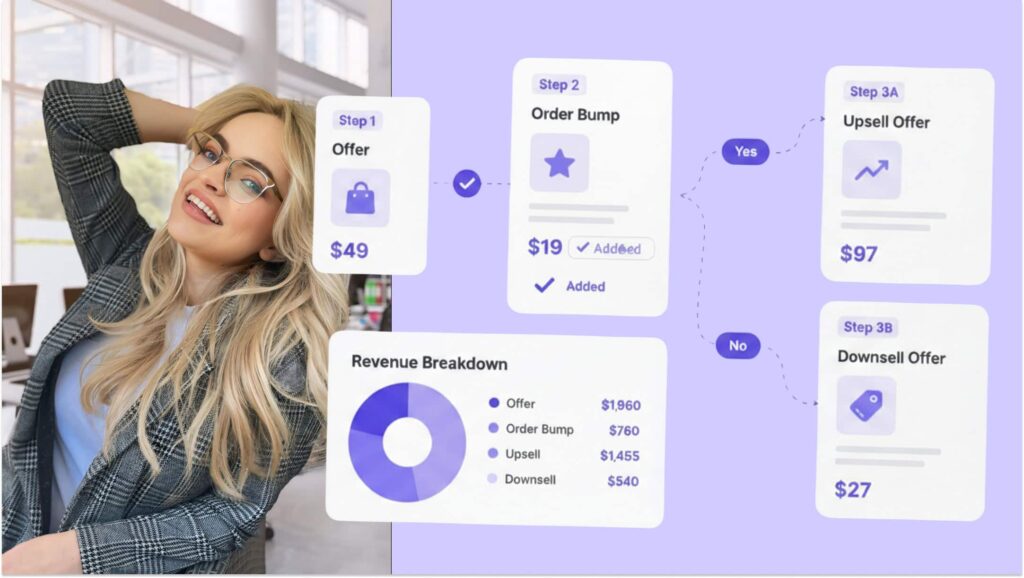
Nicole experienced this firsthand with her very first Funnel. It wasn’t anything fancy—just a two-page Funnel with a free guide that led into her main offer. But by adding a paid offer behind her freebie, she was able to make an extra $8,500 on Stan Store.
Nicole’s Top 6 Lessons on Building Funnels That Convert
1. Just start and improve things as you go
When it comes to Funnels, Nicole’s #1 piece of advice is simple: just start. Push past the fear of doing it wrong or not having the ‘perfect’ setup.
Stan Store Funnels are beginner-friendly, and Nicole believes the best way to learn is by clicking buttons, making mistakes, and iterating as your offer evolves.

Two years in, she still actively makes changes to her own Funnels—adding pages, deleting pages, changing the copy.
The Takeaway: A live Funnel you can learn from beats a perfect one that never launches.
2. Lead with a low-ticket offer
Most Creators use a freebie as their Funnel entry point, but Nicole recommends opening with a low-ticket offer instead.
While freebies are great for building your email list, Nicole prefers using a $3-$5 offer because it removes friction to making a sale and capitalizes on a customer’s excitement immediately.
Think about it: A freebie sale is fragile. Let’s say someone sees your Reel, wants the recipe now, and comments to get it, but then they have to wait for the freebie to hit their inbox. And by the time it arrives, the excitement is gone—and so is your chance to make an upsell.
But if you capture their attention with a paid product right away, you’re more likely to close the sale.
“I’m all about no obstacles to the money,” she explains.
The Takeaway: Choose your entry point based on your goal—a freebie if you’re building an email list, or a low-ticket product if you want to make more immediate sales.
3. Give every “no” an easy yes
Nicole says the most effective Funnels don’t run in a straight line. They branch—sending buyers down one of two roads (with an upsell or downsell) depending on what they buy.
Imagine you’re shopping for an event and decide to buy a $500 dress. When you reach the checkout counter, you’re offered matching earrings. You’re already buying the dress, so it’s an easy “yes” to spend an extra $50 to complete the look.
The same concept applies to upsells. If someone buys your offer, you can follow up with an upsell to a small add-on—and then potentially multiple add-ons if they keep saying “yes.”
Now say you’re car shopping. You find a car you love, but can’t afford the high-end version with all the bells and whistles. So the salesperson shows you a similar model without the sunroof. It’s a slightly lesser and more affordable version, but it still gets you in the door and saves the sale.
Downsells work the same way. If someone declines an offer, you can share similar products at a lower price—and turn every “no” into an easy “yes.”
The Takeaway: The best Funnels customize the customer journey, adapting the offers shown based on their behavior—so you can maximize sales and save lost ones.

4. Sell with visuals, not paragraphs
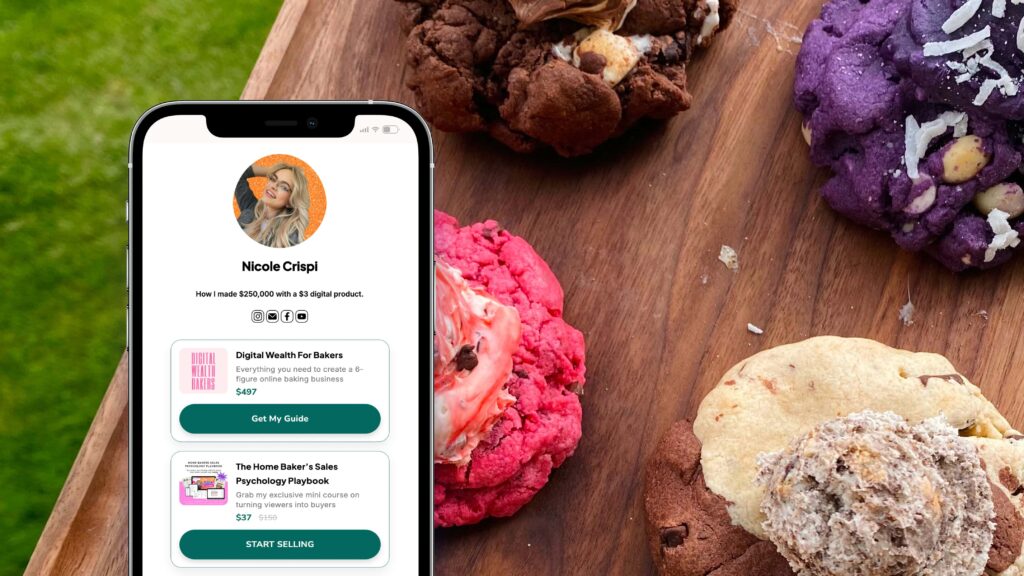
A Funnel only works if people understand what they’re buying within the first few seconds of hitting the page. For Nicole, that means leading with images over walls of text.
Her fix? A strong photo or a Canva mockup, a keyword or two, and one sentence that reminds people why they’re there.
Something like, “This is my 100-year-old great-great-grandma’s Sicilian cannoli cream recipe.”
That’s it.
Massive paragraphs of text kill conversions. You need to remind buyers of the feeling they had when they first discovered the product through your content, so try to emulate that in your Funnel landing pages.
The Takeaway: A confused buyer never buys. Curate your offers to match your Funnel, and avoid walls of text—let visuals do the selling.
5. Never let a freebie be a dead end
Instead of hard-selling your audience, Nicole recommends tying all of your social posts back to a Funnel. It doesn’t have to feel forced—you can create entertaining, interactive, or conversational freebies that seamlessly guide your followers from their social app to their first sale.
For example, you could create an Instagram carousel that matches a specific type of cookie to a user’s birth month, then end with a call to action to take a quiz or download a guide.
One of Nicole’s students does this by offering a fun, Buzzfeed-style “Which Disney park treat are you?” quiz that ends with a link to buy her recipe ebook.
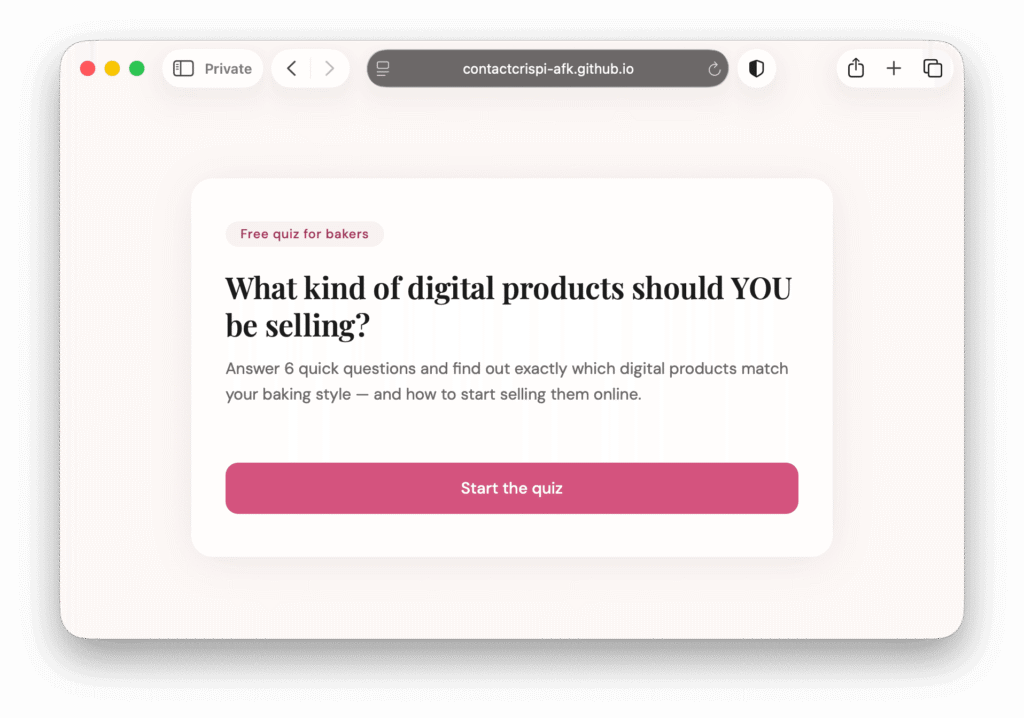
And for Nicole’s own audience, she created a Top 10 Food Topics Guaranteed to Sell in 2026 guide, where every page links back to her main offer.
By setting up multiple Funnels to effortlessly guide customers from one offer to the next, you can share free value and product recommendations that feel tailored—and make money while you sleep.
The Takeaway: Tie every social post to a Funnel, but avoid hard selling. Focus on sharing entertaining, interactive, or conversational content that naturally attracts customers and guides them to the next step.

6. Don’t make people guess what you’re selling
The most common mistake Nicole sees Creators make is not selling enough or being too vague about what they’re actually selling.
If you want to convert customers, you need to get specific about the problem you solve and why you’re uniquely positioned to help them.
Nicole also recommends clarifying exactly what someone can expect once they buy your offer—like where you’ll send it, what it covers, and what happens next.
The Takeaway: Specificity sells. Be explicit about the problem you solve and point people straight to your offer.
Putting It Together: Turn One Recipe Into Multiple Sales
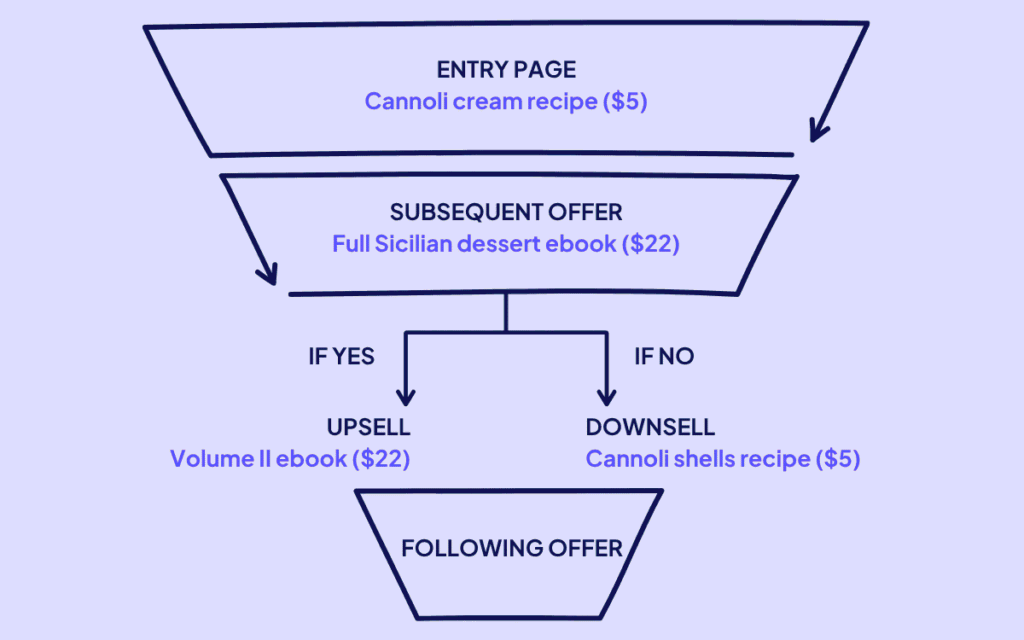
Together, Nicole’s strategies can help you turn a single checkout into multiple sales. Here’s a real example of how Nicole’s student, Andrea, sets up a Funnel selling Italian desserts:
- Entry offer—Cannoli cream recipe ($5). Andrea’s Funnel starts with one low-ticket recipe on a clean page (a photo, one line of copy, and a CTA button).
- Main offer—Full Sicilian dessert ebook ($22): Once customers reach checkout, she shares her main offer. “If I’m going to pay $5 for one recipe, then obviously it’s a deal to pay $22 for 13. The math just makes more sense,” she explains.
- Upsell—Sicilian dessert ebook (Volume II): If someone buys the ebook, she upsells them on the second edition.
- Downsell—Cannoli shells recipe ($5): If someone passes on the ebook, she downsells them on a Cannoli shells recipe, which pairs well with the dessert recipe they just bought.
From there, every offer depends on the last decision the customer made—buy, and she upsells them. Pass, and she offers something smaller that still feels relevant.
And she keeps the Funnel to just a few pages, so it never starts feeling like a pitch.
Sell More, Doing Less
Funnels turn single offers—like a free guide or $5 recipe—into sales you’d otherwise leave on the table. And every page you add is one more chance to earn from a customer who’s already in your Funnel.
You don’t need a big audience or a perfect setup. You can start with one simple Funnel and grow from there, just like Nicole.
Ready to build yours? Stan Store makes it easy. Unlock Funnels with an exclusive 30-day free trial of Creator Pro—and discover why top Creators like Nicole choose Stan.