TL;DR
Substack doesn’t pay Creators for views or engagement—you earn directly from your readers instead, through paid subscriptions, founding tiers, and offers you sell alongside your newsletter. This guide breaks down how Substack monetization works and 8 ways to earn from yours, even with a small subscriber list.
Can you make money on Substack? That’s what Creators, writers, and founders keep asking.
It’s a fair question. Substack doesn’t pay you for views, watch time, or engagement the way most social platforms do. There’s no payout program to chase and no ad revenue to split.
But that doesn’t mean there’s no money in it.
More than 2 million posts get discovered on Substack every day, and Creators are turning that reach into a living with as little as 1,000 subscribers. So if the platform isn’t cutting you a check, where is that money coming from?
That’s what I’m breaking down. Whether you’re thinking about starting a Substack or you already have one you want to monetize, here’s how Substack monetization works and eight ways you can earn.
What’s Substack?
Substack is a publishing platform that lets you share newsletters, posts, podcasts, and videos, while building an audience you own. It essentially combines email marketing, blogging, and subscriptions to give its Creators more control over:
- Who sees their content. You’re not competing with a typical algorithm to win views. Your Substack lands in your subscribers’ inboxes and gets the same spot as the biggest brands out there—plus in-app discoverability beyond your subscriber list.
- What they earn from it. Paid subscriptions are built directly into the platform, so you decide what you earn from readers and when.
- How quickly they can grow. Instead of single-handedly promoting your Substack to drive email signups, subscribers can discover you through recommendations, notes, and collaborations with other Substacks.
Since Substack is a largely text-based social platform, you can build a successful business on it without forcing yourself to create videos or carousels. So if putting your face on camera is what’s holding you back from creating, Substack might be the platform for you.
The Rise of Substack
Building your business entirely on Instagram, TikTok, LinkedIn, or X is inherently risky. If your go-to social platform deletes your account, gets banned, or disappears tomorrow, the following you’ve worked so hard to grow will disappear with it.
But with an email list, your subscribers are yours—you can move your list to another platform whenever, so you’re never left building from zero.
In years past, newsletters were often seen as an add-on to social media strategies. But as social platforms become more volatile, a wave of newsletter-first Creators are rising up. Creatives who refuse to build in rented space and want to grow an audience they can take with them no matter the platform they use.
That’s why Substack, a newsletter-first platform, is having such a moment right now.

Substack has been around since 2017, but its growth has exploded in the last few years. Now, with over 20 million monthly active subscribers (more than double that of 2024) and 17,000 paid Creators, many are turning to Substack to build and monetize an audience they own.
And for good reason—the top 10 Substack authors collectively make $40 million per year on the platform alone (not including off-platform income, like digital products, affiliate earnings, and brand deals).
More Creators are moving onto the platform as new features roll out, like Substack live, video streams, and podcast integrations. And with them, so are writers, founders, and creatives looking for a space to build a brand with long-form content vs. video.
How Substack Monetization Works
As Substack grows in popularity and Creators flock to the platform, it feels like everyone is asking the same question: Can you actually make money on Substack?
Yes, you can—but monetizing on Substack works differently than most social platforms.
When you launch a Substack, you’ll get your own web page and email list. Readers can find your content in their email inbox, Substack feed, or in the Substack app. You can also offer paid subscriptions using Substack’s native tools, which can help you build a steady income stream.
But the people making significant money on Substack in 2026 aren’t relying on one income stream to pay their bills. They’re diversifying their revenue and are using a funnel technique to maximize how much they can earn per subscriber.
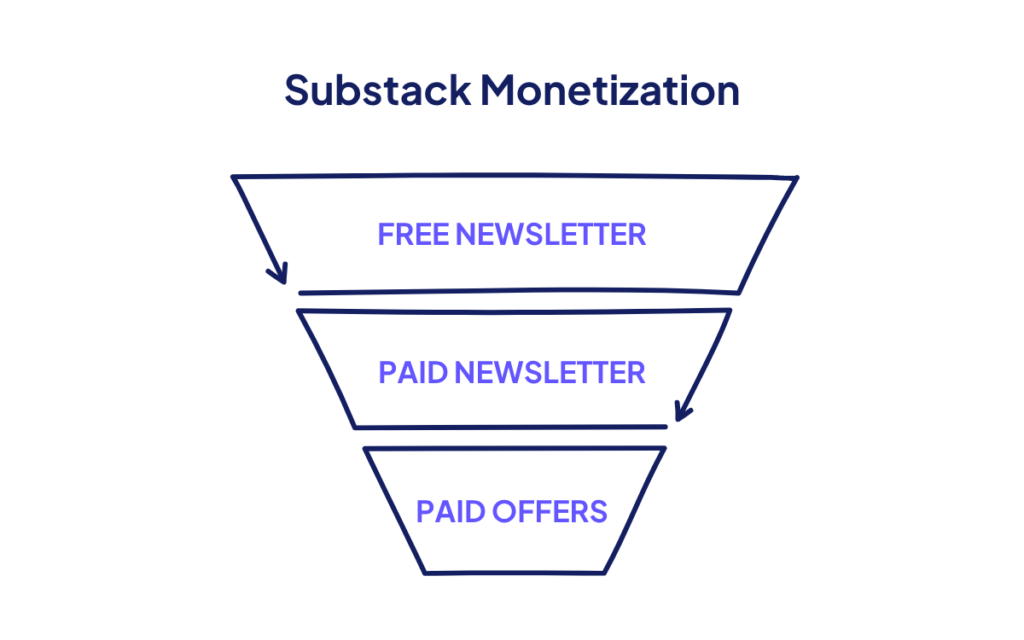
Each layer does a different job. The free newsletter brings people in, the paid newsletter turns readers into customers, and your paid offers give subscribers a way to go deeper.

For example, you could share:
- A free bi-weekly newsletter to grow your email list and give readers a taste of your content before going paid.
- A paid weekly newsletter that goes more in-depth, shares exclusives, and gives readers value they won’t find anywhere else.
- Links to additional paid offers. Your paid subscribers tend to be your most loyal audience—the ideal people to upsell on your other paid offers, like digital products, courses, programs, or community access.
Substack offers plenty of native features to help you get paid offers in front of the right audience at the right time, like drip campaigns, targeted emails, and push notifications. But what most Substack users struggle with is figuring out what to offer and how to drive sales without hurting engagement.
Here’s where to start.
8 Ways to Earn Money On Substack
1. Paid subscriptions
The most straightforward way to make money on Substack is by offering a paid newsletter subscription. You can enable paid subscriptions on Substack from day one and set the monthly price, which Substack takes a 10% cut of.
Most social platforms only pay Creators when they hit a certain number of views or engagement—and even then, the platform payouts usually aren’t enough to build a livelihood on. Substack’s model aims to counter that, giving those with a small base of loyal subscribers the chance to earn a full-time salary.
You don’t need to have tens of thousands of subscribers to earn substantial income from Substack paid subscriptions. A Substack writer with just 1,000 subscribers paying $5/month makes roughly $55,000 per year after fees.
You can offer a free newsletter and a paid subscription, or just a paid subscription. But if there’s one thing successful Substack Creators emphasize, it’s that your paid subscription needs to genuinely deliver value beyond what a free tier does.
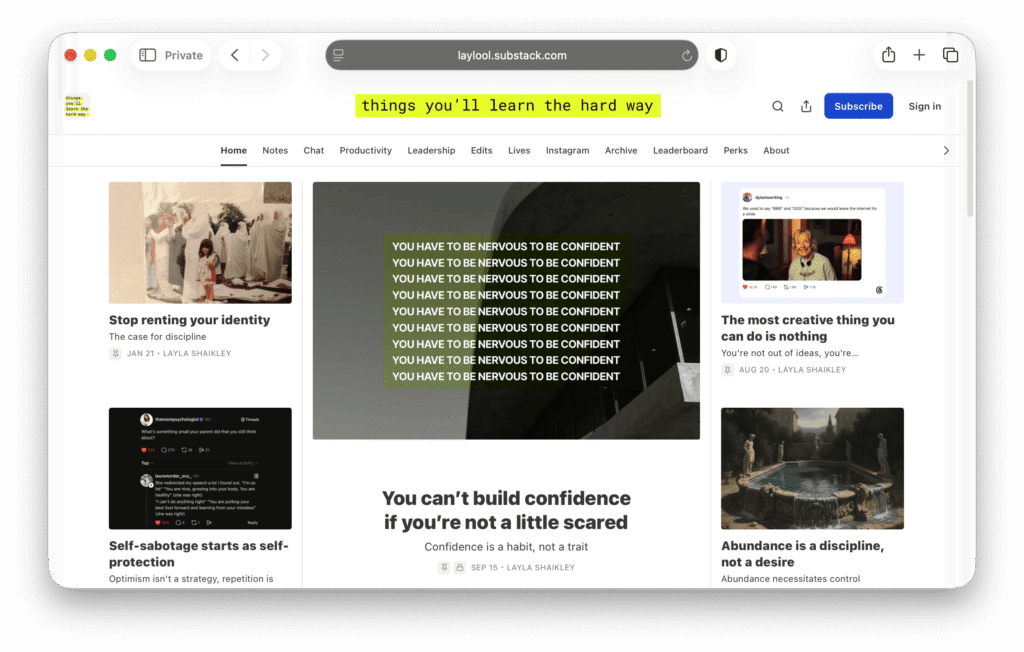
Take Creators like Layla Shaikley of Things You’ll Learn The Hard Way, for instance. She clearly outlines the difference between her free and paid tiers in her Substack’s About section.
You can offer more value by:
- Sending paid subscribers content more frequently
- Going more in-depth on topics and sharing exclusive content
- Offering freebies in exchange for being a paid subscriber, like a free workshop, community access, or PDF guide
- Reserving certain series or topics—like financial breakdowns, interviews, or research—for paid subscribers
There are countless ways to create a valuable paid subscription with a loyal subscriber base. But if you really want to maximize your income and build for the long term, it’s worth pairing paid subscriptions with additional revenue streams that aren’t reliant on you churning out more content.
2. Founding tiers
In addition to Substack’s standard paid subscriptions, you can also offer Founding Tiers. These are higher-priced subscriptions new subscribers can opt into directly within Substack that give them access to everything—both your free and paid newsletters—plus anything else you choose to reserve for founding members.
Founding Tiers boost your average income per subscriber without adding more newsletters to your cadence. Most people who choose to pay a higher founding member price are looking for:
- More contact
- More conversation
- More exclusivity
Think of this as your premium Substack tier. Instead of adding a third newsletter type to your Substack, add more depth to your brand. Maybe it’s behind-the-scenes posts, live monthly calls, or gated newsletter closings that only founding members can access.
You don’t need to overdeliver value to make your Founding Tier feel worth the added cost. You just need to make it mean something—with the kind of personalization and proximity that makes members feel like they’re in your inner circle.
3. Digital products
Paid subscriptions aren’t the only way to earn on Substack—and they’re not for everyone. Some Substack Creators prefer to keep their newsletter open so they can grow a larger audience without a paywall interfering, then sell to them later. Others prefer to keep their audience small and financially invested in their brand.
Either way, one of the most profitable revenue streams you can build into your Substack brand is digital products. Digital products give you more freedom over your time and potential to scale, because your income isn’t purely reliant on creating more content.
With digital products, you put in time and effort upfront to create your offer, then can sell it on repeat without investing more in the offer itself.
You can offer digital products like a:
- Downloadable PDF guide that breaks down investing
- Notion system for content creation
- Recipe ebook with your go-to dishes

Start by brainstorming offers that complement your Substack content well, so you can naturally weave selling into your newsletters. Think about what your audience is constantly asking for, needs help with, or could genuinely benefit from.
Then, turn those ideas into something tangible–a PDF, Canva or Figma file, Notion system. Anything you can deliver virtually that doesn’t cost you time every time someone buys.
Once your digital product is ready, you can sell it on Stan Store—the link in bio store that only takes a few minutes to set up and has helped Creators earn over $600M+.
You can add links to your Stan Store in your Substack newsletters and About section, seamlessly selling your audience on your offers while adding an extra revenue stream to your business.
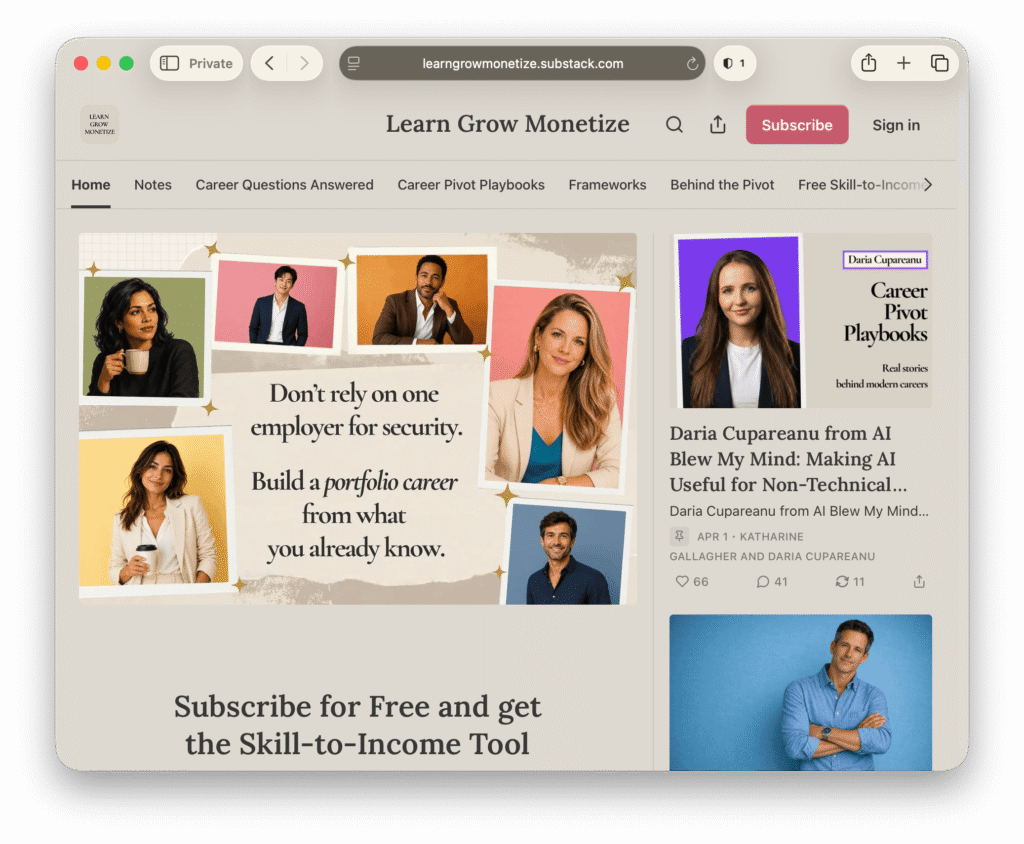
That’s how Katherine Gallagher, the writer behind Learn Grow Monetize, monetizes Substack. She writes about all things portfolio careers and monetizing Substack, sharing both paid and free newsletters. Once she established trust with her audience, she started using Stan Store to sell her Portfolio Career System in her Substacks.
4. Online courses and programs
Another way to make money on Substack is by selling online courses and programs around what you know. These are typically mid- to high-ticket offers that are self-paced, community-oriented, or live.
The goal with any course or program is to deliver some kind of transformation. Maybe you’re helping people who are navigating a career transition land their next opportunity. Or you’re teaching non-techy people how to vibe code their first website.
No matter your focus, to successfully sell an online course or program, you need to clarify:
- What transformation you deliver
- Who it’s for
- What you’ll include
And of course, how you’ll deliver it. The easiest way to create and sell your online course is by hosting it on Stan Store, so your programs live alongside everything else you offer.
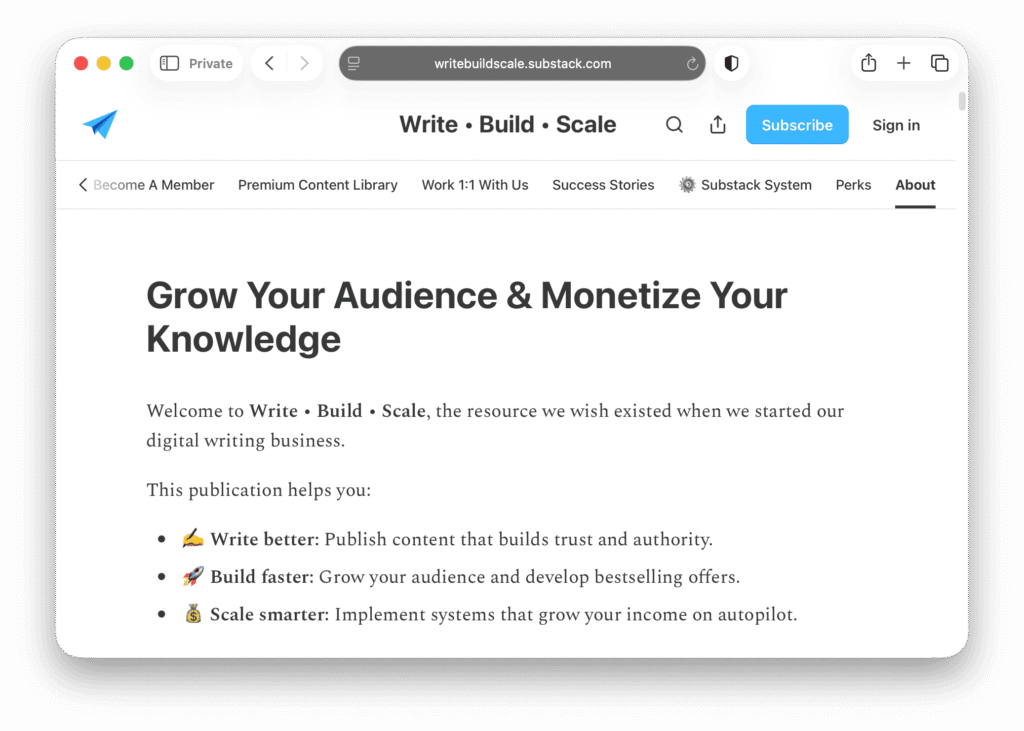
At a higher price point, courses can become one of your biggest revenue streams. Just ask Philip Hofmacher, Co-founder of Write • Build • Scale, who’s helped thousands of Creators grow on Substack with his $500 online course, which he promotes in relevant newsletters and discussions on the platform.
5. Coaching
One simple way to add an extra income stream to your Substack is by offering online coaching. Coaching lets you provide individualized support beyond what a digital product or online course can offer. You can either offer 1:1 coaching or group sessions and sell individual sessions or coaching packages.
With coaching, readers aren’t just paying for a transformation—they’re paying for proximity to you. And that proximity tends to command a higher price tag.
But before someone hires you as a coach, they have to trust you and believe you’re worth the investment. That’s why the best way to land coaching clients is to treat your Substack like a funnel, building relationships with your readers before pitching them on why they should work with you.
Start by creating Substack content that naturally attracts your ideal clients. For instance, if you offer coaching that helps people pivot from corporate to freelancing, then you’d probably want to write about topics like:
- How to get freelance clients when you don’t have a portfolio yet
- The questions to ask yourself before going freelance
- Where freelance clients are really coming from in 2026
These are likely to attract people looking to pivot into freelancing. And by consistently sharing helpful free content, you’ll earn their trust and position yourself as someone who can help them.
Over time, you can use different approaches to layer your coaching offers in, like:
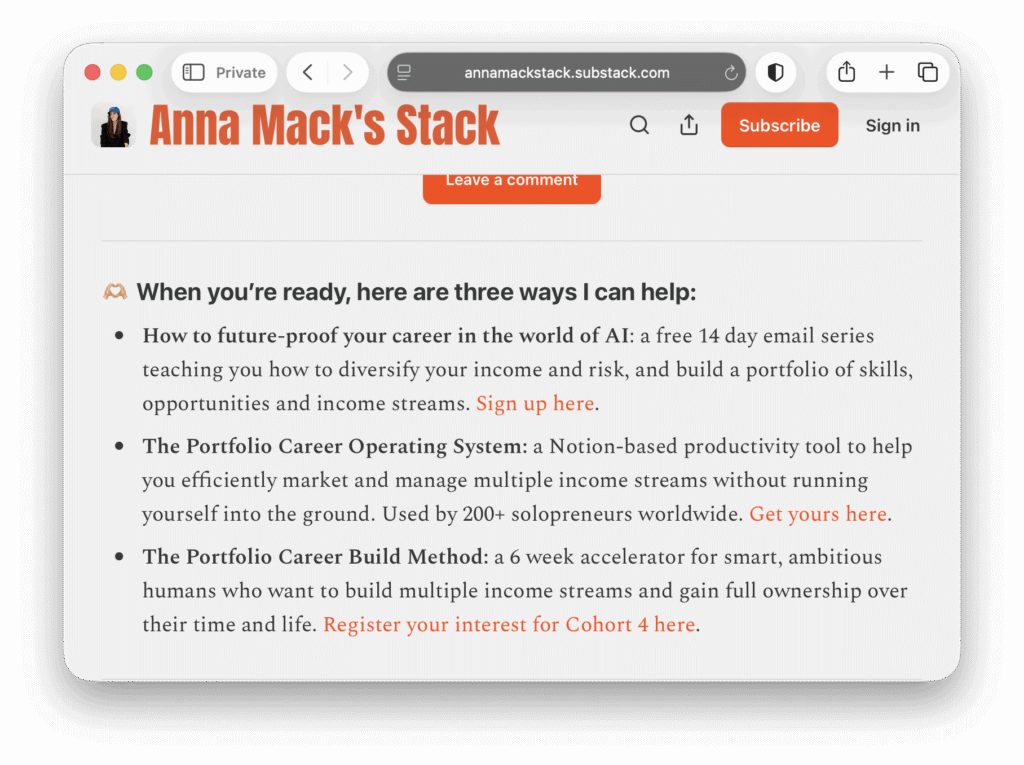
- Building soft CTAs into your Substack template: Sometimes all it takes to sell someone on your offers is making sure they know about them and can easily find them. You can add a ‘ways to work with you’ footer into your Substack template with links to each of your offers, just like Anna Mack’s Stack.
- Tripwire funnels: Sell subscribers on a low-ticket digital product so they convert to paying customers. Then, upsell them on higher-ticket coaching. It’s easier to sell to someone who’s already bought from you than someone who hasn’t.
- Using drip campaigns. Drip campaigns help you reach the right subscribers at the right time, so you can gradually nurture your audience, then sell them on coaching at the perfect moment.
6. Communities
An often-overlooked way to make money on Substack is to launch your own online community. As a Substack Creator, you’re already growing an audience of like-minded people who resonate with your content. So why not bring those people together in a curated space where they can connect, grow, and learn from each other?

It’s one of the many offers you can easily add to your Stan Store, then customize with exclusive resources, tips, and prompts that spark discussions and make the space feel undeniably yours.
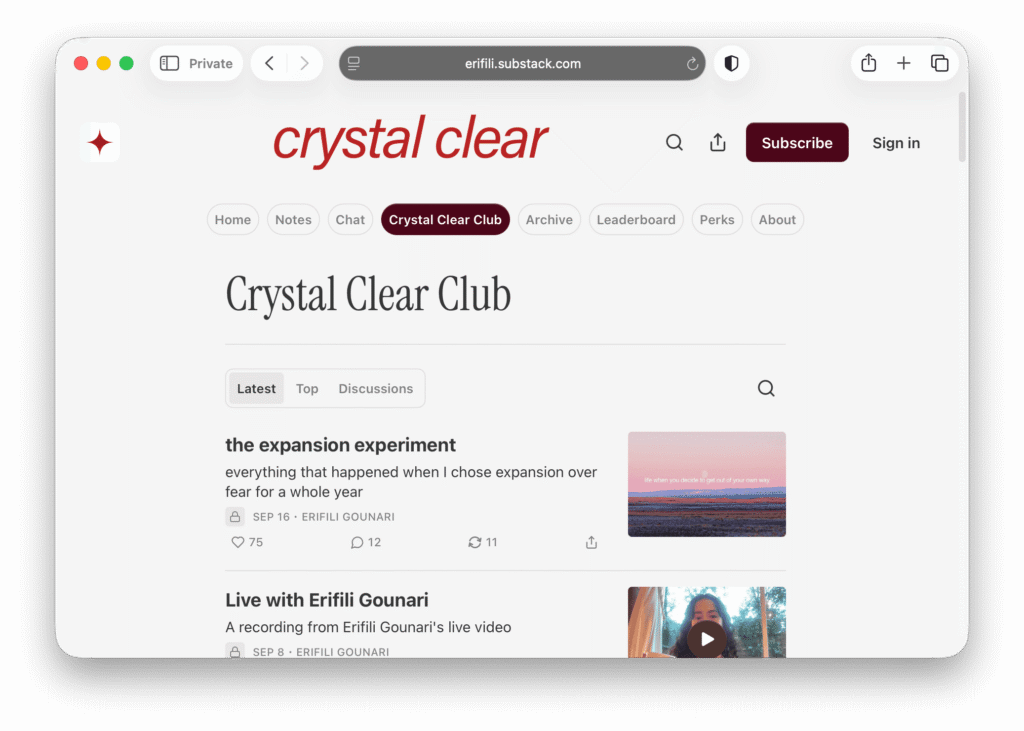
You can sell community access as a standalone offering or include it as part of your paid subscriptions. That’s what Erifili Gounari has done with Crystal Clear Club—giving her paid subscribers a community filled with practices, livestreams, and meaningful discussions instead of just “more essays.”
Within a week of building community into her paid tier, her paying subscribers doubled.
7. Affiliate links
Just like blogging, you can earn money on Substack through affiliate marketing. Affiliate marketing is when you share referral links to products or services you love in exchange for a small commission on every sale made through your link.
Substack doesn’t strip or redirect affiliate links, so you’re free to include them in your Substack newsletters. However, some affiliate networks (like Amazon Associates) restrict sharing links in email newsletters, so it’s worth checking each affiliate program’s terms and conditions first.
To earn affiliate commissions without hurting your brand’s reputation or the trust you’re building with your Substack subscribers, be thoughtful about how and where you include affiliate links.
Make sure you:
- Only share links to brands you’d personally vouch for.
- Use affiliate links when they feel relevant to the content—but don’t over-stuff your newsletters with them.
- Provide real value for your readers vs. just selling them on brands.
In the United States, if you get paid a commission when someone clicks your link and buys, you have to include a statement saying so in your newsletters. So when sharing affiliate links, don’t forget to include a short disclosure like, “This newsletter contains affiliate links. If you buy something through one of those links, I may earn a commission at no extra cost to you.”
8. Paid sponsorships
While Substack itself isn’t an ad-focused platform, you can give brands the opportunity to partner with you or sponsor a newsletter for a fee or percentage revenue share. With sponsorships, brands aren’t just paying for your content—they’re paying for access to your audience.
Too much sponsored content can dilute your brand’s authenticity and hurt the trust you’ve fostered with subscribers, so be mindful of how often you accept sponsorships. And more importantly, be cautious about the brands you choose to partner with.
Work with brands that:
- You genuinely love
- Feel relevant to your audience
- Align with your values and mission
Sponsored content should feel like an extension of your brand. The more aligned a partnership is, the less salesy or forced it’ll feel for those who read your newsletters.
Sell on Substack with Stan Store
So, can you really make a living on Substack? YES.
With Substack, you’re not constantly fighting an algorithm for visibility. You have a direct line to readers who trust you—and the Creators earning the most on Substack turn that trust into income beyond paid subscriptions.
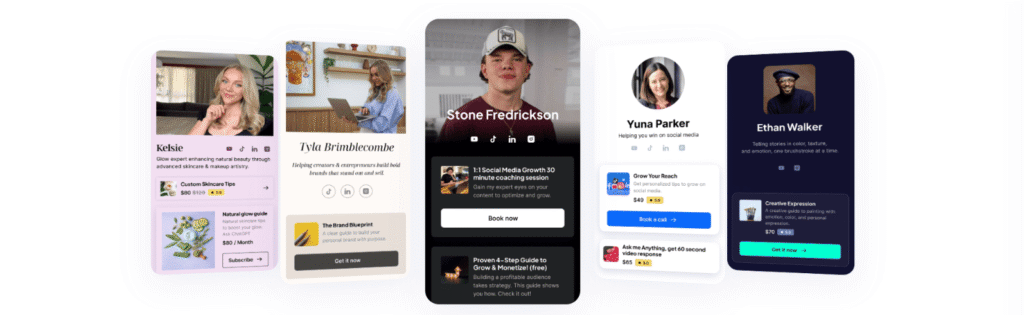
Stan Store is the easiest way to diversify your revenue off-platform. You can sell digital products, host online courses, launch a paid community, and book coaching clients—all from one link you can drop into your Substack footer, About page, or next newsletter.
Everything lives in one place, so your subscribers always know where to buy from you. And you can keep evolving your offers as your newsletter grows without switching platforms or piecing together multiple tools.
Ready to try it yourself? Get 14 days free and see why more and more Substack Creators are monetizing with Stan Store.